

Aero Lattice Quick-Deploy Assisted EDC Knife - Electric Blue
11 sold in last 24 hours
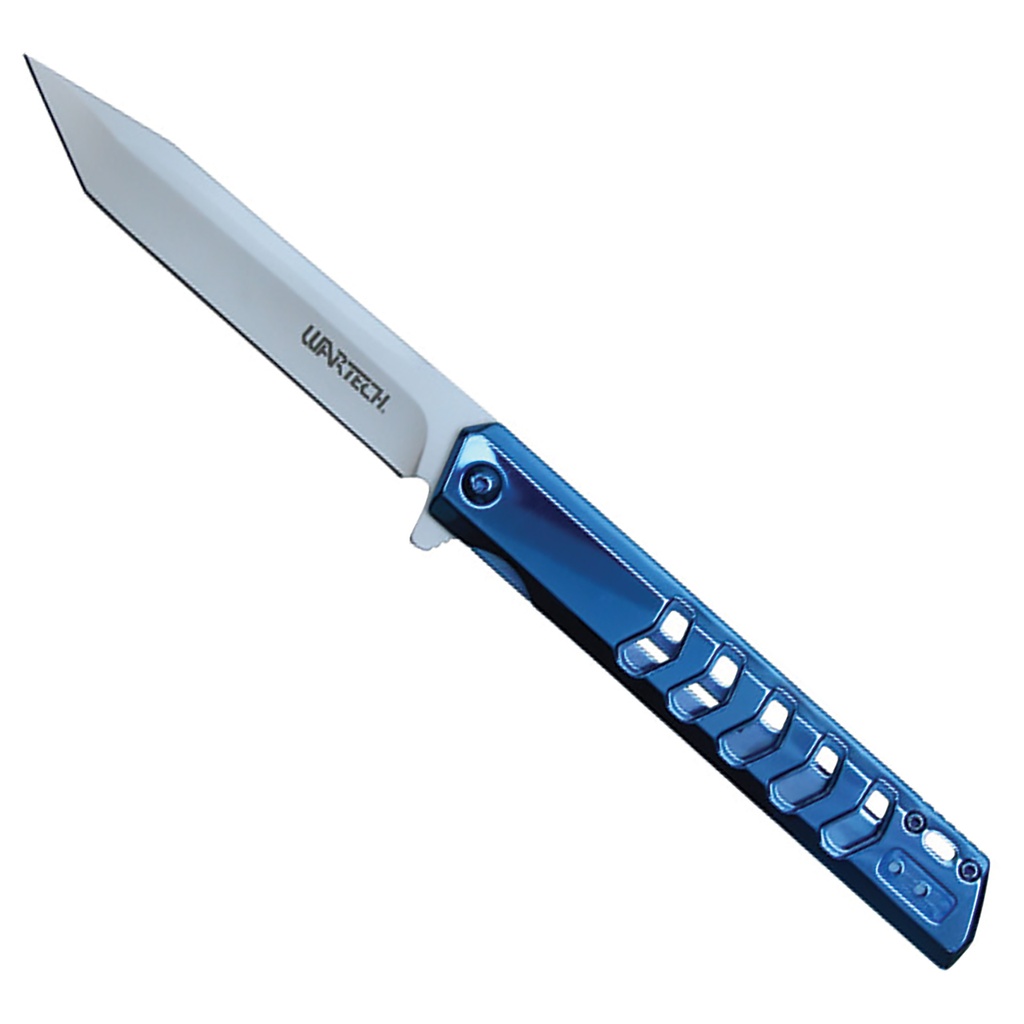
This isn’t the best OTF knife, but it fills the same role many buyers want: a fast, one-handed everyday carry with modern styling. The 4.125-inch American tanto in 3Cr13 steel takes a keen working edge, and the spring-assisted flipper brings it out with a decisive click. Weight-reduction cutouts keep the 5.125-inch electric blue handle feeling lighter than it looks, while a liner lock and pocket clip make it practical for daily pocket carry. Ideal for budget-conscious users who actually use their knives.
What Actually Makes the Best OTF Knife for Everyday Carry?
When people search for the best OTF knife, what they usually want is fast, one-handed deployment in a slim package that carries well. Mechanism aside, the criteria that matter are the same: reliable opening, a blade that cuts more than it complains, and a handle you don’t mind gripping when you’re tired and sweaty. The Aero Lattice Quick-Deploy Assisted EDC Knife - Electric Blue is not an OTF knife, but it competes for the same pocket space as many budget OTFs — and for a lot of buyers, it’s the better tool.
Why This Assisted Knife Competes With the Best OTF Knives
If you’re looking at the best OTF knife for everyday carry, you’re already prioritizing speed and convenience over nostalgia. This knife checks those boxes in a different way. Instead of a sliding OTF mechanism, it uses a spring-assisted flipper: you put light pressure on the tab, the spring takes over, and the blade snaps open with a clean, confident action. In practice, deployment speed is on par with many budget OTF knives, with fewer parts to foul, break, or rattle loose over time.
Deployment: Real-World Speed and Reliability
On the bench, this spring-assisted mechanism is simple: one pivot, a torsion spring, and a flipper tab big enough to find without looking. In pocket use, that simplicity is an advantage. There’s no slider track to collect pocket lint, and no dual-action complexity to tune. If you’ve handled lower-tier OTF knives that arrive gritty or develop play, you’ll recognize why a well-executed assisted flipper often feels more trustworthy for daily work.
Lockup and Safety Compared to OTF Designs
Most double-action OTFs rely on internal sear systems and track tolerances; they’re quick but can feel a bit loose by design. Here, you get a familiar liner lock. It’s not exotic, but it’s positive: the steel liner engages solidly behind the tang, and there’s none of the front-to-back blade wiggle common to inexpensive OTF mechanisms. If you’re cutting down boxes or pushing into plastic clamshells, that solid lock-up is worth more than a fancy deployment story.
Blade and Build: How It Stacks Up Against the Best OTF Knife Options
The blade is a 4.125-inch American tanto in 3Cr13 steel, paired with a 5.125-inch electric blue metal handle. Open, you’re at 9.125 inches overall — enough reach for utility tasks without drifting into unwieldy territory. Compared to many knives marketed as the best OTF knife under $100, the materials are honest budget fare, but used intelligently.
Steel Choice: 3Cr13 in Daily Use
3Cr13 won’t win edge-retention contests against high-end steels, and it’s not pretending to. What it does offer is predictable behavior: it sharpens quickly on basic stones, resists rust well enough for normal pocket carry, and takes a fine edge that’s more than enough for tape, cardboard, and light plastic. If your reality is “cut, resharpen occasionally, repeat,” this is a rational trade instead of a spec-sheet brag.
Blade Geometry: American Tanto for Utility
The American tanto profile gives you two working zones: the primary edge for slicing and the reinforced tip for poking, scraping, and controlled push cuts. Many buyers chase the best OTF knife for EDC specifically for a strong tip; this design gives similar durability without the mechanical overhead of an OTF chassis. The matte finish avoids glare and makes scratches less visually loud over time.
Carry, Comfort, and Where This Knife Is Actually “Best”
On paper, a lot of knives compete to be called the best OTF knife for everyday carry. In the pocket, weight, bulk, and clip design usually decide the winner. Here, the electric blue handle has weight-reduction cutouts that do more than look interesting; they keep the long handle from feeling like an anchor at the edge of your pocket.
Pocket Clip and Everyday Ride
The single-position pocket clip is straightforward: it holds the knife where you put it, doesn’t require special hardware, and doesn’t dig aggressively into your palm when you’re cutting. This isn’t deep-carry stealth, but it is honest: you can grab it reliably with gloves or cold hands. For users who thought they wanted a compact OTF but really just needed a fast-access pocket knife, this clip plus the flipper tab solves the same problem.
Handle Ergonomics and Tradeoffs
The metal handle and angular lines undeniably skew “modern tactical” more than “organic ergonomic.” You get flat facets instead of palm-filling curves. For short, decisive cuts — opening boxes, trimming cord, breaking down packaging — it works fine. If you want all-day, heavy carving comfort, this is not the best choice; a thicker, textured G10 handle would beat it there. That honesty is part of the story: this knife is tuned for quick tasks, not bushcraft.
Best-For Positioning: Who This Knife Actually Serves
If you’re hunting for the best OTF knife under $100 but your real use is utility cutting, this assisted knife deserves a hard look. It’s best for buyers who value quick deployment, a durable tip, and uncomplicated mechanics over the cachet of a true OTF. Retailers stocking entry-level OTFs will recognize the appeal: this fills the same “fast, tactical-style EDC” slot with fewer returns due to finicky internals.
The main tradeoff is obvious and should be stated plainly: this is not an OTF knife. If you specifically need a double-action OTF mechanism — for collection, training, or specialized use — this won’t scratch that itch. But if your goal is simply a fast, one-handed knife that looks modern and works on real materials, the assisted flipper format is often the more dependable tool.
Common Questions About the Best OTF Knives
What makes an OTF knife the best choice for EDC?
The best OTF knife for EDC combines three things: reliable, one-handed deployment; a blade shape that handles daily cutting chores; and a chassis slim enough that you’ll actually carry it. Double-action OTFs add the ability to retract the blade with the same control, but they also introduce more moving parts and tighter internal tolerances. For many everyday users, a good assisted flipper like this one delivers equivalent deployment speed with fewer mechanical failure points.
How does this OTF knife alternative compare to a true OTF knife?
Mechanically, this isn’t a true OTF knife — it’s a spring-assisted folding knife — but it competes in the same decision space. Versus most budget double-action OTFs, you get stronger lockup from the liner lock, less blade play, and a simpler mechanism that’s easier to keep working if you’re rough on your gear. You give up the novelty and instant retraction of a true OTF in exchange for durability and straightforward maintenance. If your priority is cutting performance per dollar rather than mechanical spectacle, that’s a reasonable swap.
Who should choose this OTF knife alternative?
Choose this knife if you’re shopping the best OTF knife lists for a fast, tactical-looking everyday carry, but you don’t want to babysit a complex mechanism. It’s well-suited to users who regularly break down boxes, open deliveries, and cut light materials, and to retailers who need a visually striking, quick-deploy knife that sells on looks but earns repeat customers on function. If you need true OTF operation for duty or collection, look elsewhere; if you just need a reliable, fast-opening tool, this is a pragmatic answer.
If you’re looking for the best OTF knife alternative for budget-minded everyday carry, this is it — because it delivers OTF-like deployment speed, a reinforced American tanto tip, and simpler, more durable mechanics than most low-cost OTF designs.
| Blade Length (inches) | 4.125 |
| Overall Length (inches) | 9.125 |
| Closed Length (inches) | 5.125 |
| Blade Color | Silver |
| Blade Finish | Matte |
| Blade Style | American Tanto |
| Blade Edge | Plain |
| Blade Material | 3CR13 Steel |
| Handle Finish | Glossy |
| Handle Material | Metal |
| Theme | None |
| Pocket Clip | Yes |
| Deployment Method | Spring-assisted |
| Lock Type | Liner lock |