Aero-Vent Rhythm Butterfly Knife - Blue Steel
11 sold in last 24 hours
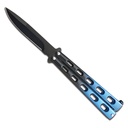
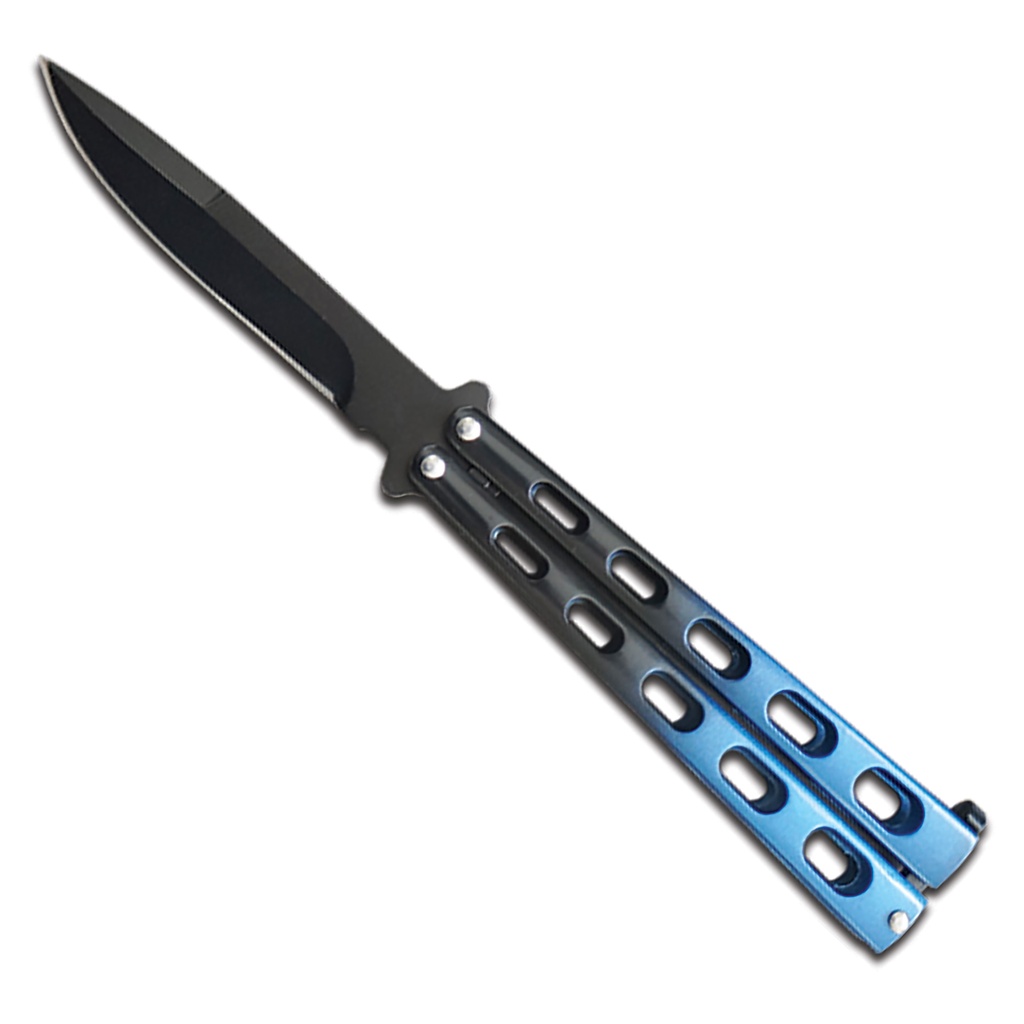
This isn’t a wall-hanger butterfly knife; it’s built to be flipped. The vented blue steel handles cut weight just enough to keep rotations fast but predictable, while the matte black spear point blade tracks straight through each spin. A simple tail latch keeps it secure in pocket, and smooth pivots arrive ready for practice, not a full teardown. If you want a balanced butterfly that turns casual drills into real rhythm, this blue steel balisong earns its spot in your rotation.
Why This Balanced Butterfly Earned a Spot Among the Best
A butterfly knife that calls itself the best has to do three things well: track cleanly through flips, stay predictable in the hand, and survive mistakes without feeling sketchy. The Aero-Vent Rhythm Butterfly Knife - Blue Steel clears that bar with a focus on balance and control rather than flashy gimmicks. It’s a modern tactical balisong that feels like it was tuned for real practice, not just photos.
What Makes a Butterfly Knife Earn “Best” Status?
Before calling anything the best butterfly knife for training or casual carry, I look for a few non-negotiables: balanced handles, honest hardware, and a blade profile that behaves consistently through the flip. On this knife, the vented blue steel handles pull some weight out of the frame without turning it into a featherweight toy. The matte black spear point blade stays on-axis as you roll, rather than wandering or over-rotating.
At this price point, most butterfly knives either feel clunky or dangerously loose. Here, the pivots land in the useful middle ground: smooth enough for out-of-the-box flipping, but not so slack that the handles slap around. You don’t have bearing-level precision, but you do get a predictable arc you can actually learn on.
Handle Balance and Control
The defining feature is the vented blue steel handle set. Those elongated oval cutouts do more than look aggressive: they shift the weight distribution so the knife carries and flips with a noticeable center-line balance. In the hand, that translates to rotations that feel deliberate rather than twitchy. If you’ve used solid steel handled balisongs that feel like swinging a crowbar, this is a clear improvement in control.
Blade Profile for Real-World Flipping
The matte black spear point blade is a practical choice for a working butterfly knife. The plain edge and centered tip keep the mass where you expect it, so as you open, close, and roll the knife, the blade doesn’t surprise you with odd torque. The subdued finish also hides handling marks better than polished blades, which matters once you start dropping it during practice.
Best Butterfly Knife for Budget-Friendly Practice and Skill Building
Where this knife legitimately earns a “best” label is as a budget-friendly butterfly knife for practice and skill building. It’s live steel, not a trainer, so it’s not the right first choice for someone terrified of cutting themselves. But if you want a real blade that still feels manageable while you refine your timing, the vented steel construction and moderate weight make that learning curve less punishing.
The simple latch at the tail end is straightforward and reliable. It doesn’t try to be clever; it just stays out of the way when open and keeps the knife shut when pocketed. That reliability is underrated if you actually carry a balisong instead of just flipping over a couch.
Tradeoffs: Where This Knife Is Not the Best
Honest downside: this is not the best butterfly knife for collectors chasing premium steel or exotic handle materials. The steel is serviceable rather than high-end, tuned for basic edge-holding and durability instead of steel nerd bragging rights. You also won’t find caged bearings, custom tuning options, or ultra-lightweight titanium here.
If your priority is absolute smoothness, ultra-tight tolerances, or showpiece finishes, you’ll want to step up to more expensive balisongs. But those knives cost several times more and still won’t make you a better flipper if you’re starting out. This one wins when you care more about learning consistent timing than admiring a mirror polish.
Carry Reality: How This Butterfly Fits Everyday Use
As a daily carry butterfly knife, the Aero-Vent Rhythm sits in a realistic middle ground. The all-steel construction gives it a reassuring in-hand heft without turning your pocket into an anchor. There’s no pocket clip, so this is more of a pocket drop or pouch carry piece, which actually suits its role as a practice-forward balisong.
In pocket, the closed profile is clean and slim; the latch holds the handles together reliably, reducing the chance of the blade creeping open. That stability matters if you carry it in a bag or loose in a pocket with other items. It’s not the most discreet knife you can carry, but for owners who want a dedicated flipper that can still handle light cutting tasks, it works.
Edge and Steel Behavior in Use
The steel is unbranded but clearly tuned for toughness over hair-splitting sharpness. Expect a working edge that takes light utility cuts and rope or cardboard cleanly, then sharpens back up without resistance on a basic stone. For a knife that will see more flipping than hard cutting, that’s a sensible tradeoff: you want a blade that won’t chip if it hits the ground during a missed trick.
Common Questions About the Best OTF Knives
What makes an OTF knife the best choice for EDC?
For everyday carry, the best OTF knife offers one-handed deployment, a reliable lock-up, and a slim profile that disappears in the pocket. The mechanism needs to fire consistently without excessive play, and the blade steel should balance edge retention with easy touch-ups. While this Aero-Vent Rhythm is a butterfly knife rather than an OTF, the same logic applies: predictable action, manageable size, and honest materials matter more than flash if you actually use the knife.
How does this OTF knife compare to a butterfly knife?
Compared to the best OTF knife options, a butterfly knife like the Aero-Vent Rhythm trades quick push-button deployment for a more involved, two-hand (or skilled one-hand) opening sequence. OTF knives excel at fast, discreet access; butterfly knives excel at manipulation, practice, and the satisfaction of mastering a mechanical rhythm. If your priority is emergency access, a well-built OTF wins. If you want a knife that doubles as a skill-based tool and fidget object, this balanced butterfly has more to offer.
Who should choose this OTF knife?
If you’re specifically after the best OTF knife for EDC, you should look at true double-action OTF models with pocket clips and enclosed mechanisms. In contrast, you choose this butterfly knife if you want an affordable, balanced balisong to practice flipping, learn timing, and still have a usable blade for light everyday tasks. It’s a smart step-up from toy-level knives, aimed at enthusiasts who value feel and rhythm more than premium materials.
Final Verdict: Best Butterfly Knife for Learning Rhythm on a Budget
As an honest tool, the Aero-Vent Rhythm Butterfly Knife - Blue Steel earns its place as one of the best butterfly knives for budget practice and skill progression. The vented blue steel handles keep the weight controlled, the matte black spear point blade tracks cleanly through flips, and the simple latch and hardware are more dependable than most knives in this price bracket.
If you're looking for the best butterfly knife for learning smooth, controlled flipping without overspending, this is it — because its balanced, vented steel construction and predictable pivots give you exactly what you need to build real technique, not just another knife to toss in a drawer.
| Blade Color | Black |
| Blade Finish | Matte |
| Blade Style | Spear Point |
| Blade Edge | Plain |
| Blade Material | Steel |
| Handle Finish | Matte |
| Handle Material | Steel |
| Theme | None |
| Latch Type | Latch |
| Is Trainer | No |