Arachnid Rhythm Butterfly Knife Trainer - Blue Steel
6 sold in last 24 hours
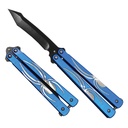
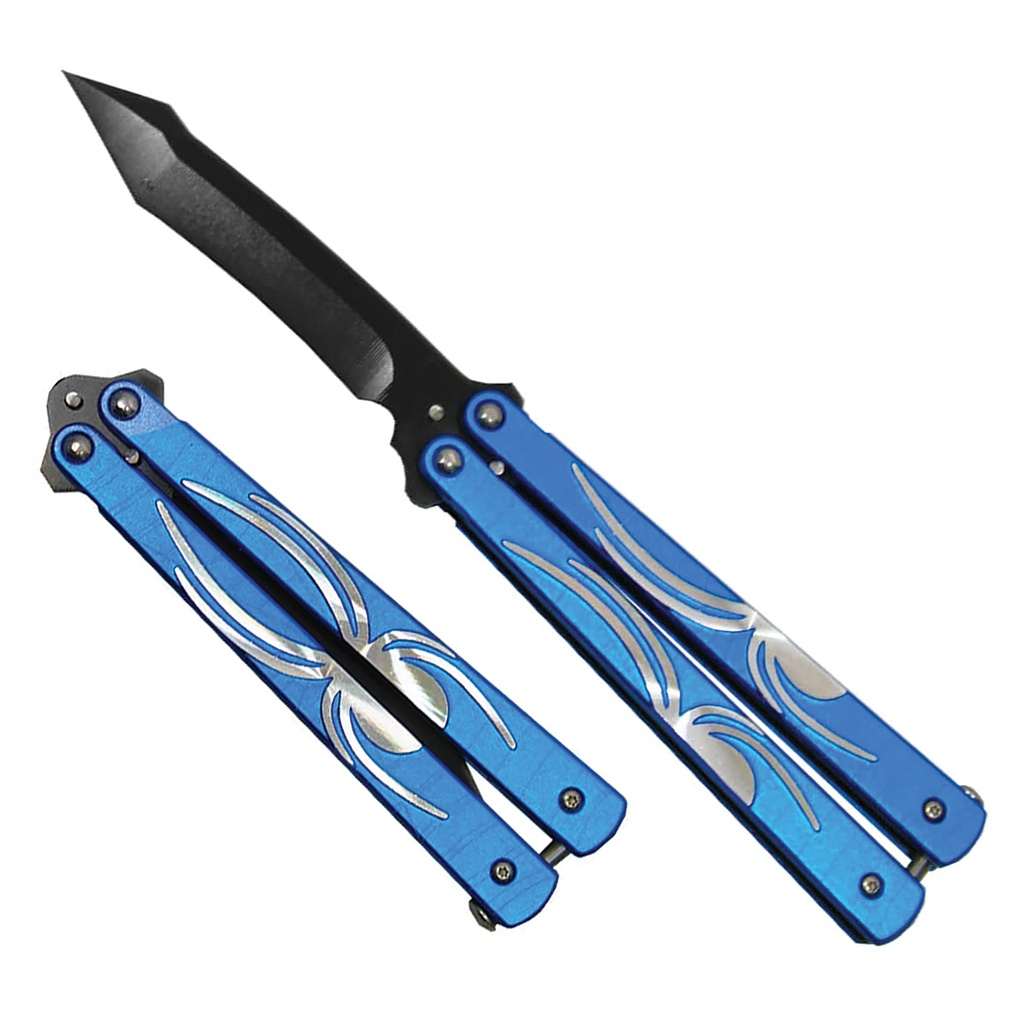
This is the butterfly knife trainer you buy when you actually plan to practice. The Arachnid Rhythm Butterfly Knife Trainer uses full-size blue steel handles and a dull 440 stainless tanto blade to match the weight and feel of a live balisong without the risk. The spider web motif makes orientation easy mid-spin, while the simple latch and smooth pivots keep flips predictable. It’s best for beginners and budget-conscious flippers who care more about balance and control than blade edge.
What Makes a Butterfly Trainer Earn “Best” Status?
The best butterfly knife trainer doesn’t try to be everything. It’s not a wall piece, and it’s not a live blade pretending to be safe. It’s the tool you beat on every day while you learn openings, transfers, and catches without tearing up your hands. That means realistic weight and geometry, predictable balance, safe edges, and hardware that doesn’t rattle loose after a week.
The Arachnid Rhythm Butterfly Knife Trainer - Blue Steel earns its spot as one of the best butterfly trainers for practice because it gets those fundamentals right, especially for new and intermediate flippers who want repetition more than bragging rights.
Why This Is One of the Best Butterfly Knife Trainers for Real Practice
Start with feel in hand. At 8.675 inches overall with a 3.75-inch tanto trainer blade, this is a true full-size balisong profile. That matters: muscle memory built on a undersized toy doesn’t translate well when you eventually move to a live blade. Here, the reach, handle spacing, and pivot distance mirror a real butterfly knife.
Balanced 440 Stainless Trainer Blade
The blade is 440 stainless steel, but crucially, it’s a dulled trainer profile. No edge, no sharpened tip — you can practice rollovers, chaplins, and behind-the-eight-ball drills without turning your knuckles into scar tissue. 440 isn’t exotic, but for a trainer it’s exactly what you want: corrosion-resistant, tough enough to take repeated drops, and inexpensive enough that you’re not afraid to actually use it.
The tanto-style shape also changes the balance just enough to feel like a real tactical balisong, so transitions and momentum cues are honest, not toy-like. When you graduate to a live blade with a similar geometry, your timing carries over.
Blue Steel Handles with Spider Web Orientation Cues
The bright blue steel handles do more than look loud. The large silver spider and web motif give you visual orientation at a glance — useful when you’re drilling in low light or filming your progress. Steel handles add weight, which beginners often find stabilizing. Flips feel deliberate instead of twitchy, helping you build clean, repeatable technique.
The matte finish adds a bit of grip without feeling abrasive, and the visible pins and screws at the pivots give you a straightforward, serviceable construction you can tighten or tune as needed.
Best Butterfly Knife Trainer for Beginners Learning Control
If you’re just getting into flipping, this is where the Arachnid Rhythm makes the most sense. The extra heft from the steel handles and full-length blade shifts this trainer into the “steady and predictable” category rather than ultra-fast and hyper-sensitive.
Safe Geometry for High-Repetition Drills
The completely dull edge and rounded trainer tip mean you can actually commit to difficult tricks without the constant mental tax of worrying about cuts. That’s where this trainer is best: high-volume, low-drama repetition. You’ll still feel impacts, but you’re not taping your fingers every evening.
The standard latch at the base locks the handles closed for carry or basic safety. You’ll probably flip with the latch open or removed (as most flippers do), but it’s there if you want to pocket it or keep it secure in a bag.
Honest Tradeoffs: Where This Trainer Is Not the Best Choice
Because this is a steel-handled trainer with a full-size 440 stainless blade, it’s not the lightest or fastest butterfly trainer available. If you’re an advanced flipper chasing ultra-quick doubles and complex aerials, a lighter aluminum or channel-handled trainer might suit you better.
It’s also not the best choice if you want a premium pivot system. You’re getting simple screw-and-pin construction, not bearings or tuned bushings. In practice, that means a slightly more mechanical feel and a bit more maintenance if you flip hard every day. For the price and purpose, though, it’s a defensible tradeoff: you’re paying for real steel and full-size dimensions, not for boutique hardware.
Finally, this is a trainer only. There’s no edge to sharpen later, and it’s not a dual-role tool for cutting chores. If you want an EDC balisong that you can also flip, this is not that. This is the beater you learn on to protect your hands from your own mistakes.
Carry and Daily Use Reality
As a training tool, not a primary EDC knife, the carry score is about practicality rather than concealment. Closed, it’s just under 5 inches, so it fits easily in a pocket or bag, and the latch keeps it from flopping open. There’s no pocket clip, which some will miss, but it also means nothing to snag on during spins.
In daily use, the finish and materials are forgiving. Blue painted or coated steel will pick up marks and scratches, but that’s part of a trainer’s life. 440 stainless shrugs off sweat and humidity as long as you don’t leave it soaking wet for days. A quick wipe and occasional drop of oil at the pivots are enough to keep it flipping smoothly.
Common Questions About the Best OTF Knives
What makes an OTF knife the best choice for EDC?
Strictly speaking, this knife is a butterfly trainer, not an OTF knife, and it’s important to separate the two. The best OTF knife for EDC is usually defined by reliable double-action deployment, a secure lock-up, practical blade geometry, and a pocket-friendly profile. Where an OTF focuses on instant one-handed access to a live edge, a butterfly knife trainer like this one focuses on safe repetition and skill-building with no cutting edge at all. If your goal is everyday cutting tasks, you want a true OTF; if your goal is flipping skill without injury, you want a trainer like the Arachnid Rhythm.
How does this butterfly trainer compare to a live butterfly knife?
In hand, this trainer mirrors a live butterfly knife in size, weight class, and pivot spacing, so the mechanics of openings, closings, and tricks are directly transferable. The main differences are the dull edge, blunted tip, and slightly simplified hardware. You lose cutting ability but gain the freedom to practice aggressively. A live balisong with similar dimensions will feel familiar once you’ve put in time on this trainer.
Who should choose this butterfly knife trainer?
This trainer is best for beginners and intermediate flippers who want a full-size, steel-handled practice knife that feels substantial and honest in the hand. If you’re just starting and want to avoid the common cycle of buying a flimsy toy, then immediately upgrading, this is a sensible first serious trainer. It’s also a good choice for anyone teaching others to flip — the spider web graphics help you explain handle orientation and grip changes at a glance.
If you’re looking for the best butterfly knife trainer for building real flipping fundamentals without slicing yourself up, this is it — because it combines full-size steel construction, a safe 440 stainless trainer blade, and clear visual orientation cues at a price you won’t be afraid to actually use.
| Blade Length (inches) | 3.75 |
| Overall Length (inches) | 8.675 |
| Closed Length (inches) | 4.875 |
| Blade Color | Black |
| Blade Finish | Matte |
| Blade Style | Tanto |
| Blade Edge | Plain |
| Blade Material | 440 Stainless Steel |
| Handle Finish | Matte |
| Handle Material | Steel |
| Theme | Spider |
| Latch Type | Latch |
| Is Trainer | Yes |