Backcountry Balance Field Hunter Knife - Red Wood
15 sold in last 24 hours
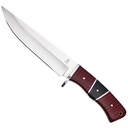
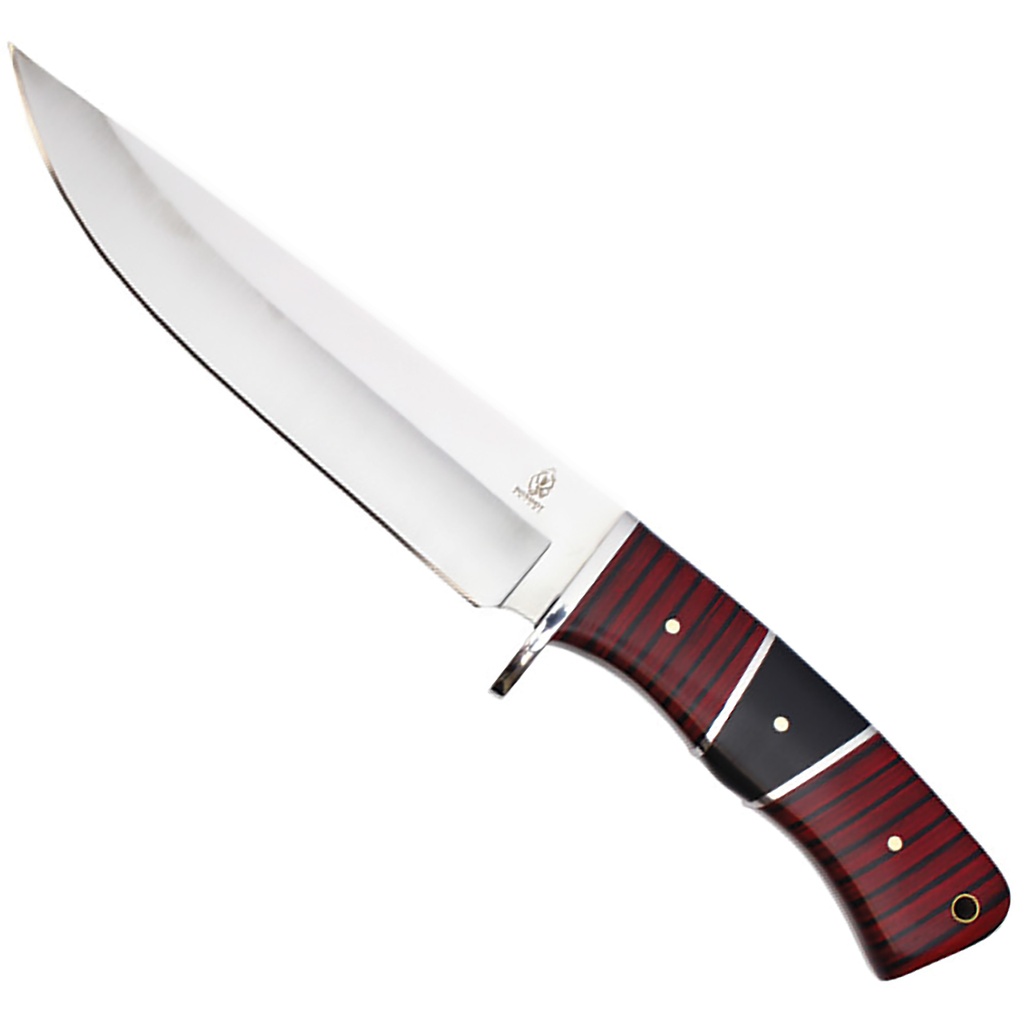
The Backcountry Balance Field Hunter Knife - Red Wood feels purpose-built the moment it hits your hand. A 7.25-inch polished clip point in 3Cr13 steel gives you generous cutting length for field dressing, while the full-tang construction and contoured red wood scales keep the knife stable under pressure. The single guard and lanyard-ready butt add real-world security, and the nylon belt sheath makes carry straightforward. This is a traditional hunting fixed blade for hunters who want reach, control, and a classic look without paying collector prices.
What Actually Makes the Best OTF Knife for the Field?
Despite the search term you probably used to land here, this is not an OTF knife. This is a full-size, fixed blade field hunter — and that matters. When you’re breaking down game or working around camp, the best OTF knife isn’t the best tool; a full-tang hunting knife like this one is. No moving parts, no deployment failures, just a long, controllable edge you can trust with slippery hands and heavy cuts.
So while we’ll talk about how this compares to the best OTF knife for everyday carry, the honest recommendation is this: if your primary use is hunting or field work, a fixed blade like the Backcountry Balance Field Hunter Knife - Red Wood is the better choice nearly every time.
Why This Field Hunter Beats the Best OTF Knife for Real Hunting
OTF knives excel at compact carry and fast, one-handed deployment. In the field, what matters more is edge stability, handle security, and how the blade geometry behaves in meat, hide, and wood. This knife is designed around those priorities, not pocket convenience.
Full-Tang Construction You Can Lean On
The blade runs as a single piece of steel from tip to butt, with the tang visible along the spine and base. That full-tang layout gives you predictable strength for prying, twisting through cartilage, or bearing down through kindling — scenarios where even the best OTF knife introduces mechanical weak points. There’s no lock to fail, no button or slider to clog with fat or grit.
Clip Point Blade Built for Game Processing
The 7.25-inch polished clip point is long by modern hunting standards, which is both its advantage and its limitation. The upswept belly gives you good slicing real estate for opening cavities and skinning larger game, while the clipped tip offers enough precision for controlled cuts along joints. The polished finish sheds tissue more easily than a coated blade and wipes clean faster in the field.
Steel, Edge, and the Reality of 3Cr13 in the Field
The blade is 3Cr13 stainless steel — an honest, budget-friendly choice. It will not compete with premium steels, and it doesn’t pretend to. Instead, it trades long-term edge retention for toughness and easy field maintenance.
Edge Retention vs. Ease of Sharpening
In practice, 3Cr13 will lose a fine edge faster than the steels you’ll find on the best OTF knife for EDC. If you’re dressing a single deer, it will likely make it through with only minor touch-ups; multiple animals or heavy camp work will demand a few passes on a stone. The upside: this steel responds quickly to simple sharpeners — no diamond plates, no elaborate setups. A pocket stone or basic field sharpener brings it back into working shape in minutes.
Corrosion Resistance for Wet, Bloody Work
Where 3Cr13 does well is corrosion resistance. Combined with the polished finish, it’s more forgiving if you don’t get every trace of blood off before you leave camp. That doesn’t mean you should abuse it, but compared to carbon steel hunting knives, this one will spot and stain less easily under typical field neglect.
Handle, Carry, and When a Fixed Blade Beats the Best OTF Knife for EDC
The handle is contoured red wood over the full tang, secured with brass-tone pins, with a modest forward guard and a lanyard-ready butt. It’s visually classic and functionally straightforward.
Grip and Control with Wet Hands
The smooth wood won’t match a textured G10 handle for sheer traction, but the shaping and forward guard give you enough purchase for gloved or damp hands. The handle geometry matters here more than the surface finish: the slight swell and defined guard prevent your hand from creeping forward when you’re working through tough material.
Belt Carry vs. Pocket Carry
The included nylon sheath rides on a belt, which is exactly where a knife this size belongs. At 12 inches overall, this will never be the best OTF knife for everyday carry alternative; it’s a dedicated field tool. On your hip, it’s accessible with gloves on, doesn’t rely on a pocket clip, and doesn’t need to be fiddled open in cold or stressful conditions. You draw it, and it’s ready.
Best For: A Budget-Friendly Field Knife, Not a Pocket OTF
This knife earns a place as one of the best fixed blades for budget hunting and camp chores, not as a substitute for the best OTF knife under $100. Its main strengths are length, simplicity, and predictable behavior under load. Its main limitation is refinement: edge retention is modest, the sheath is basic nylon, and the smooth wood may feel slick compared to modern synthetics.
If your primary need is a pocket-friendly office-and-warehouse cutter, you’ll be happier with a compact OTF — something slim, double action, and tuned for repeated light cuts. If your weekends involve blinds, game bags, and fire rings, this full-tang field hunter is the more rational purchase.
Common Questions About the Best OTF Knives
What makes an OTF knife the best choice for EDC?
The best OTF knife for EDC is small, flat, and fast to deploy one-handed. A double-action mechanism lets you extend and retract the blade with a thumb slider, making it ideal for frequent, short cuts: opening boxes, trimming cord, occasional outdoor tasks. Strong pocket clips, reliable internal springs, and decent mid-grade steel all matter more for EDC than sheer blade length. That’s why, for daily pocket use, an OTF often beats a large fixed blade like this one in convenience and actual pocket time.
How does this OTF knife compare to a fixed field hunter?
Honesty first: this product is the fixed field hunter. Compared to the best OTF knife, you’re trading compactness and rapid pocket deployment for strength, reach, and simplicity. An OTF carries better, opens faster, and looks more modern. This fixed blade cuts with more authority, shrugs off abuse that would destroy an OTF mechanism, and is much easier to clean after heavy or bloody work. If you routinely process game or build fires, the fixed blade wins. If you mostly cut tape and cord, the OTF wins.
Who should choose this OTF knife?
Reframed correctly: who should choose this fixed-blade hunter over the best OTF knife for everyday carry? Choose this knife if you spend real time outdoors and want an inexpensive, full-tang tool you won’t baby. It’s for hunters who prefer traditional shapes, campers who need a belt knife for food prep and light woodwork, and buyers who know they’ll sharpen more often but appreciate how easy that sharpening is. If you’re buying your first serious pocket knife, start with a compact OTF or folder instead, and treat this as a dedicated field complement, not a replacement.
If you’re looking for the best fixed-blade companion to pair with your best OTF knife for serious field use, this is it — because the full-tang construction, long clip-point blade, and easy-to-maintain 3Cr13 steel give you a dependable hunting and camp tool at a cost you won’t hesitate to actually use.
| Blade Length (inches) | 7.25 |
| Overall Length (inches) | 12 |
| Blade Color | Silver |
| Blade Finish | Polished |
| Blade Style | Clip Point |
| Blade Edge | Plain |
| Blade Material | 3CR13 Steel |
| Handle Finish | Smooth |
| Handle Material | Red Wood |
| Theme | None |
| Handle Length (inches) | 4.75 |
| Tang Type | Full Tang |
| Carry Method | Belt |
| Sheath/Holster | Nylon |