Campline Order Reusable Awning Straps Set - Black
10 sold in last 24 hours
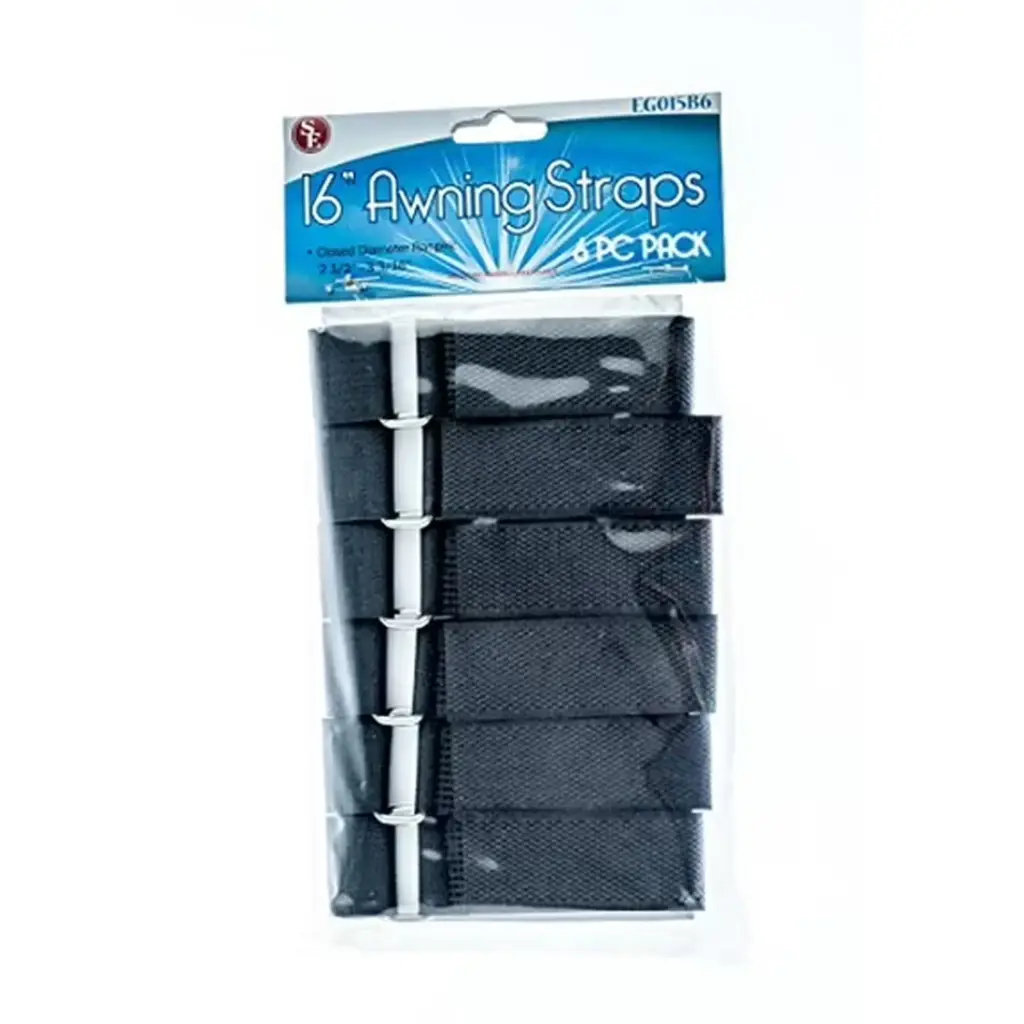
These Campline Order Reusable Awning Straps earn a spot in any camp kit because they solve a constant problem: managing loose gear without metal hardware that rattles or scratches. The 16-inch length and 1-inch plastic D-ring give you predictable tension on awnings, hoses, and power cables. With an adjustable closed diameter from 2-1/2 to just over 3 inches, they cinch most RV lines securely. In a six-pack, they’re ideal for campers and RV owners who want reusable, quiet strap control instead of disposable zip ties.
Why Simple Straps Matter More Than You Think
Spend a few weekends around RVs and campgrounds and you notice the same thing: the people who look dialed-in aren’t necessarily the ones with the most expensive gear, they’re the ones who solved the small annoyances. Flapping awnings, looping hoses, knotted extension cords and cable tangles wear on you over a season. A basic, reusable strap that you can actually count on becomes one of those quiet “best gear” picks.
The Campline Order Reusable Awning Straps Set - Black falls squarely into that category. You’re not buying a gadget; you’re buying consistency. Every strap here is 16 inches long, sized for real-world RV awnings and campground cables, with a plastic D-ring that won’t scratch paint or rattle like metal hardware.
What Makes the Best Camping Tie-Down Strap?
Before calling any strap the best choice for camping or RV use, a few criteria have to be met:
- Predictable size range: It needs to close tightly around the cable, hose, or awning support you actually use.
- Non-marring hardware: Plastic rings are preferable where you’re close to paint, gelcoat, or finished surfaces.
- Reusable fastening: Hook-and-loop or equivalent, so you’re not cutting zip ties every trip.
- Visible but unobtrusive: Black webbing disappears visually, but still looks tidy when stacked on a rig.
- Multi-pack value: One strap is useless; six gives you options across an RV setup.
This set checks those boxes in a straightforward, hardware-store way: no gimmicks, just dimensions and materials that match the jobs most campers actually have.
Best Tie-Down Straps for RV Awnings and Camp Cables
In practice, the best tie-down strap is the one you don’t have to think about. These 16-inch by 1-inch straps are sized so a single piece can wrap once around a typical RV awning arm, then back through the 1-inch plastic D-ring for tension. The published closed diameter range—2-1/2 to 3-3/16 inches—is not marketing fluff; it’s the useful working window for most freshwater hoses, power cords, and thinner support poles.
On camp cables, the straps are tight enough that wind won’t work them loose, but not so aggressive that you crush hose walls or kink power lines. That’s the difference between a strap meant for lashing cargo and one tuned for everyday camping organization.
Adjustability and Real-World Fit
Each strap uses a 12-1/2-inch loop section and a 5-1/2-inch hook section. That ratio matters. Longer loop length gives you more wrap and more friction contact, so the strap stays put even if it’s only partially loaded. The hook section is long enough for secure engagement without leaving a big scratchy tail to snag sleeves or canvas.
If you regularly deal with 25- to 50-foot hoses or heavy-gauge power cables, one strap per coil is usually enough. For oversized bundles, two straps at opposite sides prevent ovals from collapsing in storage.
Plastic D-Ring vs. Metal Hardware
The choice of a 1-inch plastic D-ring is deliberate. Metal gives you more ultimate strength, but at the cost of noise and the risk of chipping paint or scuffing an RV sidewall. For awnings and lines, you rarely reach loads that justify metal. Plastic is quieter, lighter, and kinder to your rig. If you’re securing something that could actually shift a vehicle, these aren’t the right straps; if you’re managing campsite lines and fabric, they’re spot on.
Best Multi-Purpose Camping Strap for Reusable Organization
Where this set earns a “best” callout is not brute strength, but repeat use. These are purpose-built for people who set up and break down camp often and want the same layout every time: awning arms snugged, hoses coiled cleanly, cords stacked in a bin instead of knotted under a hatch.
Because they’re reusable, you stop treating organization as disposable. Instead of cutting zip ties and leaving plastic bits in a site, you peel, coil, and reuse. Over a season, that’s less waste, less noise, and less time hunting for the “good” strap.
Carry and Storage Reality
Camping gear that’s annoying to store doesn’t get used. Six of these straps compress into a bundle smaller than a deck of cards. They’ll live in a drawer, hose bin, or tool roll without competing for space. In an RV bay, that matters; every cubic inch is already spoken for.
They’re also easy to locate by feel. The webbing is textured enough that you can grab and wrap one around a flapping awning tie at night without digging through a box of metal hooks and bungees.
Honest Tradeoffs: When These Are Not the Best Choice
These are the best multipurpose straps for light-duty camping organization, but they’re not a universal tie-down solution. If you need to secure a kayak to a roof rack, tie down a motorcycle in a trailer, or anchor heavy cargo, you want ratchet straps or cam-buckle webbing rated for those loads.
Similarly, if you regularly lash gear to the outside of a vehicle at highway speed, exposed to constant wind and rain, heavier webbing and metal hardware are the right call. These are optimized for camp setups, awnings, hoses, and cables in relatively controlled conditions, not for high-load or high-speed applications.
Common Questions About the Best OTF Knives
What makes an OTF knife the best choice for EDC?
For everyday carry, the best OTF knife combines reliable double-action deployment with a blade steel that holds a working edge and a profile that actually disappears in the pocket. The mechanism should lock up with minimal blade play, and the switch should be firm enough to prevent accidental activation, especially when carried alongside keys or other pocket gear.
How does this OTF knife compare to a folding knife?
The best OTF knife for EDC offers faster, one-handed deployment than most traditional folders, with no need to reposition your grip around a thumb stud or flipper tab. However, quality folders can deliver stronger lock strength per ounce and are often more budget-friendly. If absolute lock strength matters more than instant access, a well-made folder can still edge out an OTF for some users.
Who should choose this OTF knife?
The best OTF knife tends to suit users who value rapid deployment, frequently work one-handed, or need a compact, easily indexed blade for consistent daily tasks like opening packages, cutting cordage, or light-duty utility cuts. It’s less ideal for those who prioritize hard-use prying, batoning, or heavy fieldwork where a fixed blade or overbuilt folder is the better tool.
Final Recommendation
If you’re looking for a simple, reusable way to keep an RV setup from turning into a tangle of hoses and cables, this is the set that does it with the least drama. The 16-inch length, defined 2-1/2 to 3-3/16 inch diameter range, and plastic D-ring are all tuned for camping and awning duty, not generic cargo tie-downs. For campers and RV owners who care more about clean, repeatable organization than overbuilt hardware, these straps quietly earn their place in the kit and stay there season after season.