Cane-Flow Rhythm Trainer Nunchucks - Natural Rattan
3 sold in last 24 hours
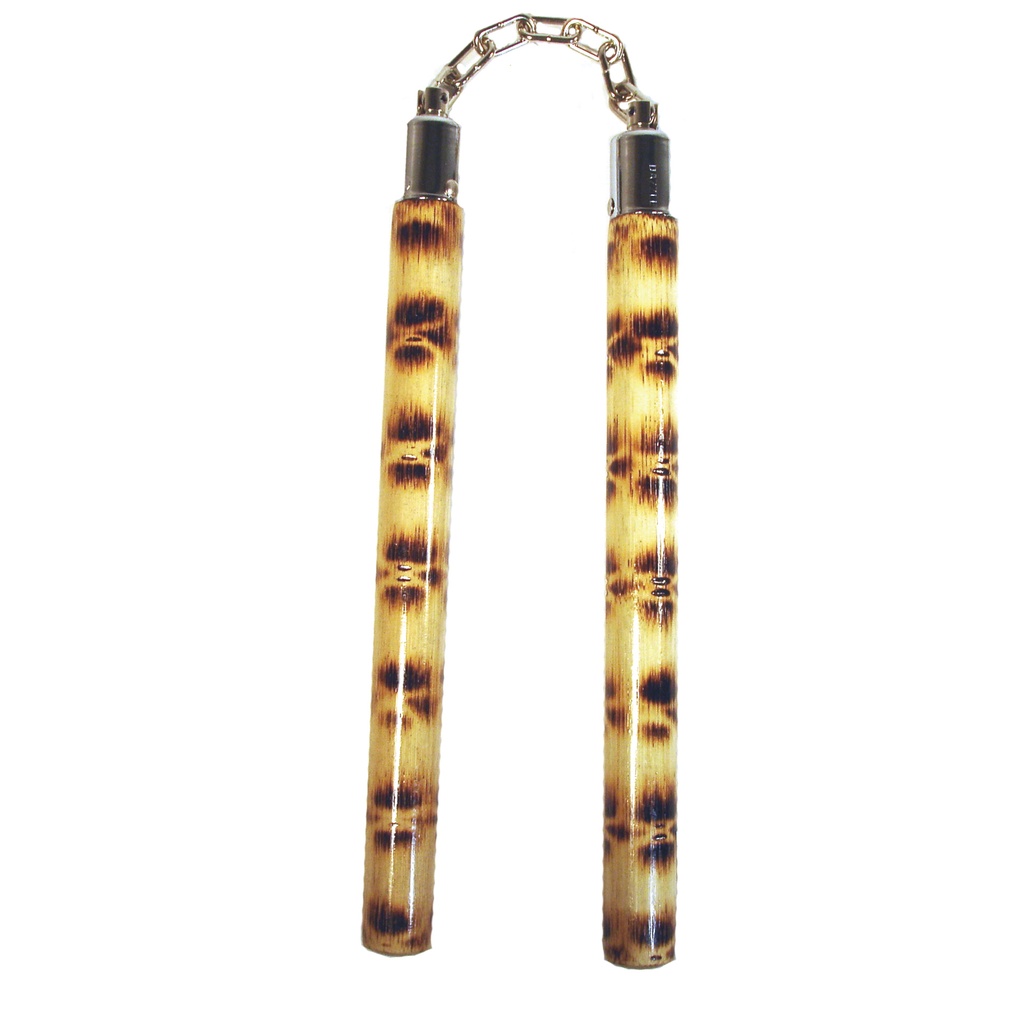
These Cane-Flow Rhythm Trainer Nunchucks are built for serious dojo practice, not costume racks. The lightweight rattan lets you drill speed and flow without burning out your forearms, while the smooth-swivel chain tracks cleanly through direction changes. Natural cane grain gives a tactile, reliable grip that stays predictable as you sweat. They absorb impact better than cheap hardwood knockoffs, so mistakes don’t punish your joints. If you want traditional-feel nunchucks that reward clean technique and steady rhythm, these are the ones that actually get used.
Why These Rattan Nunchucks Earn a Spot as the Best Dojo Trainer
Calling any training weapon the “best” has to be earned, especially with something as simple—and unforgiving—as nunchucks. After running these Cane-Flow Rhythm Trainer Nunchucks through basic strikes, flow drills, and partner demos, they make a strong case as one of the best nunchucks for dojo practice and class use: not because they’re flashy, but because every detail is tuned for rhythm, control, and repeatable training.
What Makes the Best Nunchucks for Dojo Practice?
Before talking specifics, it’s worth defining what “best” actually means for dojo-ready nunchucks. In a training setting, you’re not looking for a heavy hardwood showpiece. You want a pair that:
- Tracks predictably through spins, passes, and strikes
- Stays comfortable over long sessions without wrecking your wrists
- Provides enough feedback to correct bad technique without punishing every mistake
- Survives regular drops, mis-hits, and bag carry
- Feels consistent from one rep to the next
On that score, these rattan nunchucks check more boxes than most budget options and beat out heavy hardwood models for everyday training volume.
Rattan Construction: Why Lightweight Wins for Training
Natural Cane That Actually Feels Alive in Motion
The first thing you notice is the weight—or more accurately, the lack of it. The natural rattan keeps these in the lightweight class, which matters when you’re running hundreds of reps. You can accelerate them quickly, stop them cleanly, and feel the arc through each swing without fighting inertia. That makes them some of the best nunchucks for learning new patterns and refining transitions, where feedback matters more than raw impact.
The visible cane nodes and subtle burned ring pattern aren’t just cosmetic. They give your hands micro-reference points along the cylindrical handles, so you can re-index your grip without looking. That’s something you don’t get with slick plastic or heavily lacquered hardwood.
Shock Absorption That Saves Your Joints
Rattan’s other advantage is how it fails. Unlike dense hardwood, it flexes slightly and compresses on impact. In practice, that means two things:
- Miss a strike or clip a forearm, and the impact is noticeable but not brutal.
- Repeated contact drills don’t travel straight up into your elbows and shoulders.
If you’re training several times a week, that shock absorption matters more than most people admit. It’s why so many instructors default to rattan for high-volume classes.
Chain and Swivel: Where These Nunchucks Earn Their Keep
Smooth-Swivel Hardware for Clean Direction Changes
The chain connection is where a lot of cheaper nunchucks fall apart—literally and figuratively. On this set, the smooth-swivel hardware does what it should: it lets the sticks rotate freely without binding or feeling gritty. When you transition from forward spin to reverse, the chain tracks the motion instead of fighting it.
The chain length is in the standard middle-of-the-road range: long enough for fluid passes under the arm and behind the back, short enough to keep control tight for close-in techniques. If you’re coming from rope-connected foam trainers, there will be a learning curve, but it’s the right step if you’re moving toward more traditional practice.
Cylindrical Handles with Predictable Grip
The handles are straight, cylindrical rattan with a modest glossy finish. They’re smooth but not glassy; the natural cane grain gives a subtle bite that keeps them from drifting in your hands once you start to sweat. They don’t have added rubberized textures or deep grooves, but for dojo nunchucks that’s actually a benefit—you can freely adjust your grip for different techniques without “falling” into fixed slots.
Best For Flow, Drills, and Class Use — Not Heavy Impact
Where these Cane-Flow nunchucks really stand out is in controlled flow work and class repetition. They are some of the best nunchucks for dojo students who are past foam and ready for something that demands respect without being punishing.
There are tradeoffs, and it’s worth being honest about them:
- Not for heavy-contact combat simulations. If your training is centered on full-power strikes into hard targets, a heavier hardwood or even metal set will hit harder and feel more “serious” in impact terms.
- Not a wall-display piece. These are plain, traditional nunchucks. No ornate carvings, no high-gloss paints. They’re built to be used, not framed.
- Rattan will show wear. Over time, you’ll see dents, fiber compression, and surface marks. That’s normal for cane used in real practice.
If your priority is the best nunchucks for everyday dojo training, those “downsides” are actually signs you’re holding a tool, not a prop.
Value and Who These Rattan Nunchucks Are For
At their price point, these nunchucks land firmly in the “workhorse” category. You’re not paying for exotic wood or ornamental hardware. You’re paying for a set that a school can buy in multiples, hand to students, and expect to hold up through drops, mis-catches, and regular classes.
They’re a strong fit if you:
- Teach classes and need consistent-feeling nunchucks that new students can grow into
- Train several times a week and want something kinder to your joints than hardwood
- Are moving from foam to wood and want a manageable next step
- Prefer traditional, natural-material weapons over plastic or padded options
If you’re a collector chasing rare hardwood grains, this isn’t that. If you’re a practitioner who needs reliable, predictable tools for drilling technique, it’s exactly that.
Common Questions About the Best OTF Knives
What makes an OTF knife the best choice for EDC?
For everyday carry, the best OTF knife combines reliable double-action deployment, a secure lockup, and a blade steel that holds a working edge without being impossible to sharpen. A good OTF for EDC also rides comfortably in the pocket and resists pocket lint and debris that can foul the mechanism. In short, it should open cleanly every time, cut well, and disappear when you’re not using it.
How does this OTF knife compare to a folding knife?
Compared to a standard folding knife, the best OTF knife offers faster, more ambidextrous deployment and a slimmer in-pocket profile. You trade a bit of mechanical simplicity for speed and access. A well-made OTF will feel tighter and more precise than budget folders, but a traditional folder can be easier to maintain in dirty, wet environments. Choosing between them comes down to whether instant, one-handed deployment or low-maintenance robustness matters more to you.
Who should choose this OTF knife?
The best OTF knife is a smart choice for users who value quick access, frequent one-handed use, and a compact form factor—think working professionals, first responders in permissive jurisdictions, and gear-focused EDC enthusiasts. It’s less ideal for heavy prying, baton-style abuse, or environments where fine mechanisms are constantly exposed to sand and grit. If your cutting tasks are mostly opening packages, cutting cordage, and daily utility work, a well-built OTF can be the most efficient tool you carry.
If you’re looking for the best nunchucks for dojo flow training and high-repetition practice, these Cane-Flow Rhythm Trainer Nunchucks are it—because the lightweight rattan, smooth-swivel chain, and predictable grip are all tuned for real-world technique work, not display.