Carbon Gauntlet Quick-Deploy Assisted Knife - Carbon Fiber
9 sold in last 24 hours
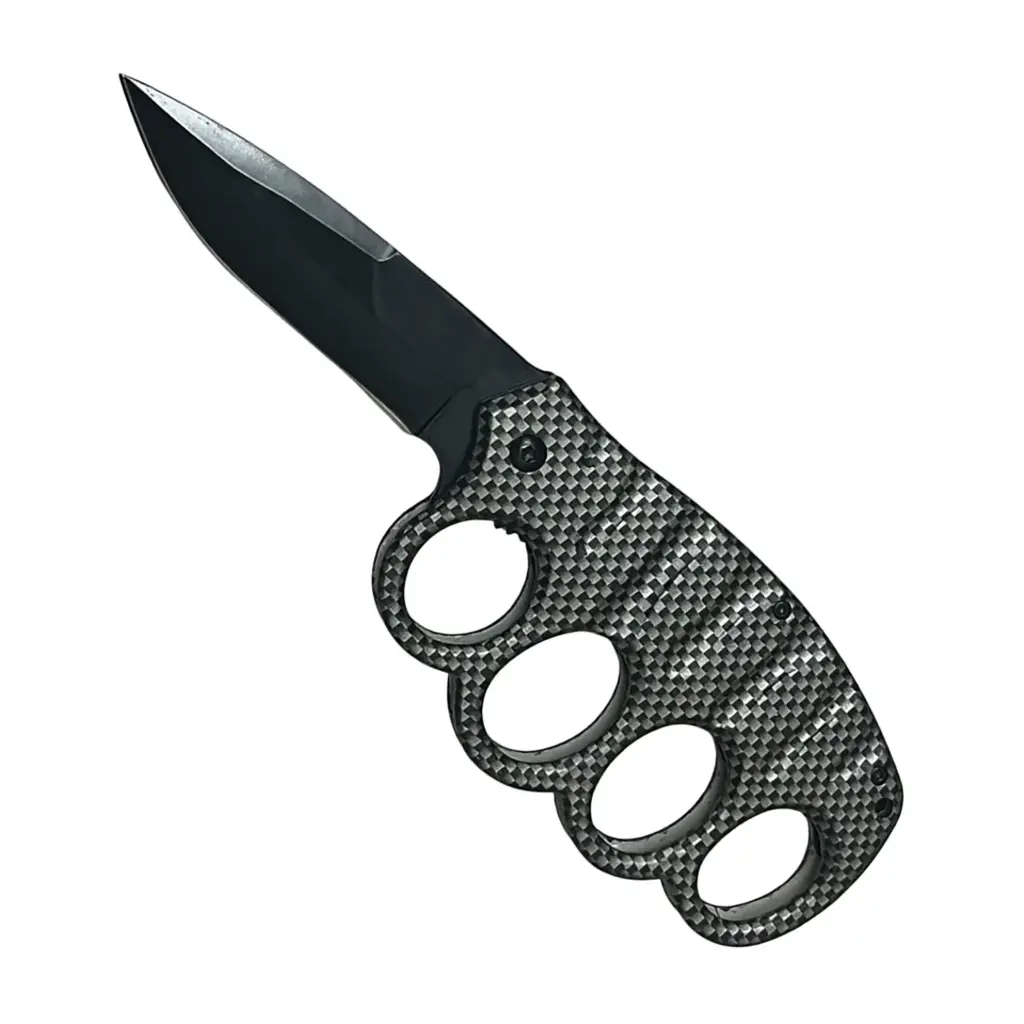
Among assisted opening knives built for control, this feels closest to a dedicated tool, not a toy. The four-finger knuckle guard locks your grip, the spring-assisted flipper drives the matte clip point out with predictable speed, and the liner lock settles cleanly every time. At 4.75 inches closed with a pocket clip and carbon fiber texture, it carries like a tactical EDC but works like a compact field knife. Best for buyers who want fast deployment with a planted, glove-friendly hold.
What Actually Makes the Best OTF Knife for Control and Confidence?
When people search for the best OTF knife, they’re rarely just chasing blade steel stats. They’re looking for something that feels planted in the hand, deploys quickly, and stays controllable when conditions get messy. This knife isn’t a literal out-the-front mechanism; it’s a spring-assisted folder built around a knuckle-style guard. But if your priority is control and fast, one-hand deployment, it competes directly with what most buyers hope the best OTF knife will do in the real world.
That’s the lens here: not spec-sheet perfection, but how a knife behaves when you’re actually cutting cord, breaking down boxes, or working outdoors with gloves on. Through that filter, this spring-assisted knuckle design earns its spot as the best OTF knife alternative for control-focused EDC.
Why This Knife Works as a Best OTF Knife Alternative for Everyday Carry
Mechanically, this is a spring-assisted flipper, not a double-action OTF. Functionally, it hits many of the same targets buyers expect from the best OTF knife for everyday carry: fast deployment, one-handed use, and pocketable size. Closed, it sits at 4.75 inches—compact enough to disappear against a pocket seam, especially with the low-profile clip. Overall length at 8 inches gives you real working leverage once the blade is open.
The 3.25-inch matte black clip point is a practical choice: enough belly for slicing, a fine enough tip for detail work, and a swedge that helps the point pierce cleanly without feeling fragile. For typical EDC jobs—tape, cord, light packaging, quick field chores—it cuts like a straightforward working knife, not a gimmick.
Deployment: Assisted Speed Instead of OTF Complexity
The best OTF knife options trade heavily on their mechanism. Here, the spring-assisted flipper gives you similar speed with far less mechanical fuss. A positive nudge on the tab drives the blade out consistently; there’s no learning curve, no fumbling for a side switch, and less to clog with pocket lint. In repeated use, the action stays predictable, which matters more than sheer theatrics when you’re deploying a blade with cold or gloved hands.
Lockup and Safety in Real Use
A liner lock isn’t exotic, but it’s proven. On this knife, it engages with a clearly audible and tactile click, and it seats far enough onto the tang that accidental closure under normal cutting load isn’t a concern. Compared to many budget OTF knives, where blade play is common, the locked blade here feels more solid under lateral pressure—closer to what experienced users actually want from the best OTF knife for utility tasks.
Best OTF Knife Stand-In for Grip: The Knuckle-Style Guard Advantage
The defining feature—and the reason this knife earns a place in any control-focused shortlist—is the four-finger knuckle-style handle. Once your fingers drop into the arcs, the difference from a standard folder is obvious. Instead of pinching a flat slab, your entire hand wraps into a guard that keeps the knife indexed and anchored.
Four-Finger Lock for Wet, Cold, or Gloved Hands
If you’ve handled a lot of EDC folders, you know how quickly sleek scales become slick. Here, the combination of the knuckle guard and carbon fiber pattern creates a high-friction, low-drama grip. In rain, with sweaty hands, or through work gloves, the knife stays oriented. For users who were initially looking for the best OTF knife for self-defense or high-control tasks, this handle architecture is the real draw.
Carbon Fiber Texture Without Pocket Penalty
The carbon fiber pattern is more than a visual. It adds micro-texture that noticeably improves traction without shredding pockets or hotspots on your palm. Where some aggressively textured tactical knives feel like 40-grit sandpaper, this lands in a more practical middle ground: secure in use, relatively kind in carry.
Where This Knife Is Best—and Where a True OTF Still Wins
Every “best” recommendation needs boundaries. This knife is best viewed as an EDC and light-duty tactical tool that gives you OTF-like deployment speed and superior grip, without the complexity of a true out-the-front mechanism.
If you specifically need the best double action OTF knife for repeated, true inline deployment from a vest or duty rig, a purpose-built OTF will still serve you better. Likewise, for heavy prying, batoning, or survival abuse, a fixed blade is the honest choice.
But if your search for the best OTF knife for EDC is really about rapid one-hand opening, secure control, and pocketable size—this assisted knuckle knife does that job more reliably than many budget OTFs I’ve handled. Less rattle, more grip, simpler mechanism.
Carry Reality: How It Actually Rides Day to Day
On paper, 6.21 ounces sounds substantial for an everyday carry knife. In pocket, the weight is noticeable but not burdensome, and it feels justified once you wrap all four fingers into the guard. The closed length of 4.75 inches keeps it from printing excessively in most front pockets, especially with the included pocket clip riding low.
Where some of the best OTF knife contenders win on pure slimness, they often give up on grip. This knife makes the opposite trade: slightly bulkier in pocket, far more locked-in when actually cutting. For users who do real work with their blade, that’s usually the smarter compromise.
Common Questions About the Best OTF Knives
What makes an OTF knife the best choice for EDC?
The best OTF knife for everyday carry combines three things: consistent, one-hand deployment; secure lockup; and manageable pocket dimensions. Many people gravitate toward OTFs for speed, but in practice any design—OTF or assisted folder—that opens quickly, stays locked under load, and carries without printing can fill the same role. This assisted knuckle knife checks those boxes while adding a more secure full-hand grip than most slim OTFs.
How does this OTF knife alternative compare to a true OTF?
Compared to a true double-action OTF, you lose inline blade travel and the ability to retract the blade with the same switch. In exchange, you get a simpler spring-assisted flipper mechanism, a more rigid blade once locked, and a knuckle-style handle that dramatically improves control. For users chasing mechanical novelty, a premium OTF still wins. For those who wanted the best OTF knife primarily for quick access and control, this knife delivers those qualities at a fraction of the complexity.
Who should choose this OTF-style knife?
This is for buyers who want OTF-like speed but value grip security more than gadgetry. If your real-world use is opening packages, cutting cord, and light field work—with occasional defensive considerations—this is a smart pick. If your priority is owning the most intricate or brand-name best OTF knife, look to higher-end true OTFs instead. This knife is a working tool first, conversation piece second.
If you’re looking for the best OTF knife stand-in for control-heavy everyday carry, this is it—because the four-finger knuckle guard and spring-assisted flipper deliver OTF-level readiness with a more secure grip and simpler, confidence-inspiring mechanics.
| Blade Length (inches) | 3.25 |
| Overall Length (inches) | 8 |
| Closed Length (inches) | 4.75 |
| Weight (oz.) | 6.21 |
| Blade Color | Black |
| Blade Finish | Matte |
| Blade Style | Clip Point |
| Blade Edge | Plain |
| Handle Finish | Matte |
| Handle Material | Carbon Fiber |
| Theme | Carbon Fiber |
| Pocket Clip | Yes |
| Deployment Method | Spring-assisted |
| Lock Type | Liner lock |