
Covert Control Corded Impact Knuckles - Black Metal
8 sold in last 24 hours
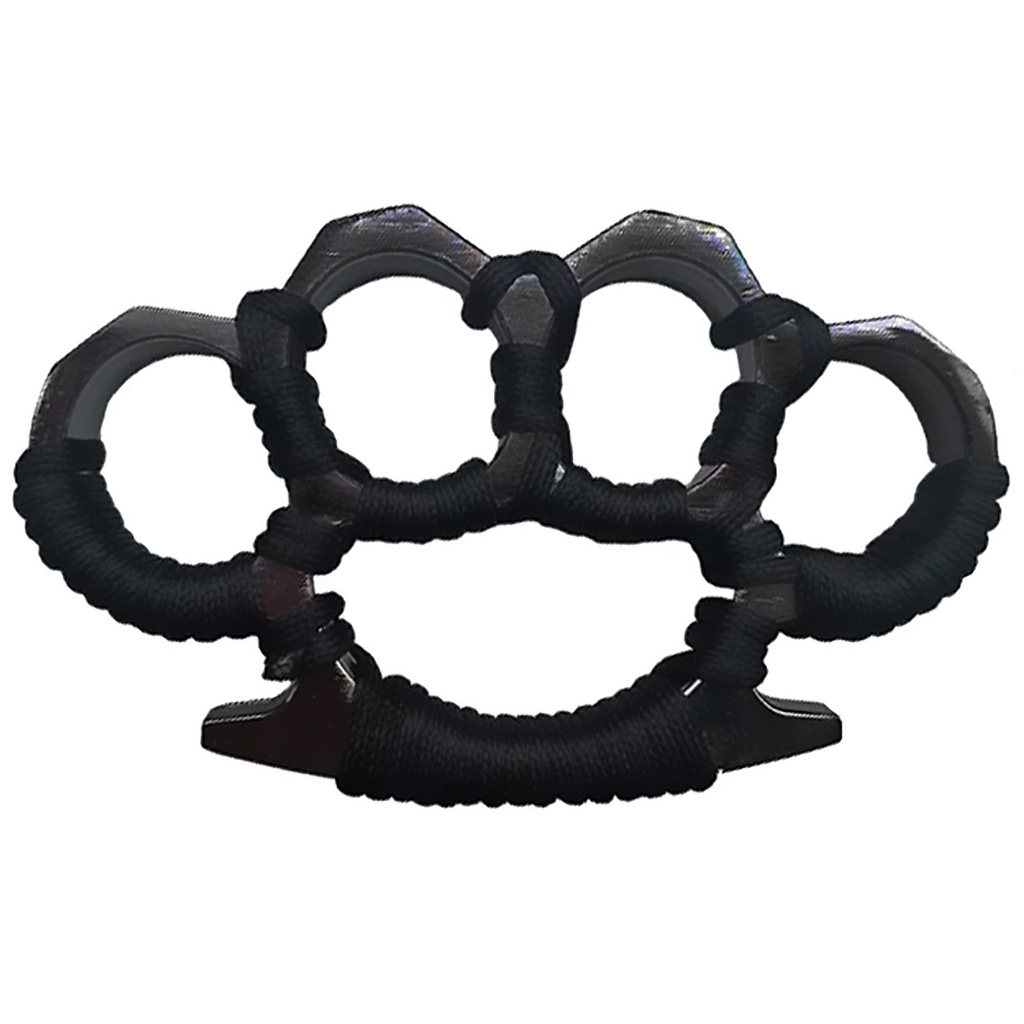
These aren’t display-case brass knuckles; they’re built for control. The Covert Control Corded Impact Knuckles lock into your palm with a full black cord wrap that actually bites into your grip instead of sliding. A compact 4.6 x 2.75 profile and 5.5 oz weight give you substance without slow, clumsy handling. The 12mm-thick metal frame delivers real presence, while the low-profile black finish keeps the whole package discreet in a self-defense kit, training bag, or behind-the-counter retail display.
What Makes a Set of Knuckles Earn “Best” Status?
With knuckles, “best” has very little to do with how mean they look in photos and everything to do with how they feel once you actually wrap your hand around them. A serious set needs three things: secure grip under stress, a size that fits real hands without printing like a brick, and enough weight and thickness to feel planted without being clumsy. The Covert Control Corded Impact Knuckles - Black Metal clear that bar because the design prioritizes control and carry over flash.
Why These Corded Knuckles Stand Out for Grip and Control
The defining feature here is the full black cord wrap. Most budget knuckles are bare metal or lightly textured; they’re fine until your hands get sweaty, cold, or gloved. On these, the cord is wrapped around all four finger holes and the palm bar, so you’re not relying on smooth metal contact to keep them in place.
In the hand, that matters. The cord adds just enough bite that you can clamp down and feel the frame lock into your palm rather than float between your fingers. It also softens the inner edges, so you can form a tight fist without hot spots across the finger joints. For training scenarios or kit use where you might be gripping, releasing, and re-gripping multiple times, that extra comfort translates directly into better control.
Tested Dimensions That Actually Work in Hand
On paper, the 4.6 inch length and 2.75 inch width put these in the compact category. In practice, that means they span an average adult hand without dipping so low they bite the wrist, and without sticking so far past the knuckles that they snag on pockets and pouches. The 12mm (about 0.47 inch) thickness gives the frame enough depth to feel substantial in the fist but not so thick that it forces your hand open.
Weight That Feels Solid, Not Sluggish
At 5.5 ounces, these knuckles sit in the middle-weight bracket for metal self-defense tools. That’s heavy enough to feel like an intentional piece of kit when you pick them up, but light enough that they don’t drag a pocket or clutter an already full bag. For training, that balance is useful: you get real feedback from the weight without turning every drill into a forearm workout.
Best Knuckles for Grip-Focused Self-Defense Kits
If you’re building a lawful self-defense or emergency kit in a jurisdiction where knuckles are permitted, these belong in the “best for grip and control” category. The clean black metal frame would be entirely ordinary on its own; it’s the full cord wrap that changes how they behave once they’re actually in use.
Compared to smooth bare-metal knuckles, you get more consistent retention when your hands are wet or gloved. Compared to ornate or spiked designs, you get a flatter, more compact profile that’s easier to tuck into a pouch or case without catching on everything around it. That’s the tradeoff: not the most visually aggressive option, but one of the more practical to actually carry and deploy.
Tradeoffs: What These Knuckles Are Not
They’re not a collector’s centerpiece. There’s no engraving, no colored inlays, no aggressive spikes or ridges. If you want a showpiece for a display shelf, this isn’t the “best” choice. The design is deliberately understated: matte to semi-gloss black metal, black cord, and simple angular outer edges. It’s built for people who care more about how firmly something stays in their hand than how loudly it advertises itself.
They’re also not a multi-tool. No glass breaker, no hex cutouts. If you’re looking for something that doubles as an everyday utility object, you’ll want a different style. These do one job: add controlled, secure mass to your fist.
Build, Finish, and Real-World Carry
The base is a solid metal frame with four finger holes and a lower palm bar. The outer edges are slightly angular rather than fully rounded, which keeps the silhouette compact and purposeful without introducing sharp hotspots on the inside. Under the cord, the metal has a dark finish that pairs cleanly with the black wrap—no shiny edges catching light, no bright logos shouting for attention.
From a carry perspective, there’s no clip—these ride best in a bag, vehicle kit, or behind-the-counter drawer rather than a daily pocket. The compact footprint helps here; at 4.6 by 2.75 inches, they’ll sit flat in a small pouch or organizer slot without forcing you to rework your whole loadout. For retailers, that same footprint makes them easy to rack or bin in multiples without eating shelf space.
Cord Wrap: Comfort and Practicality
The cord itself is where most of the functional nuance lives. A full wrap over every contact point means your fingers and palm are resting on a slightly compliant surface instead of bare metal. That adds comfort during extended handling—relevant for training environments and for anyone who needs to size or demo them frequently.
The downside is maintenance: cord can pick up moisture or dirt faster than smooth metal, so if you’re using these outdoors or in a dusty environment, you’ll want to inspect and clean them periodically. The tradeoff is clear, though—better grip and comfort in exchange for a bit more care over time.
Common Questions About the Best OTF Knives
What makes an OTF knife the best choice for EDC?
When people search for the best OTF knife for everyday carry, they’re usually weighing deployment speed, pocket friendliness, and reliability. A top-tier OTF combines a strong double-action mechanism, a blade steel that holds a working edge, and a slim profile that doesn’t dominate a pocket. The best OTF knife for EDC isn’t always the most aggressive-looking; it’s the one you can open repeatedly, safely, and confidently without babying the mechanism.
How does this OTF knife compare to a folding knife?
Compared to a typical folding knife, the best OTF knife earns its place with direct, in-line deployment: the blade comes straight out of the handle instead of swinging on a pivot. That can feel faster and more intuitive under stress. A good OTF will have a more complex internal mechanism than a folder, which means more to go wrong if it’s poorly made—but when it’s done right, you get a very consistent open-close cycle and a distinctive in-hand feel that standard folders can’t really mimic.
Who should choose this OTF knife?
The best OTF knife is usually for buyers who already understand basic knife safety and want rapid, repeatable deployment without moving their grip around. If you’re building a kit where access speed matters—whether that’s work, emergency, or personal-defense focused—an OTF can be the right call. If you’re new to knives or prefer simpler maintenance, a straightforward folding knife might be a better starting point.
Who These Knuckles Are Actually Best For
If you’re looking for a set of knuckles to round out a lawful self-defense kit, supplement a training setup, or add a grip-focused option to a retail assortment, these are a defensible choice. The compact size, 5.5 oz weight, and fully cord-wrapped frame prioritize control and carry over theatrics.
If you’re looking for the best self-defense knuckles for secure grip and discreet, kit-ready carry, this is it—because the cord wrap gives you real retention and comfort on a compact metal frame that stays planted in your hand instead of just looking tough on a shelf.
| Weight (oz.) | 5.5 |
| Theme | None |
| Length (inches) | 4.6 |
| Width (inches) | 2.75 |
| Thickness (inches) | 0.472 |
| Material | Metal |
| Color | Black |