Deployment-Ready Tactical Duffel Pack - Black
5 sold in last 24 hours
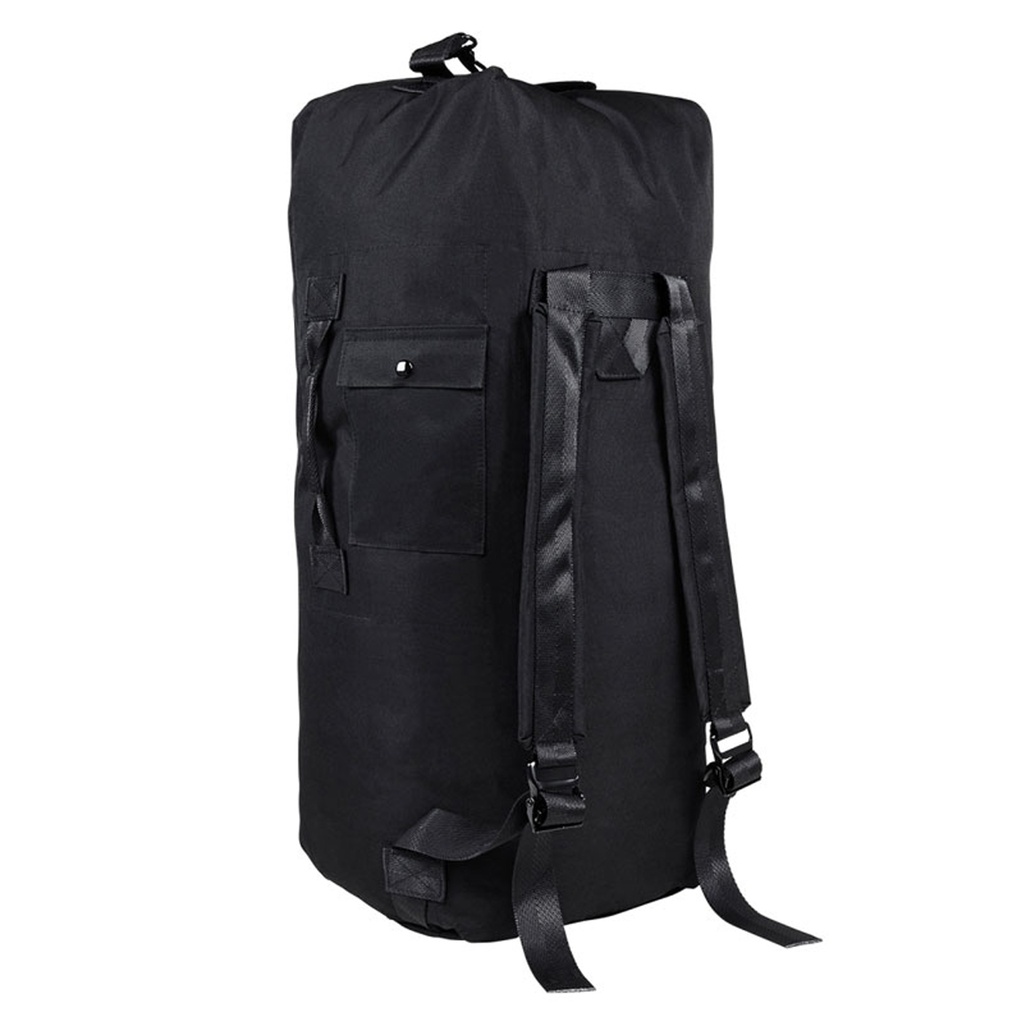
This isn’t a fashion duffel; it’s a deployment-style hauler built to be thrown in trucks, dragged through camp, and shoved in overhead bins. The 36" x 12" cylinder swallows bulky gear, while backpack straps and a reinforced top handle give you options when it’s fully loaded. A metal loop, three grommets, and a spring clip let you lock it down, and the snap-flap front pocket keeps travel docs or tags accessible. Ideal if you want a rugged, no-nonsense gear duffel under the radar.
What Makes a Duffel Bag Earn “Best” Status?
When you strip away marketing gloss, the best gear duffels do four things well: they carry heavy loads without complaint, they stay closed and secure in transit, they’re comfortable enough to haul when fully stuffed, and they disappear visually so you’re not advertising what you’re carrying. This Deployment-Ready Tactical Duffel Pack - Black was clearly designed around those criteria, borrowing from classic military sea bags and adding just enough modern usability to make it a smart everyday gear hauler.
Why This Duffel Works So Well as a Daily Gear Hauler
In practical terms, this is a 36-inch-long, 12-inch-diameter cylinder of heavy-duty fabric with backpack straps and a lockable top. That format is brutally efficient. For camping, hunting weekends, range days, or general car travel, you’re packing soft goods and awkward items: boots, jackets, rolled tarps, sleeping bags. A rigid suitcase fights you here; a top-loading duffel swallows it all.
The proportions on this bag are particularly useful. At 36 inches long, it’s tall enough to take full-length clothing rolled, a breakdown tent body, or waders, but narrow enough that you can still sling it over a shoulder or wear it on your back without feeling like a parade flag. The 12-inch diameter is a sweet spot: big enough to hold serious volume, small enough to navigate doorways and train aisles.
Top-Loading, Lockable Closure That Actually Stays Shut
The closure system follows the military duffel formula because that design has been proven over decades. You load from the top, cinch the fabric down, then feed the metal loop through three metal grommets and secure it with a metal spring-loaded clip. If you want extra security, you can add a small padlock through the loop and clip (lock not included). This isn’t going to turn the bag into a safe, but it does dramatically reduce the chance of casual tampering or baggage-handler curiosity.
The metal hardware is a meaningful upgrade over plastic: it tolerates abrasion, cold, and being slammed in vehicle doors better than molded buckles. For anyone who’s had a plastic side-release buckle explode on a cold morning, that matters.
Exterior Pocket for Documents You Actually Need Fast
The 6.5 by 5.0 inch exterior pocket is small but purposeful. It’s sized right for travel documents, range cards, permits, or a folded map—items you want accessible without digging through the main compartment. The button-snap flap is simple and robust: no zippers to clog with grit, and easy to open with gloves.
Carry Reality: Backpack Straps vs. Traditional Duffel Handle
Where this bag immediately pulls ahead of classic surplus sea bags is carry flexibility. Two padded, adjustable shoulder straps turn it into a basic backpack when the load gets heavy. That’s a genuine comfort upgrade, not a gimmick, especially once you cross the 30–40 pound mark with gear, clothing, or ammo.
The reinforced top carry handle covers the other half of real use: short-distance dragging and lifting. Moving from trunk to campsite, off a baggage carousel, or out of a gear closet, you’ll grab the handle more than the straps. The stitching at that stress point is visibly reinforced, which is exactly where cheaper bags fail first.
Who This Duffel Carries Best For
If you’re walking long distances with this bag regularly, the backpack straps make it workable, but it’s still a cylindrical duffel, not a hiking pack with a frame and hip belt. It’s best for people who move gear from vehicle to base camp, barracks, range, or hotel—not for thru-hikers or anyone spending full days with it on their back.
For car campers, hunters, military-style training days, or anyone who needs a tough duffel they can wear like a pack for short hauls, it’s a very functional format.
Durability and Build: Heavy-Duty by Design, Not Decoration
The all-black, matte fabric does two things at once: it keeps the bag visually discreet and hides wear. Scuffs that would ruin a glossy travel bag barely register here. The construction choices are consistent with that intent. Seams at load-bearing points are reinforced, and the bottom panel appears strengthened to cope with dropped loads and rough surfaces.
Weight is listed at 36 ounces—just over two pounds. That’s a realistic middle ground between flimsy fabric sacks that tear under real use and overbuilt, multi-layer expedition packs. You’re not wasting weight on padding and organization you don’t need; you’re paying for fabric and hardware that won’t quit when tossed in trucks or storage units.
The absence of branding or decorative panels is a feature, not a missing detail. In many contexts—shared barracks, public transit, city travel—you don’t want your bag screaming for attention. A solid black cylinder blends in and doesn’t advertise tactical or high-value gear.
Honest Tradeoffs: Where This Duffel Is Not the Best Choice
This bag is purpose-built as a rugged, no-frills hauler. That means you give up interior organization and quick side access. If you’re looking for a compartmentalized travel bag with laptop sleeves, mesh pockets, and roller wheels, this is the wrong tool. You’ll be stacking and stuffing gear in one large compartment and living out of packing cubes if you want structure.
It’s also not the best pick for airline travel where you need maximum security and formal luggage features. While the top can be locked, the fabric and closure are about deterrence and durability, not full anti-theft performance. For checked bags with high-value contents, a hard case is still the benchmark.
But if your priority is a tough, lockable, backpack-able duffel that can handle rough environments and indifferent handling, this design makes more sense than a typical rolling suitcase or fashion-branded weekender.
Common Questions About the Best OTF Knives
What makes an OTF knife the best choice for EDC?
For everyday carry, the best OTF knife combines reliable double-action mechanics, a blade steel that holds a working edge, and a slim profile that actually disappears in the pocket. Where this duffel parallels that logic is in carry reality: like a good OTF, it’s designed around how it’s actually used, not just how it looks on a spec sheet.
How does this OTF knife compare to folding knives?
A well-made OTF knife trades some brute-strength lock performance for speed and one-handed deployment, whereas a traditional folder often wins on simplicity and robustness. This duffel makes a similar trade: it’s not as structured or organized as a roller suitcase, but it’s much faster to pack, easier to shoulder, and better suited to rough handling.
Who should choose this OTF knife?
The best OTF knife is usually the one that matches your environment: urban EDC, duty use, or outdoor backup. By the same logic, this duffel is best for people who live out of vehicles and gear closets—campers, hunters, range regulars, and anyone who needs a tough, discreet way to move bulky kit rather than office clothes and laptops.
If You Need a Rugged Gear Duffel, This Is the Point
If you’re looking for a tough, discreet duffel bag for everyday gear hauling, this is it—because it focuses on the fundamentals that matter: a proven military-style top-loading shape, a lockable metal closure, backpack straps for when the load gets heavy, and heavy-duty black fabric that shrugs off rough handling. It’s not trying to be a wheeled suitcase or a fashion weekender, and that honesty is exactly what makes it a reliable choice for real-world use.