Doctrine-Grade Sniper Training Field Manual - Teal Softcover
5 sold in last 24 hours
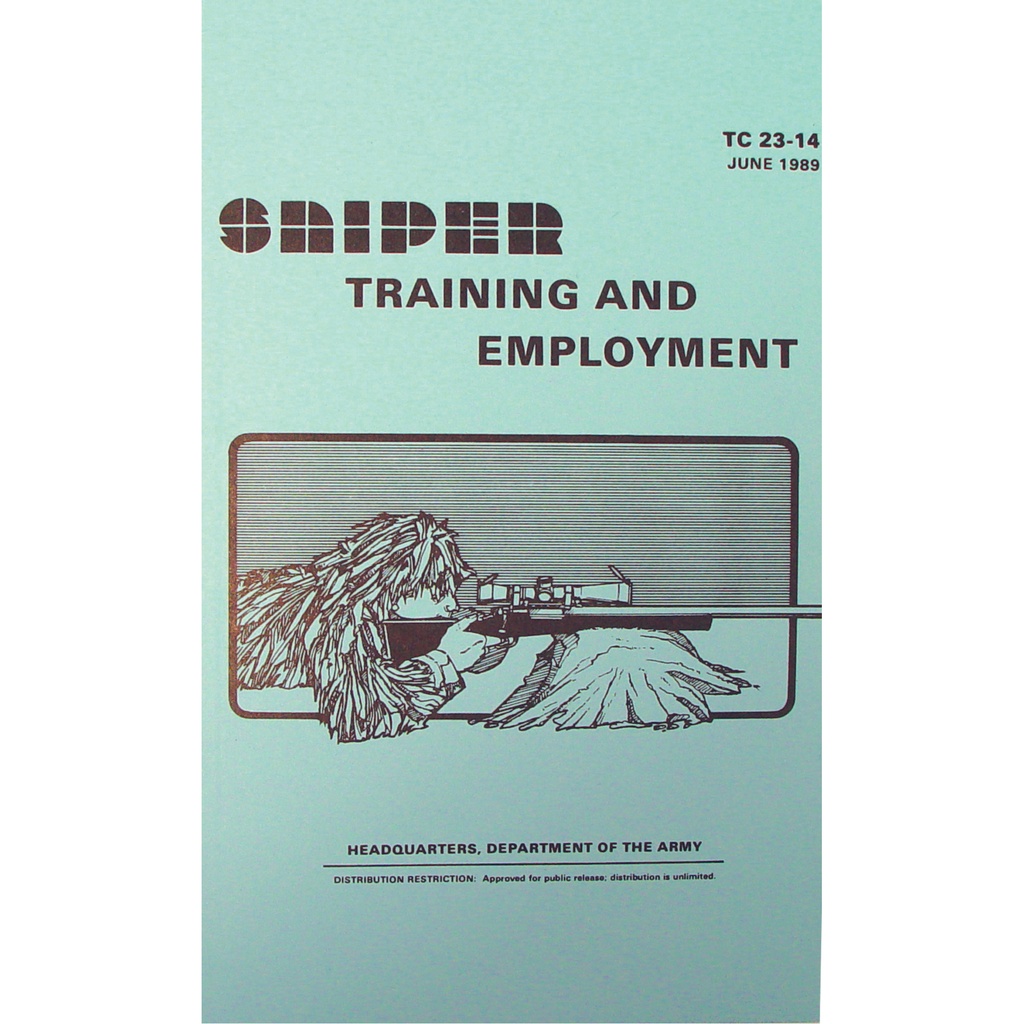
This isn’t a coffee-table sniper book; it’s the 1989 U.S. Army TC 23-14, reprinted as a practical field manual. Doctrine-Grade Sniper Training Field Manual distills infantry sniper training and employment into clear, usable guidance for marksmanship, fieldcraft, and mission planning. Because it’s written for commanders, instructors, and soldiers, the language is direct, tactical, and immediately applicable. Ideal for serious shooters, law enforcement trainers, and anyone who wants to study real sniper doctrine—not Hollywood mythology.
Why This Sniper Manual Earns a Place on a “Best Of” List
Most books about snipers are stories. Sniper Training And Employment (TC 23-14) is doctrine. This reprint captures the U.S. Army’s 1989 sniper playbook: how to train, equip, and employ an infantry sniper team in real operations. If you’re building a library of the best sniper training resources, this one earns its slot because it’s written for commanders and instructors who actually have to make those missions succeed.
Unlike general marksmanship guides, this field manual ties shooting skills directly to how snipers are planned, tasked, and supported. That makes it more useful for serious students of precision shooting, small-unit tactics, and historical doctrine than any glossy overview.
What “Best” Means for a Sniper Training Manual
Calling any training manual “best” only makes sense if you define the job it has to do. For a sniper training book, that job is threefold:
- Translate doctrine into training: It must show how to develop a sniper from baseline rifleman to competent asset.
- Connect skills to employment: It should explain not just how to shoot, but when and why a sniper is used.
- Support real-world planning: Commanders and staffs should be able to use it to plan missions and integrate snipers into operations.
TC 23-14 meets those criteria because it was written specifically “for commanders, staffs, instructors, and soldiers at training posts, Army schools, and units.” This is not a hobbyist text; it’s a working reference.
Inside the Doctrine-Grade Sniper Training Field Manual
From Marksmanship to Mission Planning
The manual moves progressively from fundamentals to employment. It covers core sniper skills—precision marksmanship, range estimation, target detection, camouflage, and movement—but always with an eye on how those skills feed actual operations. That linkage is what makes it one of the best sniper training and employment references if you care about more than punching tight groups on paper.
Because this is a straight reprint of the 1989 circular, you see the complete doctrinal framework for the Cold War era infantry sniper: how teams are structured, tasked, and controlled; how they coordinate with maneuver elements; and how their missions are prioritized. For law enforcement and current military readers, that historical context is invaluable for understanding how modern doctrine evolved.
Training Focus, Not Entertainment
There are no war stories here, no padded chapters. The layout is typical of Department of the Army publications: dense text, line drawings, and procedural guidance. That utilitarian style is exactly why this belongs in a “best sniper training manual” discussion—the content is structured to be taught, not merely read.
The Best Sniper Doctrine Reference for Serious Study
If your goal is entertainment, this will feel dry. But if you’re building a reference shelf for sniper tactics and training, this book is one of the best foundational documents you can own. It shows you how the Army thought about infantry snipers at a doctrinal level: what commanders expected from them, what training pipelines were supposed to produce, and how missions were planned and assessed.
That makes it particularly valuable for:
- Shooting instructors who want to understand how formal sniper programs structure training.
- Law enforcement trainers looking to adapt or contrast military sniper concepts with police marksman roles.
- Military historians and collectors tracking the evolution of U.S. sniper doctrine.
As a reprint, it’s also practical: you can annotate, dog-ear, and reference it without risking an original-issue copy.
Where This Manual Excels—and Where It Doesn’t
Honesty matters in any “best of” recommendation. This is one of the best sniper training manuals for doctrine and employment, but it is not the best choice if you want cutting-edge information on modern optics, current-issue rifles, or today’s rules of engagement. The original publication date—June 1989—is right on the cover, and that timestamp shows up in equipment references and some tactical assumptions.
However, core concepts like fieldcraft, concealment, range estimation, and team employment age well. If you treat this as doctrinal backbone rather than current technical order, its value is clear. For up-to-the-minute gear specifics, you’ll need to supplement with newer sources; for understanding why and how snipers are integrated into infantry operations, this remains a benchmark text.
Common Questions About the Best OTF Knives
What makes an OTF knife the best choice for EDC?
For everyday carry, the best OTF knife typically combines rapid one-handed deployment, a reliable lockup, and a slim profile that carries comfortably in-pocket. Mechanism quality matters more than flash: a well-tuned double-action OTF with solid rails and a robust spring is safer and more useful than a looser, budget mechanism. Edge retention and maintenance are also key—steels that hold a working edge without fussy sharpening are better suited to daily use. Importantly, local laws and your actual tasks should drive the decision more than aesthetics.
How does this OTF knife compare to a common alternative?
Compared to a typical folding knife, even the best OTF knife trades some ultimate lock strength for speed and convenience. Folders with strong frame or back locks often handle harder prying and twisting loads better, while OTFs excel at fast, straight-line cutting tasks. Against assisted openers, a quality OTF can offer cleaner deployment and retraction with fewer small moving parts exposed to pocket lint, but usually at a higher cost. For many users, OTFs make the most sense where rapid access and compact form factor matter more than maximum brute-force durability.
Who should choose this OTF knife?
The best candidate for an OTF knife is someone who values quick, predictable access to a sharp blade for light-to-medium cutting tasks, works within legal environments that permit autos, and understands the mechanical limits of the design. It suits users who prioritize flat, unobtrusive carry and one-handed operation—such as first responders, tradespeople opening packaging and strapping, or enthusiasts who want a dedicated cutting tool rather than a prying lever. Those who routinely abuse knives as multipurpose tools may be better served with a robust fixed blade or heavy-duty folder.
If you’re looking for one of the best sniper doctrine manuals for understanding how infantry snipers are trained and employed, this is it—because it’s the original U.S. Army circular that commanders, instructors, and soldiers actually used to build and run sniper programs.