Dojo-True Impact Practice Katana Sword - Black Polypropylene
13 sold in last 24 hours
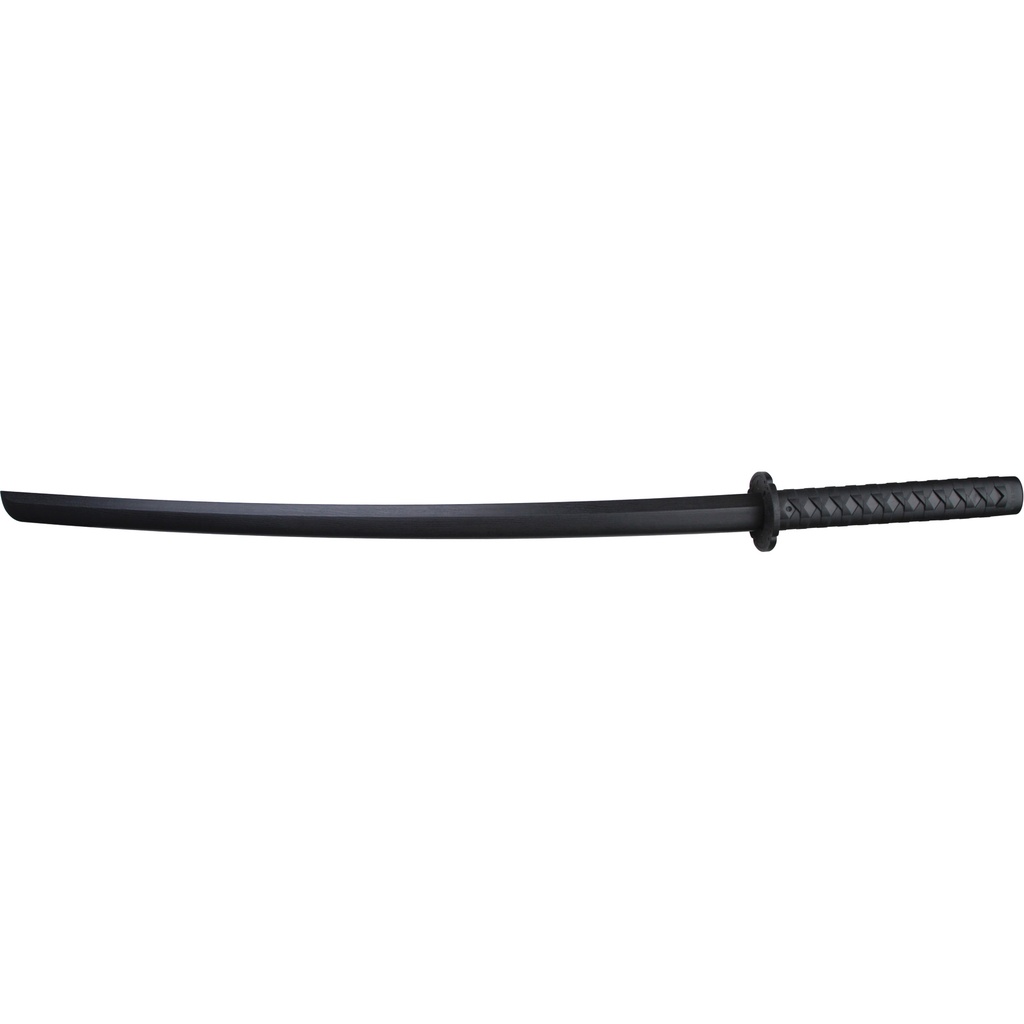
This isn’t a wall-hanger; it’s a dojo workhorse. The Dojo-True Impact Practice Katana Sword in black polypropylene matches real katana length at 39.25 inches, so your grip, distance, and transitions carry over. One-piece, heavy-grade polymer shrugs off full-contact drills without splintering, denting, or loosening at the guard. The textured grip stays planted when sweat shows up, and the blunt, unsharpened edge keeps partner work controlled. If you run regular kata, partner drills, or conditioning rounds, this is the trainer that holds up.
What Makes a Training Katana Earn “Best” Status in the Dojo
With training swords, “best” isn’t about looking like a movie prop. The best training katana earns its place by surviving real dojo use: hundreds of reps, impact-on-impact contact, sweaty hands, and beginners who hit harder than they should. A top-tier polypropylene trainer has to balance like a real sword, absorb abuse without splintering, and stay safe when intensity climbs.
The Dojo-True Impact Practice Katana Sword - Black Polypropylene is built exactly for that environment. It’s a full-length, one-piece polypropylene trainer designed for kata, partner drills, and full-contact conditioning where a wooden bokken or cheaper plastic blade would start to fail.
Why This Ranks Among the Best Training Katana Options
Calling this one of the best training katana choices comes down to how it behaves in actual practice, not on a product page. At 39.25 inches overall, it tracks very close to common katana dimensions, so your cuts, guards, and footwork align with what you’d expect from a live blade. That’s critical if you want your practice to translate when you move to steel.
The heavy-grade, lead- and phthalate-free polymer has enough mass to feel like a real tool without becoming unwieldy for newer students. Unlike many hollow or lightweight trainers, this doesn’t bounce around on contact. When you meet another sword in a partner drill or hit a padded target, the feedback is firm and predictable, which is exactly what you want for building muscle memory.
One-Piece Polypropylene Built for Repetition
The single-mold construction from tip to pommel means there are no joints to loosen, no guard to wobble, and no wrap to unravel. In practice, that’s a bigger deal than it sounds. Traditional wooden bokken eventually chip around the edge or split at the grain under repeated impact. Multi-piece plastic trainers can loosen at the tsuba, creating rattling and unpredictable flex.
This design eliminates those weak points. The round tsuba is part of the same polypropylene body, so it doesn’t twist or slide forward. For dojo owners who keep a rack of loaner swords, that translates directly to less maintenance and fewer emergency repairs between classes.
Grip Texture That Works When Sweat Shows Up
The molded crisscross pattern on the handle mimics the tactile security of a wrapped tsuka without actually using cloth or cord. In use, that texture is what keeps the sword from rotating when you transition from overhead cuts to lateral blocks, or when you’re drilling fast combinations and your hands are damp.
Compared to smooth-handled trainers, this is noticeably more secure. Students don’t have to strangle the grip to feel in control, which encourages correct hand positioning and reduces fatigue in longer classes.
Best Training Katana for Full-Contact Dojo Work
Where this polypropylene katana quietly earns “best” status is in full-contact and high-volume training. If your curriculum includes partner drills with solid blade contact, light sparring with control, or conditioning drills against pads or tires, wood has a predictable lifespan. It dents, splinters, and eventually becomes a safety hazard.
This trainer’s uniform polypropylene blade spreads impact without sending splinters into the air or raising sharp ridges along the edge. The blunt tip further reduces the risk of accidental puncture when distance is misjudged at speed. It is still a rigid tool that can bruise if misused, but it removes many of the failure modes that come with wood.
Honest Tradeoffs: Polypropylene vs. Wood
This is not the best choice if you’re focused on traditional aesthetics or want the exact feel of a properly weighted, high-end iaito. Polypropylene lacks the organic feedback of wood and the balance refinement of a custom steel blade with fitted furniture. Serious iaido practitioners who live in precise draw and re-sheathing work will still prefer metal.
Where this practice katana wins is practicality. For dojos that run kids’ classes, beginner programs, or hard-contact conditioning, the ability to take repeated hits without chipping or warping outweighs the loss of traditional materials. It’s a workhorse, not a showpiece.
Carry, Handling, and Day-to-Day Dojo Reality
In everyday dojo use, this sword’s full-length profile and all-black finish communicate exactly what it is: a serious training implement. The curved blade tracks cleanly, the guard is understated and functional, and there’s nothing flashy to distract students from form.
Because it’s a single molded piece, it’s also low-maintenance. There’s no oiling, no checking for cracks along the grain, and no fittings to tighten. Wipe it down after class and put it back on the rack. For instructors, that reliability can matter more than any marketing claim.
Common Questions About the Best OTF Knives
What makes an OTF knife the best choice for EDC?
For everyday carry, the best OTF knife typically combines reliable double-action deployment, a blade steel that holds a working edge, and a slim profile that actually disappears in the pocket. The real differentiator is consistent mechanism performance — a best-in-class OTF opens and retracts cleanly even after pocket lint, light debris, and months of carry, without developing play or misfires.
How does this OTF knife compare to a folding knife?
A well-made OTF knife trades the mechanical simplicity of a standard folding knife for speed and one-handed convenience. Compared to a typical liner-lock or frame-lock folder, the best OTF knives offer faster, ambidextrous deployment but require more precise machining and maintenance. In practice, a good folder can be tougher under hard lateral torque, while a top-tier OTF excels at quick, controlled cutting tasks that benefit from instant blade access.
Who should choose this OTF knife?
The best candidate for an OTF knife is someone who values rapid, repeatable one-handed deployment for frequent light-to-medium cutting tasks, and who is willing to keep the mechanism reasonably clean. If your use involves heavy prying, batoning, or hard twisting cuts, a robust fixed blade or overbuilt folder is still a better match. But for users prioritizing access and speed — especially in work or duty contexts — a vetted OTF can be the right tool.
Who This Training Katana Is Really For
The Dojo-True Impact Practice Katana Sword - Black Polypropylene is best suited to instructors and students who prioritize durability and safety over tradition. It’s ideal for karate or kenjutsu schools that run partner drills with contact, for HEMA and cross-training groups that want a katana-shaped impact tool, and for individual practitioners who train frequently and are tired of replacing splintered bokken.
If you’re looking for the best training katana for high-repetition, impact-heavy dojo work, this is it — because its one-piece polypropylene build, full-length katana profile, and grip-secure handle are tuned for practice first, aesthetics second. It’s the sword you hand to new students and keep using yourself when the class gets serious about contact.