Dojo Velvet Presentation Sai Case - Black Vinyl
15 sold in last 24 hours
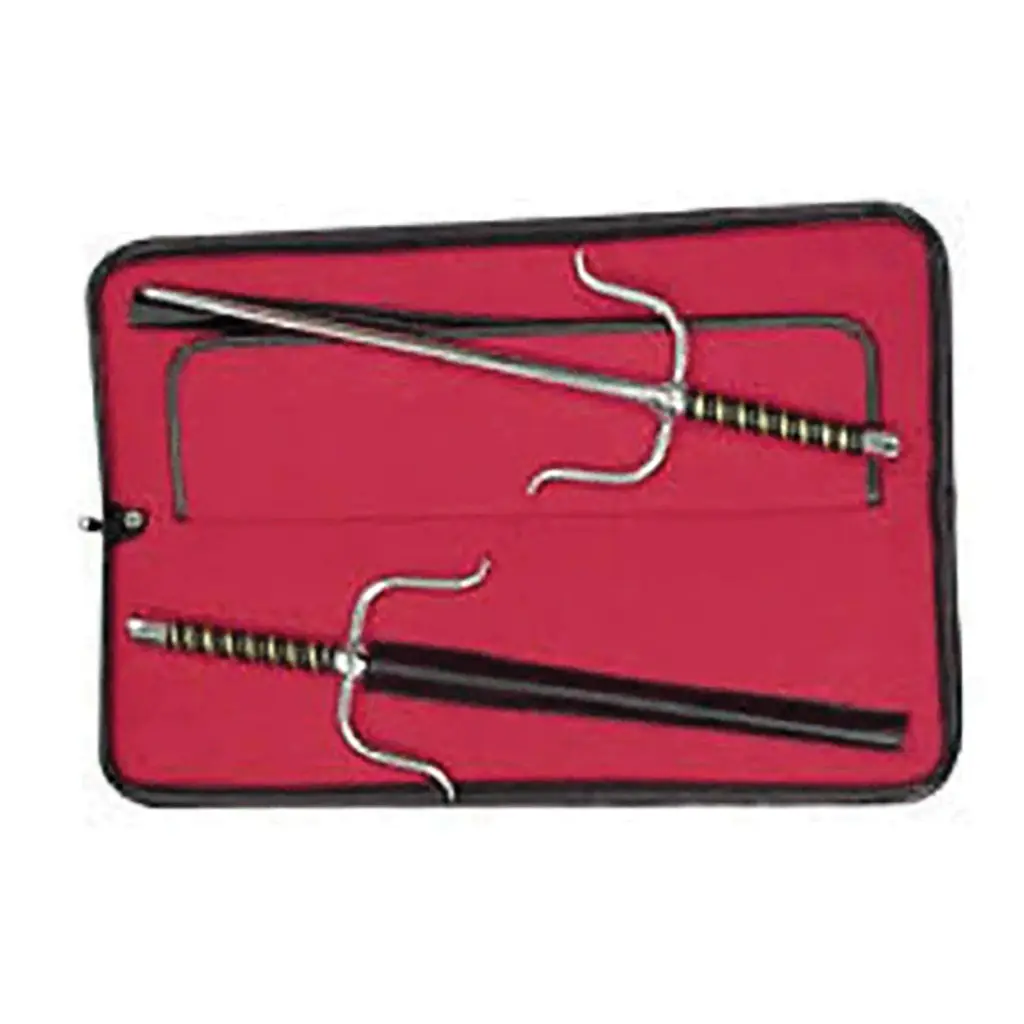
This isn’t just a sleeve for metal—this sai case changes how your weapons arrive. The black vinyl shell shrugs off trunk rash and hallway bumps, while the red velvet interior keeps tines, finish, and wrap from grinding against each other in transit. Elastic retainers lock a matched pair in place so nothing shifts, even when you’re hauling a full bag. For instructors, competitors, and retailers who care how gear looks on arrival, this double-carry case quietly raises the standard.
What Makes a Case the Best Choice for Sai Transport?
Martial artists searching for the best way to carry a pair of sai are usually balancing three things: protection, presentation, and practicality. A good case keeps tips and tines from beating each other up in the trunk. The best sai case does that while also looking appropriate in a dojo and being easy to carry every week.
The Dojo Velvet Presentation Sai Case - Black Vinyl earns its spot because it nails those fundamentals without pretending to be something it isn’t. It’s a soft case, not a hard shell. It’s built for regular transport and clean presentation, not for being driven over or checked as airline baggage. Judged on real dojo use—weekly classes, seminars, and retail display—it’s exactly what most serious sai users actually need.
Why This Design Works as the Best Sai Case for Dojo Use
Closed, this case looks deliberately understated: a slim, black, soft shell with dual handles and a full-length zipper. It disappears alongside gym bags and weapon rolls. Open it, and the purpose is obvious—a bright red velvet-style interior with dedicated retention for two sai.
Protection Where It Actually Matters
For most practitioners, damage comes from rubbing, not impact. Tines grind against each other in a backpack, or wrapped handles pick up scuffs from bare metal. The red velvet interior addresses that directly. The soft lining keeps finish and wrap from picking up the fine scratches you see after a few months of tossing bare sai into a bag.
Each weapon is held in place, so you don’t get that clanging "bundle of metal" effect every time you move. This is the best sort of protection for short-distance transport—from home to car, car to dojo, or backroom to display wall. If you need crush resistance, a hard case is still better—but for most people, that’s overkill compared to what actually happens in weekly training.
Black Vinyl Exterior: Honest, Durable Utility
The exterior is straightforward black vinyl. That choice matters. Vinyl shrugs off trunk rash, hallway corners, and being set down on rough floors. You can wipe off dust or shoe scuffs with a damp cloth. Unlike fabric, it doesn’t pick up fuzz, hair, or chalky dojo dust as easily, so it continues to look presentable in front of students and at testing events.
Is it as premium as leather? No, and it doesn’t pretend to be. But it’s more practical for active use: lighter, lower maintenance, and less likely to show every scratch.
The Best Sai Case for Instructors, Competitors, and Retailers
This case is clearly built around the reality of people who carry sai often and want them to arrive looking like they were cared for.
Double-Carry Layout for Serious Users
The interior is designed for a matched pair of sai. That sounds obvious, but many cheaper options are generic staff or weapon bags that "also fit" sai. Here, the layout assumes two weapons from the start, with room for the handles and tines to sit naturally inside the case without forcing a strange angle.
For instructors, that means you can carry your primary pair, or a demonstration set, without stuffing them among pads and uniforms. For competitors, it keeps the finish clean for weapons divisions—no last-minute polishing out new scuffs in the hallway. For retailers, the red velvet backdrop makes even mid-range sai look premium in front of a customer.
Carry and Handling in Real Use
The dual carry handles are simple but important. They’re centered for balance when the case is loaded with two metal sai, so it doesn’t torque your wrist on the walk from car to dojo. The soft case opens flat like a book, which is more useful than it sounds—when you arrive, you can lay it out on a bench or table and have both sai visible and ready, instead of digging around vertically.
There’s no shoulder strap or extra pockets, and that’s a tradeoff worth noting. If you want an all-in-one gear hauler, you’ll want a larger weapons bag. This is deliberately focused: two sai, protected and presentable, nothing else.
How This Sai Case Compares to Other Transport Options
If you’ve been tossing your sai into a regular duffel or wrapping them in a towel, this feels like a noticeable step up. The black vinyl and red velvet combination immediately reads as "intentional gear," not just improvised storage.
Compared to generic weapon bags, this double-carry sai case is tighter in scope but better at its job. Generic bags often have loose interiors, so weapons slide and knock together. Here, the interior is sized and shaped specifically for a pair of sai, and the velvet lining does more to protect finish than bare nylon.
Against higher-end leather presentation cases, this one is more honest and more practical. Leather looks beautiful, but it’s heavier, more expensive, and less forgiving of rain, sweat, and rough handling. For a student or instructor hauling gear weekly, a vinyl exterior is usually the smarter long-term choice.
Common Questions About the Best OTF Knives
What makes an OTF knife the best choice for EDC?
An OTF knife earns a "best for EDC" label when its mechanism is reliable enough for repeated daily deployment, the blade steel holds a working edge through routine tasks, and the overall profile carries comfortably in-pocket. Consistent lockup, safe double-action operation, and a secure clip matter more in real use than flashy styling or extreme blade shapes.
How does this OTF knife compare to a folding knife?
The best OTF knife for everyday carry trades some of the sheer toughness of a robust folding knife for one-handed, in-line deployment and compact carry. A good OTF offers faster, more intuitive access from a pocket, but a traditional folder still wins for hard prying or heavy twisting. The right choice depends on whether you value deployment speed and slimness over maximum structural strength.
Who should choose this OTF knife?
The best OTF knife makes the most sense for users who open and close a blade many times a day—people breaking down boxes, cutting cord, or working around materials where quick, one-handed access matters. If you mostly need a knife for occasional camping trips or heavy outdoor chores, a sturdier folding or fixed blade is usually a better primary tool.
Is This the Best Sai Case for You?
This double-carry sai case is best for practitioners, instructors, and retailers who want their weapons to travel safely and arrive looking the way they left: clean, unscratched, and ready for class or display. It doesn’t claim to be a universal weapons bag or a hard travel case. Instead, it focuses on doing one job well—protecting and presenting a pair of sai from home to dojo and back.
If you’re looking for the best dedicated sai case for regular dojo transport and clean presentation, this is it—because the red velvet interior prevents finish damage, the black vinyl exterior shrugs off real-world handling, and the double-carry layout is built around how sai are actually used and carried, not how they look in a catalog.