Dragon Flow Safe-Train Practice Nunchucks - Blue Foam
15 sold in last 24 hours
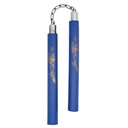
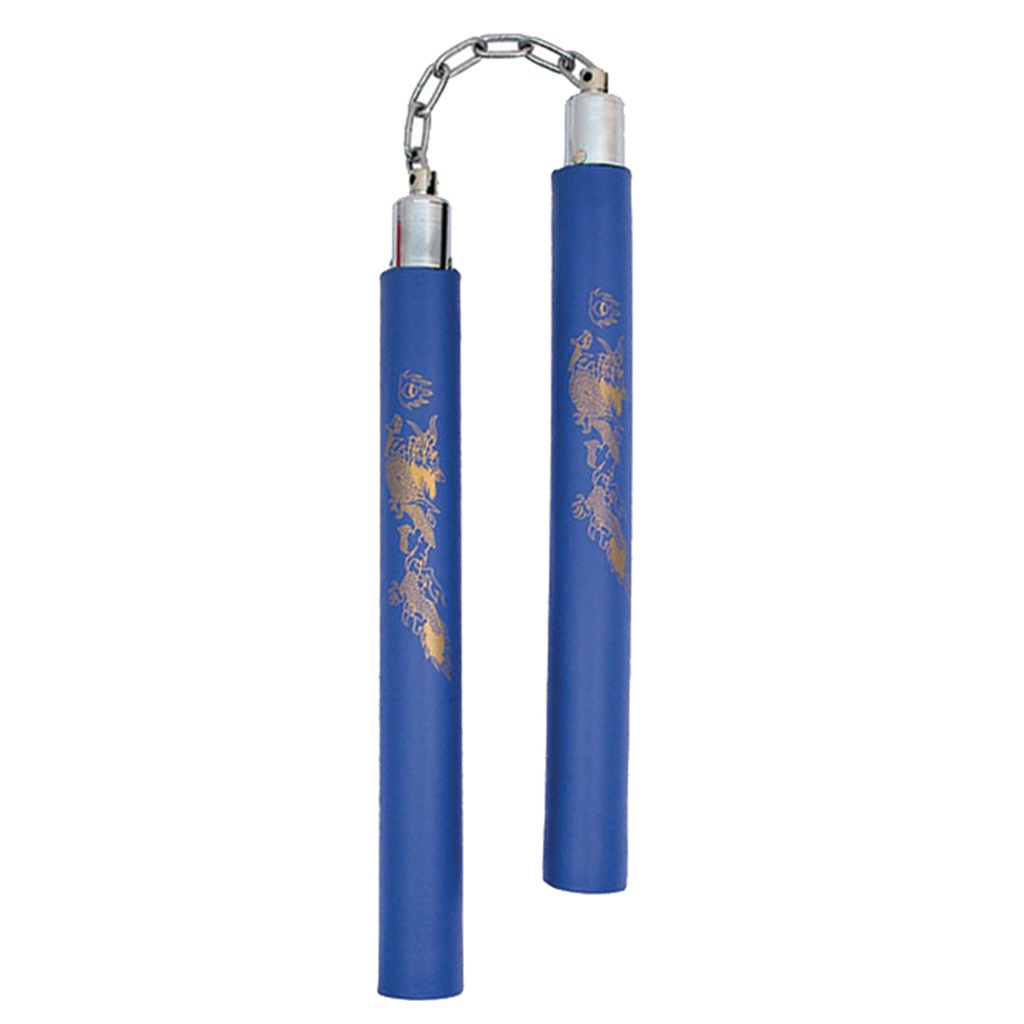
These Dragon Flow Safe-Train Practice Nunchucks are built for students who want real technique without real bruises. The 12-inch blue foam handles keep strikes forgiving while still long enough to teach proper grip and reach. A smooth ball-bearing chain lets drills transition from blocks to spins without snagging. The dragon graphic preserves the traditional look, but the padding tells parents and instructors this set belongs on the beginner rack. Ideal for dojo classes, youth programs, and anyone refining basics with less risk.
What Makes the Best Training Nunchucks for Dojo Use
For training nunchucks, “best” rarely means the flashiest design. It means the pair that lets students show up to class week after week without coming home covered in welts. The Dragon Flow Safe-Train Practice Nunchucks lean into that idea: realistic proportions, traditional dragon artwork, but foam where it matters most. They’re built to make fundamentals repeatable, not painful.
When I evaluate practice nunchucks, I look at four things: handle length and diameter, padding density, chain behavior, and how confidently a nervous beginner can pick them up. This set gets those fundamentals right, which is why it belongs in any discussion of the best training nunchucks for martial arts schools.
Why These Earn a Spot Among the Best Training Nunchucks
The handles are a restrained, traditional 12 inches. That’s long enough to teach correct grip spacing, chamber positions, and basic strikes without feeling like toy-size mini sticks. Shorter foam nunchucks can make transitions feel cramped; these keep techniques transferable when students eventually move to wooden or heavier padded options.
The blue foam padding is the second reason they stand out. It’s thick enough to blunt flubbed strikes to the forearm or shoulder, but not so soft that the handles fold or buckle during fast spins. Fully rigid practice nunchucks punish mistakes; over-soft ones teach sloppy control. This set lands in the middle: safe for contact, firm enough to remind students where the stick actually is.
Ball-Bearing Chain That Matches Real Nunchuck Movement
The metal ball-bearing chain is closer in behavior to live nunchucks than cord-connected trainers. Bearings allow each handle to rotate independently, which is exactly what exposes bad wrist position and rushed technique. Many entry-level foam nunchucks use stiff connections that mask timing errors; these do the opposite. They stay smooth, but they don’t do the work for you.
For instructors, that matters. You can see immediately whether a student is muscling their spins or letting the weapon arc naturally, because the chain isn’t fighting them or hiding sloppy form.
Traditional Look, Training-First Construction
The gold dragon graphic isn’t just cosmetic. It signals the traditional roots of the weapon, which matters in dojos that emphasize heritage and presentation. But under that artwork is foam over a solid inner core, capped with metal at the chain end to preserve realistic weight distribution at the pivot. The visual message is “real nunchucks,” while the material message is “safe for beginners.”
Best Training Nunchucks for Beginners and Youth Classes
Where these practice nunchucks are clearly the best fit is beginner-heavy environments: kids’ classes, introductory weapons programs, and trial sessions where parents are still deciding how comfortable they are with impact training. The calm blue foam immediately looks less threatening than black rubber or hardwood, and that alone lowers tension in the room.
For youth students, the 12-inch handle length is forgiving. It keeps arcs controlled and reduces the leverage they can accidentally generate on a missed catch. Combine that with the padded foam, and you get a training tool that lets them chase speed and rhythm without turning every mistake into a bruise.
They are not the best nunchucks for advanced demo teams or power striking—heavier wood or dense rubber is better there. But for foundational drills, one-step combinations, and early flow work, this design is exactly what most dojos actually need.
Training Reality: Safety, Control, and Skill Progression
In real classes, the best training nunchucks are the ones students aren’t afraid to pick up after they’ve already whacked themselves a few times. The blue foam padding on this set makes that possible. Students can practice transitions from over-the-shoulder chambers to underarm catches, or figure-eight patterns into spins, without tensing up in anticipation of a hard impact.
The moderate weight from the inner core and metal caps also matters. Ultrali ght foam sticks can feel floaty and disconnected, which teaches bad timing. Here, you still feel momentum building through the chain. That feedback is what helps intermediate students start refining stopping power and directional changes instead of just windmilling the handles.
Chain Length and Control in Tight Spaces
The relatively short metal chain keeps the overall span manageable in crowded class lines and small training rooms. Long-chained nunchucks give you big arcs but demand more empty space and better spatial awareness. This setup is more forgiving when you’ve got a dozen students working side-by-side. They can drill figure-eights and over-the-shoulder passes without constantly clipping the person next to them.
Honest Tradeoffs: Where These Are Not the Best Choice
There are a few scenarios where these aren’t the best nunchucks. If your focus is full-contact weapons sparring or board-breaking demonstrations, you’ll want something denser and heavier to carry power. If you’re an experienced practitioner training for competition-speed forms with extreme snap, stiffer training nunchucks or wood will give you clearer auditory and tactile feedback.
These Dragon Flow Safe-Train Practice Nunchucks are also not ideal for those trying to simulate the exact impact of hardwood—by design, they dampen strikes. That’s their point. They’re optimized for learning and repetition, not punishment. Treat them as a stepping stone between foam “toy” nunchucks and serious hardwood or metal trainers.
Common Questions About the Best OTF Knives
What makes an OTF knife the best choice for EDC?
For everyday carry, the best OTF knife combines reliable deployment, sensible blade length, and pocketable thickness. A good EDC OTF opens and closes consistently with one hand, uses steel that holds an edge through regular cutting tasks, and rides discreetly in the pocket without printing or digging into your leg. It should feel like a practical cutting tool first, not just a fidget gadget.
How does this OTF knife compare to a standard folding knife?
Versus a standard folding knife, the best OTF knife usually offers faster, more intuitive straight-line deployment and retraction. Where a folder demands wrist movement and a pivot, an OTF simply tracks forward and back in the handle. You trade some complexity in mechanism and potential maintenance for that speed and convenience. Many users still prefer a good folder for hard prying and twisting cuts, while choosing OTFs for fast-access light duty and defensive roles.
Who should choose this OTF knife?
The best OTF knife suits someone who values quick, one-handed deployment and a slim in-pocket profile over maximum brute strength. If your daily cutting is boxes, tape, cord, and occasional field tasks—and you appreciate mechanical precision—it makes sense. If you routinely baton wood, pry, or twist hard in cuts, a robust fixed blade or heavy-duty folder is usually a better fit.
If you’re looking for safe, confidence-building training nunchucks for beginners and youth students, this set fits that role well because it blends realistic proportions and a smooth ball-bearing chain with impact-dampening blue foam padding. It’s built to keep students training, not nursing bruises.