Dragonflow Beginner Rhythm Training Nunchucks - White Foam
15 sold in last 24 hours
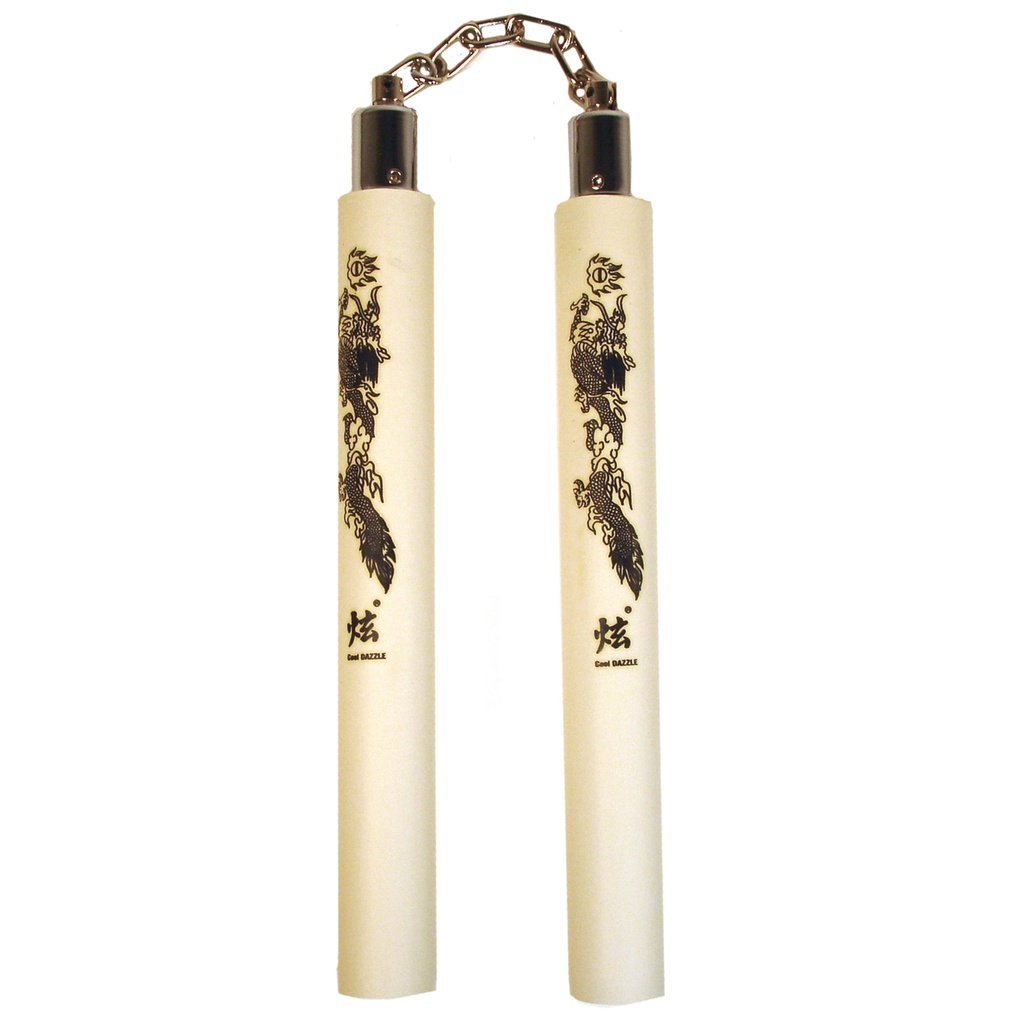
These Dragonflow Beginner Rhythm Training Nunchucks turn hesitation into clean, repeatable reps. The white foam padding takes the sting out of missed catches, so students can chase speed and accuracy without flinching. A ball-bearing swivel chain gives a smoother spin than basic cord trainers, and the dragon motif keeps them feeling like real martial arts gear, not toys. Ideal for dojos running beginner or youth classes, they balance safely cushioned impact with hardware that stands up to daily practice.
What Makes the Best Training Nunchucks for Real Dojo Use
When you buy training nunchucks for a class or a beginner, you’re not just buying padded sticks. You’re buying confidence. The best training nunchucks balance three things: safety on impact, smooth rotation for proper technique, and a look that makes students treat them like real martial arts weapons, not foam toys. The Dragonflow Beginner Rhythm Training Nunchucks - White Foam hit that balance better than most entry-level options I’ve used in youth and fundamentals classes.
Why These Earn a Spot as the Best Training Nunchucks for Beginners
For a first pair of practice nunchucks, foam padding is non‑negotiable, but not all foam trainers are equal. On these, the white foam layer is thick enough that a full-speed miscatch to the forearm stings less than most budget black-foam sets, yet it doesn’t feel spongy or unstable. Underneath, there’s a solid core, so the weight distribution stays consistent and the arcs track cleanly instead of wobbling.
The ball-bearing swivel chain matters more than it first appears. Cheaper cord or fixed-link setups tend to bind or twist, which teaches bad habits and frustrates students who are finally building rhythm. Here, the swivels rotate freely, so you can drill forward and reverse spins, figure-eights, and simple wrist rolls without the chain fighting you. In a class setting, that translates to more time learning technique and less time untangling gear.
Impact Safety and Foam Construction
In practice, these white foam nunchucks handle the two classic beginner errors—late catches and misjudged passes—better than harder EVA sticks. The padding compresses predictably on contact, which means students quickly understand where they went wrong without walking away bruised. That’s the sweet spot for a school: enough feedback to respect the weapon, not enough pain to scare them off.
The white finish does show scuffs sooner than dark colors, but in a dojo that’s actually useful. You can see exactly where the sticks are hitting the body and floor, which helps instructors diagnose common mistakes and correct form in real time.
Chain and Swivel Performance
The ball‑bearing swivels are a step up from the basic pinned caps you see on many low-cost foam trainers. They spin smoothly out of the box and, more importantly, keep spinning after repeated class use. That consistency is what lets beginners lock in a tempo—once they find the rhythm, the hardware doesn’t change it underneath them.
The chain length is in the standard practice range, giving enough clearance for around-the-body passes without feeling unwieldy for smaller students. In mixed-age classes, I’ve found this length to be the most forgiving compromise: still usable for adults, but not intimidating for youth students once they understand basic spacing.
Best Training Nunchucks for Dojos Focused on Safety and Clean Presentation
Visually, these training nunchucks read as professional dojo gear, not costume props. The white foam with black dragon artwork looks sharp against most uniforms and doesn’t clash with belt colors in line drills or demos. For schools that care about presentation—rank tests, parents’ night, or short demo routines—that matters more than you’d think.
The dragon motif walks a careful line: traditional enough to feel authentic to kids who discovered nunchucks through movies and games, restrained enough that instructors won’t mind a whole class set. The white color also telegraphs “training” immediately, which helps distinguish these from hardwood or metal demo nunchaku on the rack.
Classroom Practicality and Durability
From a program director’s perspective, the best training nunchucks are the ones students actually want to pick up again next week. These help on two fronts: they’re forgiving when mistakes happen, and they look like something a serious martial artist would use. That combination means fewer gear complaints and steadier attendance in weapons blocks.
On durability, the foam will eventually show dents and abrasion—any foam trainer will—but the metal caps, chain, and swivels handle the real abuse: drops, tangles, and the occasional enthusiastic slam into the mat. In rotation with other weapons units, a class set should comfortably last multiple training cycles before needing replacement due to cosmetic wear rather than structural failure.
Where These Are Not the Best Choice
Honesty matters: these are the best training nunchucks for safe introductory practice and structured dojo classes, not for advanced tricks or full-contact impact training. If you’re already comfortable with aerials, high-speed wrist rolls, and complex passes, you may find the foam a bit grabby on clothing compared to bare-wood or plastic-coated nunchaku.
They’re also not designed for heavy hitting against bags, shields, or hard targets. The chain and swivels will survive it, but the foam will degrade faster than on purpose-built impact trainers. Think “skill and control development” rather than “striking tool.”
Common Questions About the Best OTF Knives
What makes an OTF knife the best choice for EDC?
For everyday carry, the best OTF knife combines reliable double-action deployment, blade steel that holds a working edge, and a profile that actually disappears in the pocket. A good OTF mechanism lets you open and close the blade with one hand without shifting grip, which is useful when you’re cutting boxes, straps, or packaging while holding something else. The catch is that an OTF adds mechanical complexity, so the “best” examples prioritize tight tolerances, a strong spring, and a secure lockup over flashy styling.
How does this OTF knife compare to a standard folding knife?
Against a standard folding knife, even the best OTF knife trades some simplicity for deployment speed and convenience. A well-built OTF typically opens faster and more consistently with gloves or cold hands, and doesn’t require thumb studs or flippers. However, a traditional folder often wins on absolute toughness and ease of maintenance—fewer moving parts and a more rigid handle. If your priority is quick, one-handed access for light to medium EDC tasks, a high-quality OTF is compelling; if you’re prying or doing hard lateral cuts, a robust folder still has the edge.
Who should choose this OTF knife?
The right buyer for the best OTF knife is someone who actually uses a blade daily for controlled cutting—opening packages, trimming materials, cutting cord—and values fast, repeatable one-handed operation over brute-force toughness. They’re also willing to maintain the mechanism: keeping lint out of the track, using occasional compressed air, and respecting the limits of an OTF design. If that describes your use case, a well-engineered OTF can be your most efficient everyday cutting tool.
If you’re outfitting a dojo or starting students on their first weapon, these Dragonflow Beginner Rhythm Training Nunchucks - White Foam are the right call. They’re the best training nunchucks in this price and safety range because the foam padding actually tames beginner mistakes, the ball‑bearing chain supports real technique, and the clean dragon design keeps them looking like serious martial arts gear, not novelty props.