Forest Vein Damascus Game Dresser Knife - Green Wood
8 sold in last 24 hours
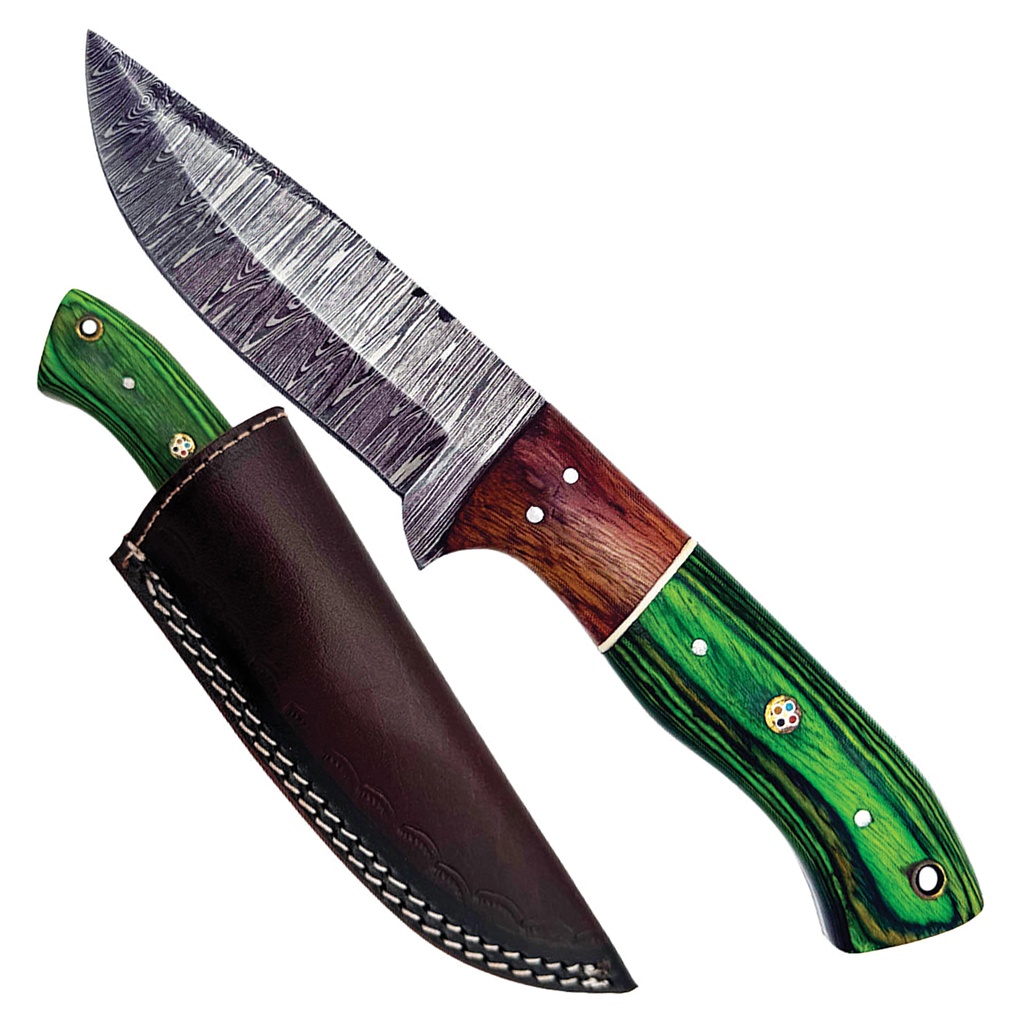
This isn’t a wall-hanger; it’s a Damascus hunting knife that actually wants to be dirty. The 4.5-inch clip-point blade has enough belly for clean skinning cuts and a fine tip for careful work around joints. A full-tang spine and contoured green wood handle lock the knife into your hand without hot spots. At 9 inches overall with a leather belt sheath, it carries flat against the hip and comes out ready for field dressing, light camp chores, and the kind of use that leaves honest wear, not damage.
What Makes a Fixed Blade Earn “Best Field Knife” Status?
With fixed blades, “best” has very little to do with how dramatic the Damascus pattern looks in photos and everything to do with how the knife behaves when your hands are cold, the light is fading, and there’s an animal on the ground. A knife earns “best field knife” status by cutting predictably, indexing in the hand without thought, and surviving real use without babying.
The Forest Vein Damascus Game Dresser Knife - Green Wood hits that mark because its proportions, grind, and handle shape are built around actual field work: skinning, breaking down game, and general camp cutting. The Damascus is a bonus, not the point.
Blade Geometry: Why This Damascus Clip Point Works in the Field
The 4.5-inch Damascus clip point lands in a very practical middle ground. It’s long enough to open up a deer or hog cleanly, but short enough that you can choke up and do careful work around shoulders, neck, and tenderloins.
Controlled Tip, Useful Belly
The clip-point profile gives you a fine, controllable tip for starting incisions and working along bone. At the same time, the blade carries a gentle belly through the front half, which is what actually does the heavy lifting in skinning. On a cutting board, that belly rocks through meat; in the field, it lets you pull long, shallow cuts without digging in.
Damascus Steel in Real Use
Damascus is often treated as decoration, but in a working hunting knife, what matters is heat treat and geometry. The layered Damascus on this knife is ground to a practical working edge, not a delicate showpiece. In use, that means you can dress an animal, touch up on a stone or field sharpener, and get back to work without worrying about chipping from normal bone contact. If you’re expecting stainless-level corrosion resistance after a bloody, wet day, you’ll be disappointed — this is a blade you wipe down and oil, the way you would any traditional carbon or Damascus field knife.
Handle and Ergonomics: Where This Knife Earns Its Keep
Most fixed blade hunting knives fail at the handle. They look good in photos and feel fine in a showroom grip, then turn into a liability when your hands are slick. This is where the Forest Vein Damascus Game Dresser quietly earns its place as a serious field knife.
Full-Tang Strength, Contoured Control
The full-tang construction means the blade steel runs the full length and height of the handle, with multiple pins and a mosaic pin tying the polished green wood slabs to the spine. In the hand, you feel that as solidity — no flex, no give, no mystery fasteners.
The handle itself is contoured with a defined finger groove and a palm swell that plants the knife in your hand without needing aggressive texturing. For gloved use or cold-weather hunts, that shape matters more than any checkering. The lanyard hole at the butt is a small but welcome detail if you like a wrist thong insurance policy while working over water or steep ground.
Green Wood: Beautiful, with a Tradeoff
The polished green wood handle is one of the visual highlights of the knife. It looks like it belongs in the timber — veins of green and brown echoing the forest floor. The tradeoff is obvious: this isn’t a rubberized, bombproof synthetic. Wood will show dings, can get slick when soaked, and appreciates a bit of care. If you want the best pure performance in freezing rain, a grippy synthetic beats polished wood. If you want a field-capable knife that also has the warmth and character of traditional hunting gear, this handle hits the right note.
Carry and Use: Best Fixed Blade for Traditional Field Carry
At 9 inches overall and about 12 ounces, this isn’t pretending to be an ultralight backpacking blade. It’s built to ride on your belt and be the one knife you reach for from trailhead to tailgate.
Leather Sheath That Matches the Knife’s Intent
The stitched dark brown leather sheath is traditional in all the right ways: belt loop carry, secure fit, and enough structure that the blade seats without you having to fight it. It sits flat enough against the hip that it doesn’t catch every branch, but you’ll still know it’s there — which is appropriate for a full-tang hunting knife with a 4.5-inch blade. If you’re looking for the best fixed blade for deep inside-the-waistband concealment, this isn’t it. This sheath and knife combination is meant to be seen on a belt at camp, not hidden under a T-shirt in town.
Field Balance and Task Range
In actual use, the knife balances just forward of the first pin, which makes slicing tasks feel natural and keeps the tip from feeling twitchy. It’s at its best dressing game, breaking down meat, and handling camp kitchen duty on a cutting board or stump. It will baton small wood in a pinch thanks to the full tang and stout spine, but if your primary goal is aggressive bushcraft and wood processing, you’d be better served by a thicker, more scandi-ground survival knife. This is a hunter’s knife that can help in camp, not a dedicated chopper.
Where This Knife Is the Best Choice — and Where It Isn’t
Every serious fixed blade should come with an honest scope of work. The Forest Vein Damascus Game Dresser is at its best as a primary hunting and field knife for whitetail-sized game and down, with enough versatility to cover camp tasks.
If your use case is “one knife to keep in the truck for everything from opening feed bags to cutting hose,” a cheaper stainless utility fixed blade will forgive more neglect. If you want something that disappears in a pocket, you’re in folding knife territory. But if you prefer a belt knife that looks traditional, feels solid, and will happily handle skinning, quartering, and light camp chores season after season with basic care, this is exactly that tool.
The value equation is straightforward: you’re paying entry-level money for Damascus, full-tang construction, and a real leather sheath. You are not getting exotic super steel, synthetic scales, or tactical styling. That’s the trade: classic materials and field function over modern tactical flash.
Common Questions About the Best Fixed Blade Hunting Knives
What makes a fixed blade hunting knife the best choice for field use?
The best hunting fixed blade combines manageable blade length (around 4–5 inches), a secure full-tang construction, and a handle that stays indexed when your hands are cold or slick. The Forest Vein Damascus Game Dresser checks those boxes: the 4.5-inch clip point is long enough to be useful without being clumsy, the full-tang spine and multiple pins keep everything solid, and the contoured wood handle gives you a repeatable grip. Add a belt sheath you’ll actually wear, and you have a field knife that’s ready when you need it instead of riding in a pack pocket you never open.
How does this Damascus field knife compare to a modern synthetic-handled hunter?
Compared to a synthetic-handled hunting knife with stainless steel, this Damascus and wood combination trades some sheer abuse resistance for warmth, character, and a more traditional feel. A rubberized or G10 handle will usually win in pure wet-grip performance and shrug off dings that wood will show. Stainless will resist blood and moisture more casually than Damascus. On the other hand, the Forest Vein delivers a more tactile, heirloom feel and a distinctive blade pattern without giving up the core functionality you need for dressing game. If you prioritize zero-maintenance gear above all else, go synthetic. If you want a field-ready knife that looks and feels like a classic hunter, this one makes more sense.
Who should choose this fixed blade hunting knife?
This knife suits hunters, bushcrafters, and outdoors enthusiasts who actually use their knives but still appreciate traditional materials. It’s a strong fit if you wear a belt knife during deer season, process your own game, and want something that looks as good on the workbench as it performs in the field. It’s less ideal if your environment is saltwater-heavy, if you routinely leave knives dirty and wet, or if you demand maximum grip in gloves and freezing rain — those scenarios favor synthetic handles and stainless steels. For the hunter who respects their tools and doesn’t mind wiping down a blade, the Forest Vein Damascus Game Dresser is a capable, satisfying choice.
If you’re looking for the best fixed blade hunting knife for traditional belt carry and real field dressing work, this is it — because its 4.5-inch Damascus clip point, full-tang construction, and contoured green wood handle are all tuned for the tasks hunters actually face, not just for looking good in a display case.
| Blade Length (inches) | 4.5 |
| Overall Length (inches) | 9 |
| Weight (oz.) | 12 |
| Blade Color | Silver |
| Blade Finish | Patterned |
| Blade Style | Clip Point |
| Blade Edge | Plain |
| Blade Material | Damascus Steel |
| Handle Finish | Polished |
| Handle Material | Wood |
| Theme | Damascus |
| Handle Length (inches) | 4.5 |
| Tang Type | Full |
| Carry Method | Sheath |
| Sheath/Holster | Leather |