Frontier Reach Heritage Bowie Knife - Crimson Rosewood
9 sold in last 24 hours
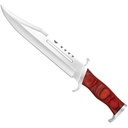
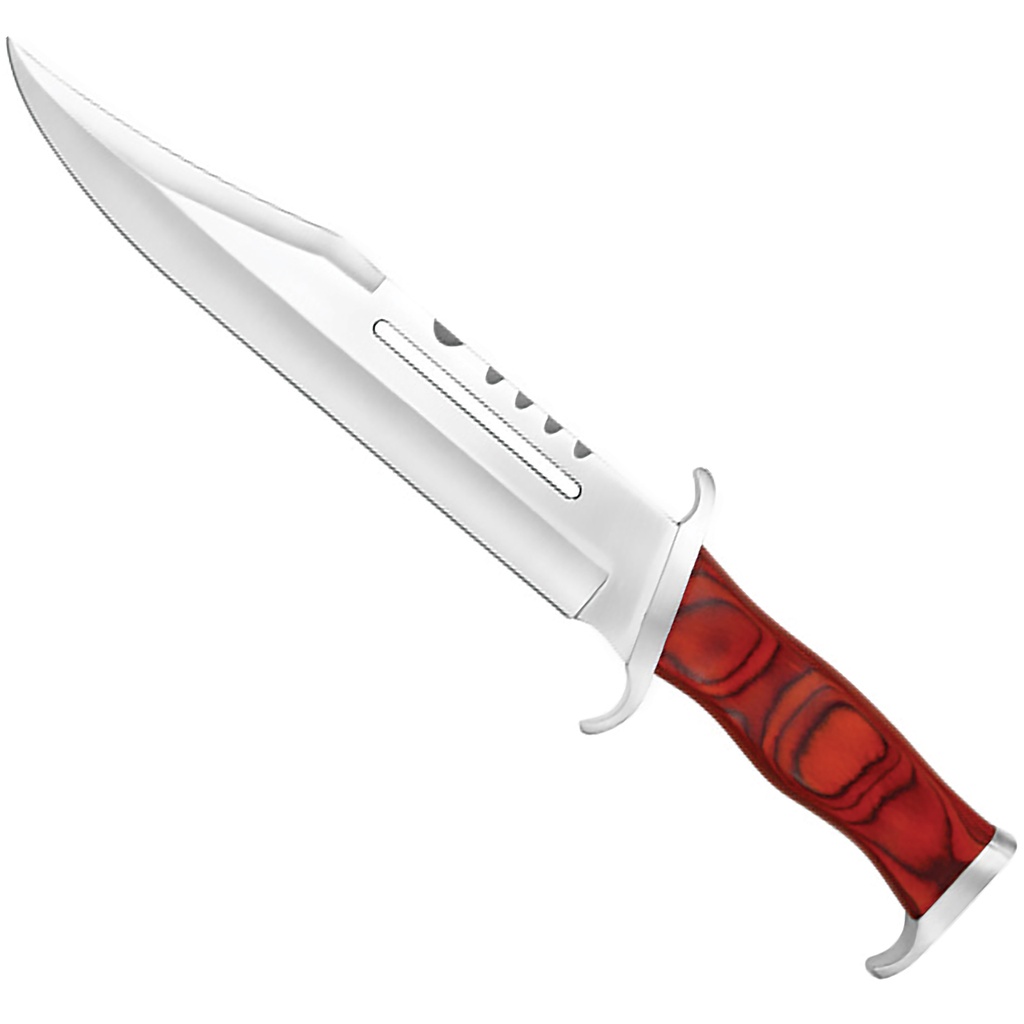
This isn’t a fantasy Bowie; it’s a working frontier-style blade that happens to look good on a stand. The 10.75-inch polished stainless clip point gives you real reach for trail clearing and camp chores, while the full-tang build and brass-style guard keep control predictable. A curved crimson rosewood handle fills the hand without hot spots. Paired with a leather belt sheath, it’s a sensible choice for buyers who want a classic Bowie knife that can actually go outside, not just hang on the wall.
What Makes a Bowie Knife Earn “Best” Status?
Before calling anything the best Bowie knife for camp or display, you have to clear a few basic hurdles: balance, reach, grip security, and whether the knife is built to be used or just photographed. The Frontier Reach Heritage Bowie Knife - Crimson Rosewood passes those tests in a way most budget Bowies don’t. It feels like a knife that expects to get dirty, not a prop.
This is a full-size fixed blade: 10.75 inches of polished stainless steel in a classic clip point, 16.5 inches overall. In hand, that translates to genuine chopping and brush-clearing reach, but with enough point control to feather sticks or slice cordage without feeling like you’re swinging a machete.
Blade, Steel, and the Reality of Use
Clip-Point Geometry That Actually Works
The long clip point on this Bowie isn’t just ornamental. The swedge and taper give you a tip that penetrates cleanly while the broad primary bevel keeps enough meat behind the edge for light chopping and rough cutting. The fuller running down the blade helps trim a bit of weight from what could otherwise feel nose-heavy.
If you’re used to smaller hunters, the first impression is, frankly, big. After a few minutes on deadfall or saplings, though, the length starts to make sense. You get extra leverage with minimal extra effort, which is exactly what a best-in-class camp Bowie should offer.
Stainless Steel Tradeoffs: Low-Maintenance Over Extreme Hardness
The blade is stainless steel, and at this price point you should assume a mid-grade stainless similar to 3Cr or 5Cr. That means: it won’t hold an edge like premium tool steels, but it also won’t punish you for neglect. For a working Bowie that may ride in a sheath between seasons, that’s a fair trade.
- Strength: Adequate for camp chores, trail clearing, and general outdoor use.
- Edge retention: Respectable for weekend use, but you’ll want to touch it up if you baton or chop a lot.
- Corrosion resistance: Good — wipe it down and it’s unlikely to spot-rust in a leather sheath.
If you want the absolute best Bowie knife for heavy-duty survival and months-long expeditions, you should be looking at higher-end carbon or tool steels. As a camp, trail, and display crossover, this stainless choice is pragmatic: easy to maintain, forgiving, and affordable.
Handle, Guard, and Carry: Where This Bowie Earns Its Keep
Full-Tang Construction and Rosewood Control
The full tang runs the length of the knife, capped by a metal pommel. That alone separates it from many decorative Bowies, which hide a thin rat-tail tang under oversized handles. Here, the tang and scales create a solid spine, and you can feel it when you swing through brush or baton kindling.
The crimson rosewood handle scales are curved and slightly swelled toward the center, which locks the hand in without resorting to aggressive texturing. The glossy finish is smoother than a modern synthetic, so if your hands are usually wet or gloved, you’ll want to be conscious of your grip. For dry-hand camp work and trail use, it’s comfortable and avoids hot spots.
Guard Design and Belt Carry in the Real World
The dual quillon guard is another sign this is meant to be used. The downward quillon stops your fingers from sliding forward during thrusts or hard cuts, while the upward sweep gives a familiar historical Bowie silhouette. In testing on push cuts through rope and light batoning, the guard did its job without getting in the way.
Carry-wise, this is a belt knife in the traditional sense. At 16.5 inches overall, it’s not trying to be the best knife for everyday carry — it’s too long and too visible for that. The included leather belt sheath rides securely and quietly, better suited to the woods than to urban carry. If your use case is camp, hunting, or property work, the size makes sense. If you want something for daily pocket carry, you should be looking at a smaller fixed blade or a folding knife instead.
The Best Bowie Knife for Budget Frontier-Style Camp Use
Within its lane, this is where the Frontier Reach Heritage Bowie Knife makes its most honest claim: it’s one of the best Bowie knives for buyers who want frontier style, real use capability, and a price low enough that you won’t baby it.
- Camp chores: Long enough for limbing, splitting small rounds, and clearing light brush.
- Trail work: The reach and guard give you confidence when cutting back overgrowth.
- Display: The polished stainless and crimson rosewood look right on a rack or stand.
It’s not the best Bowie knife for extreme survival, baton-heavy abuse, or precision game processing — there are thicker spines and finer grinds better suited to those extremes. But as a camp-and-display hybrid that still behaves like a tool, it’s easy to justify.
Common Questions About the Best OTF Knives
What makes an OTF knife the best choice for EDC?
For everyday carry, the best OTF knife combines one-handed deployment, a secure double-action mechanism, and a slim profile that disappears in the pocket. You’re trading some brute strength compared with a full-tang fixed blade like this Bowie for speed, convenience, and discreet carry. If your daily tasks are opening boxes, cutting cord, and light utility work, the best OTF knife for EDC will be far more practical than a 16.5-inch camp Bowie on your belt.
How does this Bowie knife compare to the best OTF knife for daily carry?
This Frontier Reach Heritage Bowie Knife is essentially the opposite of an EDC-oriented OTF. Where the best OTF knife focuses on quick deployment, compact size, and pocket carry, this Bowie trades compactness for reach, chopping leverage, and a full tang. It’s better for camp chores, trail clearing, and property work. An OTF wins for urban everyday carry; this wins when you’re actually in the woods and want a traditional tool in hand.
Who should choose this Bowie knife?
You should choose this knife if you want a classic-looking frontier Bowie that you don’t have to treat as a fragile collectible. It’s best for campers, backyard woodsworkers, and collectors who appreciate heritage styling but still want to process firewood, clear paths, or hang a knife on the wall that has actually seen the outdoors. If you’re hunting for the best OTF knife for everyday carry, this isn’t it — but it complements that kind of knife well as your larger camp blade.
If you’re looking for the best Bowie knife for budget-friendly frontier-style camp use, this is it — because the full-tang build, long clip-point stainless blade, and contoured rosewood handle deliver real working performance without sacrificing the classic look that made you want a Bowie in the first place.
| Blade Length (inches) | 10.75 |
| Overall Length (inches) | 16.5 |
| Blade Color | Silver |
| Blade Style | Clip Point |
| Blade Edge | Plain |
| Blade Material | Stainless Steel |
| Handle Material | Rosewood |
| Theme | Bowie |
| Handle Length (inches) | 5.75 |
| Sheath/Holster | Leather Sheath |