Geometric Quick-Strike OTF Tactical Knife - Coyote Aluminum
5 sold in last 24 hours
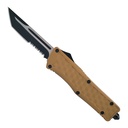
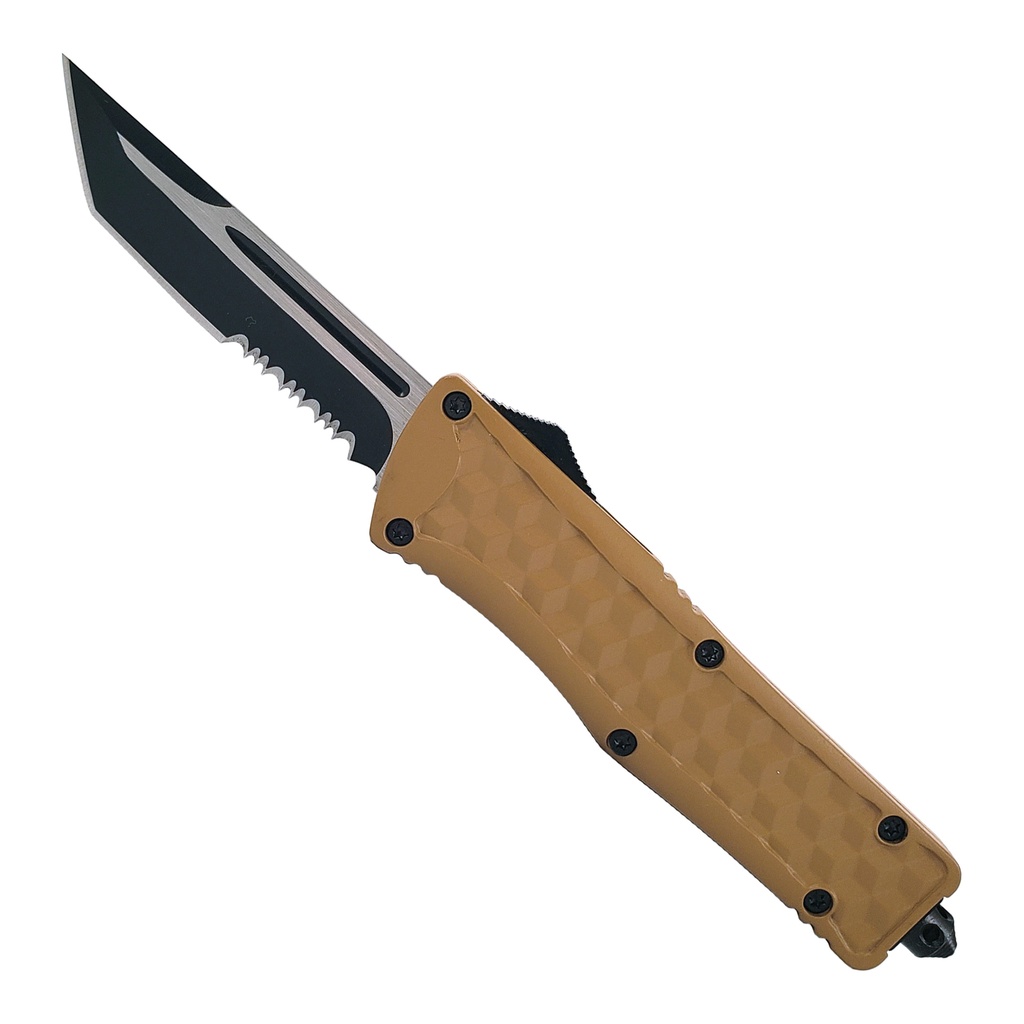
This earns a spot among the best OTF knife options for hard-use EDC because it feels built for real work, not photos. The 3.5" American tanto with partial serrations chews through rope and plastic, while the single-action OTF mechanism snaps the blade out with a positive, confident stroke. The coyote aluminum handle’s geometric texturing locks into your grip, and at 9" overall with a deep-carry clip and sheath, it rides well on belt or pocket for daily or field carry.
What Actually Makes the Best OTF Knife?
When you’ve carried a dozen out-the-fronts, the “best OTF knife” stops being about flashy mechanisms and starts being about which one you reach for when the task isn’t Instagram-friendly. The best OTF knife for real-world EDC has to deploy predictably, cut common materials without drama, ride comfortably in the pocket, and survive being dropped, scraped, and loaned out. That’s the lens this Geometric Quick-Strike OTF Tactical Knife - Coyote Aluminum was judged through.
This is a single-action OTF with a 3.5" American tanto, partial serrations, and a coyote aluminum chassis that feels like it came from a piece of duty gear, not a novelty catalog. It doesn’t try to be the best OTF knife for collectors or fidgeters; it aims squarely at being the best OTF knife for everyday carry and field chores where cutting performance matters more than mechanical tricks.
Why This Design Earns a Spot Among the Best OTF Knives
The geometry here is more than style. The handle is machined with faceted flats and texture that give your fingers consistent purchase whether you’re bare-handed or gloved. In use, that makes a bigger difference than any engraving or flashy inlay. At 5.5" closed and 7.9 oz, the knife is undeniably substantial, but that mass translates into a planted, vibration-free feel when the blade bites into material.
The blade is where this starts to justify a “best OTF knife” label for utility. The American tanto profile puts a stout tip out front for puncturing packaging, heavy plastics, or dense cardboard, while the straight primary edge stays easy to touch up on a stone. The partial-serrated section near the base is aggressive enough to tear through paracord and nylon straps without sawing for minutes. It’s not a gentleman’s slicer; it’s a work edge.
Deployment and Single-Action OTF Mechanism
The slide actuator on the handle’s side drives a single-action mechanism: you thumb the control forward to fire the blade, then retract it manually to reset. For buyers chasing the best double-action OTF knife experience, this isn’t that. But as a fast-access cutting tool, the single-action design pays off in a snappier, more authoritative deployment with fewer moving parts to gum up.
The travel on the slide is deliberate, which matters if you actually carry an OTF knife for EDC. Light, hair-trigger actuators are fun on a desk; they’re less fun when something in your pocket bumps them. Here, the stroke requires intent, and the lock-up at extension feels solid rather than springy. There’s no external safety, so that tuned actuation weight is doing the safety work.
Blade Steel and Edge Reality
The blade steel is a workaday stainless rather than a premium alloy. For a knife at this price point, that’s an honest choice. You’re not getting the edge retention of S35VN, but you are getting steel that shrugs off moisture and can be brought back with basic sharpening tools. In testing on cardboard, light wood, and plastic strapping, the edge held a functional bite through typical daily tasks before needing a touch-up.
For someone looking for the best OTF knife under $100 to actually use, that’s the right tradeoff: easy maintenance, decent toughness, and rust resistance that doesn’t punish you if you skip wiping it down after breaking down boxes.
The Best OTF Knife for Hard-Use EDC, Not Minimalist Carry
This knife’s combination of weight, blade style, and hardware makes it the best OTF knife for everyday carry if your “EDC” looks more like shipping, maintenance, range days, or field work than office envelopes. At 7.9 oz and 9" overall, it’s not trying to disappear in athletic shorts. It’s sized for a belt, heavier-duty pants, or kit.
The deep-carry pocket clip tucks it low enough to avoid printing, and the included deluxe sheath gives you a belt or MOLLE-friendly option. The glass-breaker style pommel isn’t a gimmick here; on a knife this weight, it actually has enough mass behind it to pop tempered glass or serve as an impact tool in a pinch.
Carry and Ergonomics in Daily Use
In pocket, you notice it—but you also notice the stability when cutting. The geometric handle profile fills the hand, and the flat planes keep it from rolling during pull cuts. The matte coyote finish is less slick than many anodized handles; combined with the texturing, it stays in place even when wet.
Tradeoff honesty: this is not the best OTF knife for someone who counts grams or wants a discreet suit-pocket tool. If you prioritize ultralight carry, a slim double-action OTF or a conventional folder will suit you better. If you’d rather your OTF feel like a compact fixed blade in the hand, this is the direction you want.
Build Quality, Value, and Where It Fits in the OTF Landscape
Within the crowded OTF category, you get everything you actually need here and very little you don’t. The hardware is straightforward: black screws, a robust clip, and a neutral coyote colorway that blends into modern tactical or outdoor kits. The machining is clean enough that there are no hot spots or sharp unfinished edges where your hand rests.
As a value play, this sits squarely in the “best OTF knife under $100” tier for people who intend to cut with their knives, not just collect them. You get an automatic mechanism, serrated-tanto versatility, real aluminum construction, and both pocket clip and sheath carry options. What you forgo are exotic steels, brand cachet, and ultra-refined finishing.
If you’re deciding between this and a slimmer double-action model, the honest comparison is simple: the double-action OTF will feel better for fidgeting and lighter carry; this Geometric Quick-Strike will feel better when you’re torquing into thick material and want a handle that fights back instead of flexing.
Common Questions About the Best OTF Knives
What makes an OTF knife the best choice for EDC?
The best OTF knife for EDC gives you one-hand, straight-line deployment with a profile that sits flat against the pocket. On this model, the side-mounted slide is easy to find without looking, and the blade exits in a direct line from the handle, which is useful in tight spaces—think cutting strapping inside a vehicle or slicing tape in cluttered storage. If your tasks lean toward frequent, short cuts rather than long slicing, a reliable OTF like this can beat many folders on pure access speed.
How does this OTF knife compare to a typical folding knife?
Compared to a standard liner-lock or frame-lock folder, this OTF knife trades a bit of mechanical simplicity for deployment speed and straight-line access. You don’t have to swing a blade out or clear it from the handle arc; it’s there, centered, as soon as you drive the slide. The downside is that it’s thicker and heavier than many folding knives and has more internal parts to keep clean. If your priority is a slim, featherweight pocket presence, a conventional folder wins; if you want fast, glove-friendly activation and a tactical tanto blade on tap, this OTF takes the edge.
Who should choose this OTF knife?
This is for buyers who want the best OTF knife for everyday carry in harsher, more physical environments: warehouse work, farm or ranch chores, range days, or outdoor trips where cutting nylon, plastic, and light wood are routine. It’s also a fit if you prefer a tactical aesthetic—coyote aluminum, black hardware, glass-breaker pommel—without paying collector pricing. If you mostly open mail at a desk or care more about a dress-friendly profile, a smaller, lighter OTF or a traditional folder will serve you better.
If you’re looking for the best OTF knife for hard-use EDC on a realistic budget, this is it—because it prioritizes a stout tanto-serrated blade, a positive single-action deployment, and a grippy coyote aluminum handle over cosmetic frills, delivering a tool that feels more like gear than gadget.
| Blade Length (inches) | 3.5 |
| Overall Length (inches) | 9 |
| Closed Length (inches) | 5.5 |
| Weight (oz.) | 7.9 |
| Blade Color | Black |
| Blade Finish | Matte |
| Blade Style | American Tanto |
| Blade Edge | Partial-Serrated |
| Blade Material | Steel |
| Handle Finish | Matte |
| Handle Material | Aluminum |
| Button Type | Slide |
| Theme | None |
| Double/Single Action | Single |
| Safety | None |
| Pocket Clip | Yes |
| Sheath/Holster | Deluxe Sheath |