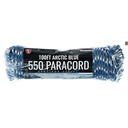
Glacier Weave Cold-Weather Survival Paracord - Arctic Blue Camo
15 sold in last 24 hours
This isn’t craft-store cord; it’s true 550 survival paracord built for cold camps and sketchy weather. The Glacier Weave’s 7-strand nylon core, 5/32" diameter, and 220 lb working load give you real confidence for guy lines, tarp rigs, and emergency lash-ups. At 100 feet, it’s long enough for a weekend basecamp without turning into a tangled liability. The Arctic Blue Camo pattern disappears in snow and rock, but stays readable enough in the hand when you’re tying knots with gloves on.
What Makes the Best Paracord for Real-World Survival Use
Before calling anything the best paracord for survival, you have to define the job. In the field, cordage earns its place by doing a handful of things well: holding real working loads without drama, tying and untying cleanly, resisting weather, and being long enough to solve problems without turning into a tangled mess. The Glacier Weave Cold-Weather Survival Paracord - Arctic Blue Camo checks those boxes in a way that feels deliberate, not decorative.
This is true 550 paracord with a 7-strand nylon core, a 5/32" diameter, and a 220 lb working load supported by a 550 lb break strength. That’s the baseline spec serious users look for, but how it handles at camp is what actually matters.
Why This 550 Cord Earns a Spot Among the Best Paracord Options
If you carry paracord for camping or emergency prep, you know not all "550" is equal. Some collapses to mush when cinched, some frays before you’ve finished a weekend. The Glacier Weave line earns its place as some of the best paracord for everyday outdoor carry because it’s built around a predictable, repeatable feel.
7-Strand Core That Works, Not Just Advertises
The core is the difference between survival paracord and cheap utility line. Here you get a full 7-strand nylon core, each inner strand usable on its own for light-duty tasks: sewing a torn strap, making improvised fishing line, or lashing a splint. In practice, that means one 100 ft hank can be deconstructed into multiple smaller lines without leaving you empty-handed if you still need a main guy line.
Under tension, the sheath and core stay unified. You don’t get that hollow, flat feel that shows up in bargain cord once you really crank on a knot. It cinches down without developing flat spots, which keeps strength more consistent along the length.
5/32" Diameter That Actually Knots and Releases
On paper, 5/32" is standard for 550 paracord. In hand, some versions run fat and stiff or thin and spongy. This Arctic Blue Camo cord hits a usable middle: supple enough to tie with cold or gloved hands, but firm enough that taut-line hitches and trucker’s hitches bite and stay put overnight.
When you break camp, knots back out without a wrestling match. That matters if you’re adjusting tarp tension multiple times through changing weather, or reusing the same cord for different tasks instead of cutting new lengths every time.
Cold-Weather Performance: Best Paracord for Winter Camps and Snow Loadouts
Visually, this is clearly designed as winter or alpine cord, and the performance lines up with that positioning. The nylon construction handles typical outdoor temperature swings without turning into wire or going mushy. In cold, the sheath stays flexible enough to tie, instead of feeling like brittle plastic.
Arctic Blue Camo That Balances Concealment and Visibility
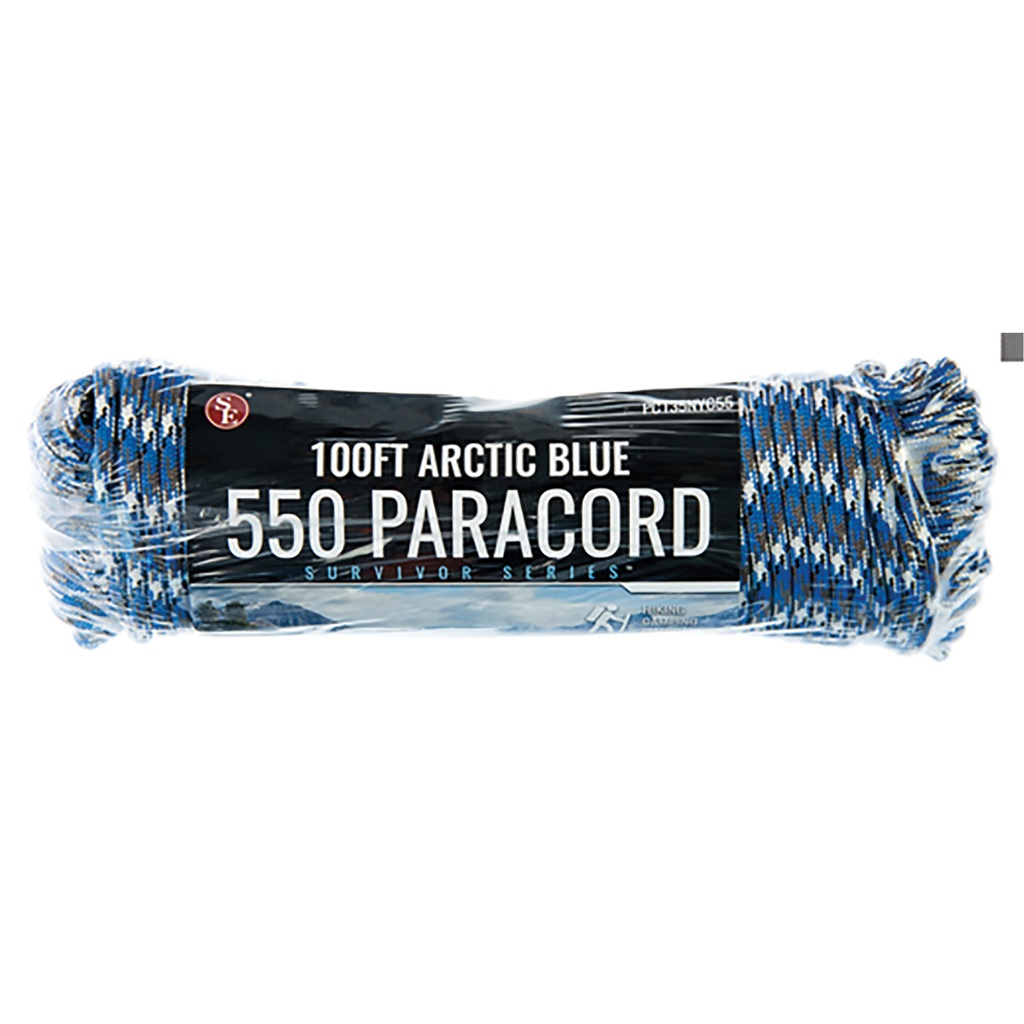
The Arctic Blue Camo pattern is not just an aesthetic play. Against snow, granite, and ice, it blends enough that you’re not stringing bright orange lines across a minimalist winter camp. At the same time, the mix of blue, white, black, and gray keeps the cord trackable in your hands and in low, diffuse light. That balance is useful when you’re moving around camp at night and don’t want to clothesline yourself on invisible guy lines.
100 Feet: The Usable Length for Real Camps
At 100 feet, this hank is long enough for a legitimate basecamp: four tent or tarp tie-outs, a ridgeline, and still enough left to rig a quick gear line or emergency lashing. You’re not paying for an unnecessary 300-foot brick that lives in a bin, and you’re not stuck with a token 25-foot bundle that runs out after the first shelter. For most hikers, overlanders, and preppers, 100 feet is the practical sweet spot.
Best Use Case: Everyday Camp and Emergency Cord, Not Heavy Rigging
Honesty matters: this is not climbing rope, and it’s not meant to haul engines. With a 220 lb working load and 550 lb break strength, it’s ideal as the best paracord for everyday camp tasks and general survival prep, not for life-safety applications.
Use it for tarp shelters, securing loads in a vehicle, hanging bear bags within reason, building improvised stretchers, or bundling firewood. If you routinely need to hoist heavy game or secure dynamic loads, you should be packing proper static rope alongside this, not instead of it.
Value and Reliability: Why This Hank Belongs in Your Kit
In a market full of decorative "paracord" bracelets and craft cord, the Glacier Weave Survivor Series sticks to basics: full 7-strand nylon, standard 5/32" diameter, honest 220 lb working load. You’re paying for repeatable performance rather than novelty colors that hide poor construction.
The clear packaging and straightforward labeling are small signals, but they matter: 100 ft, 550 paracord, Survivor Series, and load ratings are printed right on the wrap. You know exactly what you’re stowing in your pack or truck.
Common Questions About the Best Paracord for Survival and Camping
What makes paracord the best choice for EDC and outdoor kits?
The best paracord for EDC and outdoor kits combines three traits: reliable strength, manageable bulk, and versatility. True 550 paracord with a 7-strand core, like this Glacier Weave hank, gives you a working load that covers most camp and emergency tasks without weighing down your pack. Because you can strip the inner strands, one length of cord can become multiple lighter-duty lines for repairs, bindings, or improvised gear. That flexibility is why seasoned hikers and preppers default to 550 paracord instead of generic hardware-store rope.
How does this survival paracord compare to generic utility rope?
Generic utility rope often advertises a break strength but skips meaningful construction details. Many are solid braid with no usable core, or they flatten and glaze under load. This Survivor Series paracord uses a 7-strand nylon core with a tight outer sheath, so it keeps its round profile under tension and can be deconstructed for finer tasks. It also has a defined working load (220 lb) instead of a vague "strong" claim. For camping and survival, that predictability puts it ahead of most budget utility rope.
Who should choose this Arctic Blue Camo paracord?
This Glacier Weave cord is best for people who actually use their cordage: hikers setting real tarp shelters, overlanders who want a dedicated recovery and camp line, and preparedness-minded buyers building go-bags or vehicle kits. If your priority is high-visibility safety line, you’re better off with a bright orange or neon colorway. If you want cord that fits cleanly into winter or mountain environments while still tying and holding like proper 550, the Arctic Blue Camo pattern is a smart pick.
If you’re looking for the best paracord for cold-weather camping and general survival tasks, this Glacier Weave 7-Strand Survival Paracord is the sensible choice because it combines true 550 construction, a practical 100 ft length, and an Arctic camo pattern that’s built for real winter camps—not just the craft table.