Gurkha Heritage Field Kukri Knife - Brass & Leather
15 sold in last 24 hours
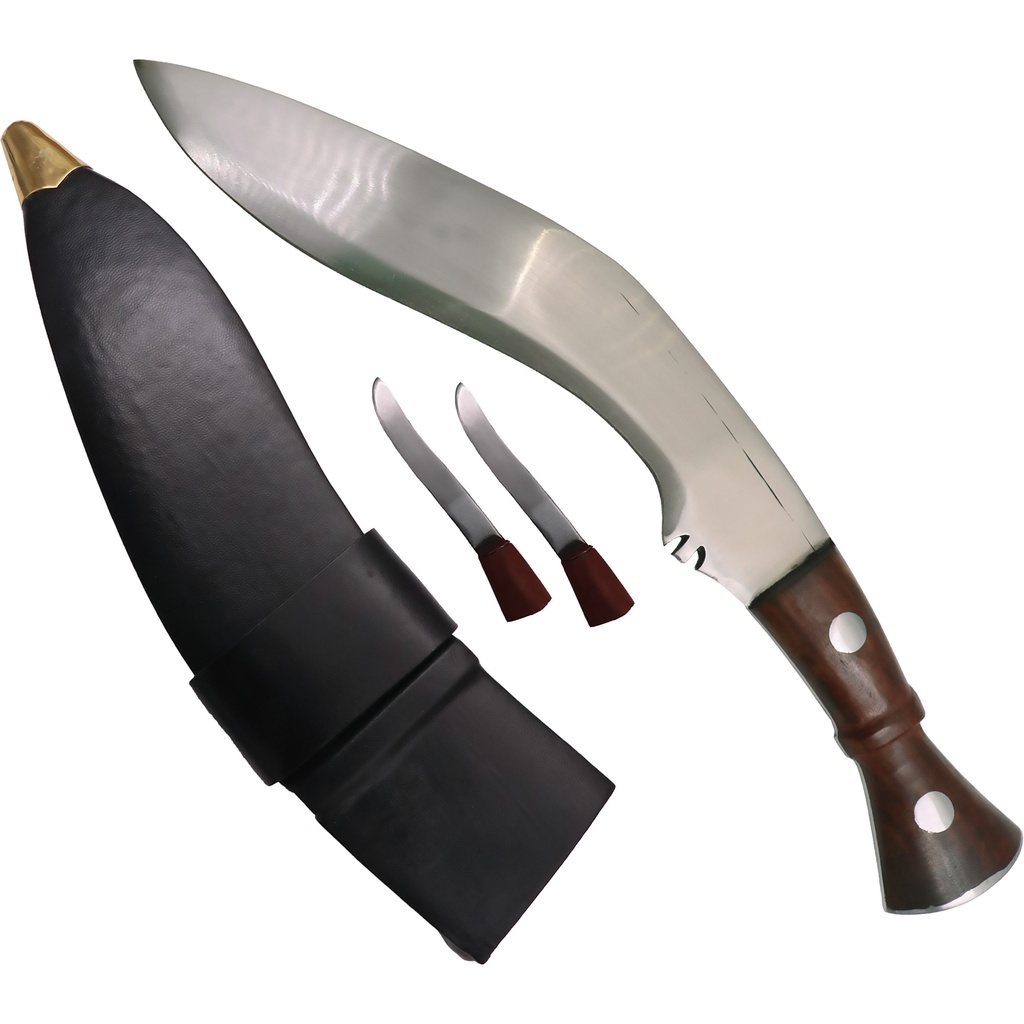
This isn’t a wall-hanger; it’s a working Gurkha heritage field kukri. The 12-inch polished carbon steel blade carries weight forward, so chopping and slicing bite deeper with less effort. A brass-bolstered handle and flared pommel lock the knife in your hand when you’re swinging hard. The leather belt sheath keeps the kukri, karda, and chakmak together, giving you a main blade, a small utility blade, and a field-sharpening tool in one traditional kit.
What Makes a Kukri Earn “Best” Status as a Field Knife
When you’re evaluating the best kukri knife for real field use, you’re not chasing looks — you’re looking for three things: forward-weighted cutting power, a handle that stays put when your hand gets tired, and a sheath that actually carries. This Gurkha Heritage Field Kukri Knife - Brass & Leather checks those boxes in a way a lot of decorative kukris simply don’t.
The 12-inch carbon steel blade has the classic kukri curve: thick at the spine, plenty of mass toward the front, and a deep belly that lets the edge punch above its weight in chopping. Paired with a brass-bolstered handle and leather belt sheath, it behaves like a working tool first and a display piece second — which is exactly how a best-in-class kukri should be judged.
Blade and Steel: Where This Kukri Actually Excels
Weight-Forward Geometry for Real Cutting Power
The heart of any kukri is its geometry. On this knife, the 12-inch polished carbon steel blade carries noticeable forward weight. In use, that means the edge wants to bite without you muscling every cut. Limbing small branches, roughing in kindling, or clearing brush, the belly of the blade does the work if you let the swing arc naturally. That’s what separates a best kukri knife for field work from a generic big knife — the blade shape turns your swing into efficient chopping instead of just impact.
The plain edge, with no serrations to snag, makes it easy to sharpen in the field using the included chakmak or a stone. Carbon steel will patina and can rust if ignored, but the tradeoff is straightforward: better bite, easier sharpening, and a more forgiving edge for rough tasks than many stainless options in this price range.
Carbon Steel Tradeoffs: Strength vs. Maintenance
Compared to stainless, the carbon steel here favors performance and ease of sharpening over corrosion resistance. If you want the best kukri knife for rainy coastal conditions with zero maintenance, this isn’t it. If you’re willing to wipe the blade down, dry it, and occasionally oil it after use, you get a blade that sharpens quickly and shrugs off light edge damage from wood contact without a fight.
For buyers who actually use their kukri around camp or property, that’s a sensible trade: minimal sharpening effort in exchange for basic care discipline.
Handle, Grip, and Carry: Best Kukri Knife for Budget Field and Display
Brass-Bolstered Handle Built to Stay in Hand
The handle on this Gurkha Heritage Field Kukri mixes polished wood with brass accents and a flared, bell-shaped pommel. In hand, that pommel matters more than the shine; it keeps the knife from sliding out when your grip loosens late in the day. The large round pins are overkill from a structural standpoint at this size, but they’re a reassuring sign this isn’t a hollow showpiece.
Smooth wood and polished brass won’t give you the locked-in traction of G10 or heavy texturing, especially if your hands are wet. If you want the absolute best kukri knife for hard, sweaty jungle work, you’ll probably want a more aggressively textured grip. For temperate camping, backyard work, and general outdoor use with gloves nearby, this handle does its job and looks the part doing it.
Leather Belt Sheath with Traditional Companion Blades
The black leather sheath carries the kukri on a belt and includes two side pockets for the karda (small utility blade) and chakmak (traditionally for honing and spark-striking). This setup is part of what makes this one of the best kukri knife kits at its price: you’re getting not just a big blade, but a small companion for precise cuts and a tool for touch-ups in the field.
The sheath is more traditional than tactical. Retention is decent for upright belt carry, but it’s not designed for inverted or high-impact mounting. As a best kukri knife for budget-conscious collectors and occasional field use, the sheath does its job: it protects the edge, rides on a belt without fighting you, and keeps the full set together.
Where This Kukri Is Best — and Where It Isn’t
This is the best kukri knife for buyers who want a working, traditional-style Gurkha profile without paying custom money. The blade length and weight-forward balance make it genuinely useful for light chopping, yard work, and camp tasks, and the included karda and chakmak turn it into a compact little system instead of a single large blade.
It is not the best choice if you need a refined, high-end collector’s kukri with premium steels and presentation-grade fit and finish. It’s also not ideal as an ultralight backpacking tool; a 12-inch carbon steel kukri with brass fittings is unapologetically substantial. If you’re counting ounces, a smaller full-tang bushcraft knife will serve you better.
But if you want a kukri you won’t baby — something you can hang on the wall, then pull down and actually swing at real wood — this strikes a sweet spot between cost, heritage aesthetics, and functional performance.
Common Questions About the Best OTF Knives
What makes an OTF knife the best choice for EDC?
For everyday carry, the best OTF knife combines reliable double-action deployment, a secure lockup, and a slim profile that disappears in the pocket. A good OTF also uses steel that holds an edge through typical daily tasks — opening packages, light cutting, and occasional utility work — without needing constant touch-ups. Strong springs, a positive firing switch, and a safe retraction system separate the best OTF knife for EDC from budget options that misfire or feel loose over time.
How does this OTF knife compare to a folding knife?
The best OTF knife offers faster, more linear deployment than most folders: push the switch, and the blade is ready without wrist flicks or thumb studs. However, a well-built folding knife usually has fewer moving parts, which can mean greater long-term durability under heavy torque and prying (which you shouldn’t do with any knife, OTF or otherwise). In short, the best OTF knife wins on one-handed speed and convenience, while a classic folder often wins on simplicity and ruggedness for rough lateral tasks.
Who should choose this OTF knife?
The best OTF knife is suited to users who prioritize rapid, one-handed access in a compact package — people who open and close their knife many times per day and value the clean in-line action. If you’re mainly doing heavy carving, batoning, or hard outdoor work, a fixed blade or stout folder is a better fit. If your needs are mostly everyday cutting with occasional emergencies where fast access matters, a well-made OTF knife is hard to beat.
Final Verdict: Best Kukri Knife for Heritage-Style Field Use on a Budget
If you’re looking for the best kukri knife for heritage-inspired field use without overspending, this Gurkha Heritage Field Kukri Knife - Brass & Leather is a defensible choice. The 12-inch carbon steel blade delivers real chopping efficiency, the brass-bolstered handle and flared pommel keep it controllable when swinging, and the leather sheath with karda and chakmak gives you a complete, traditional kit. It’s not a premium collector’s piece, and it doesn’t pretend to be; it’s a working, Gurkha-style kukri you can actually use — and that’s exactly what earns it a place on a best-list for budget field kukris.
| Blade Length (inches) | 12 |
| Overall Length (inches) | 17 |
| Blade Color | Silver |
| Blade Finish | Polished |
| Blade Style | Kukri |
| Blade Edge | Plain |
| Blade Material | Carbon Steel |
| Handle Finish | Polished |
| Handle Material | Brass |
| Theme | Gurkha |
| Handle Length (inches) | 5 |
| Pommel/Butt Cap | Brass pommel |
| Carry Method | Belt sheath |
| Sheath/Holster | Leather |