Heritage Scrollwork EDC Pocket Knife - Damascus Wood
13 sold in last 24 hours
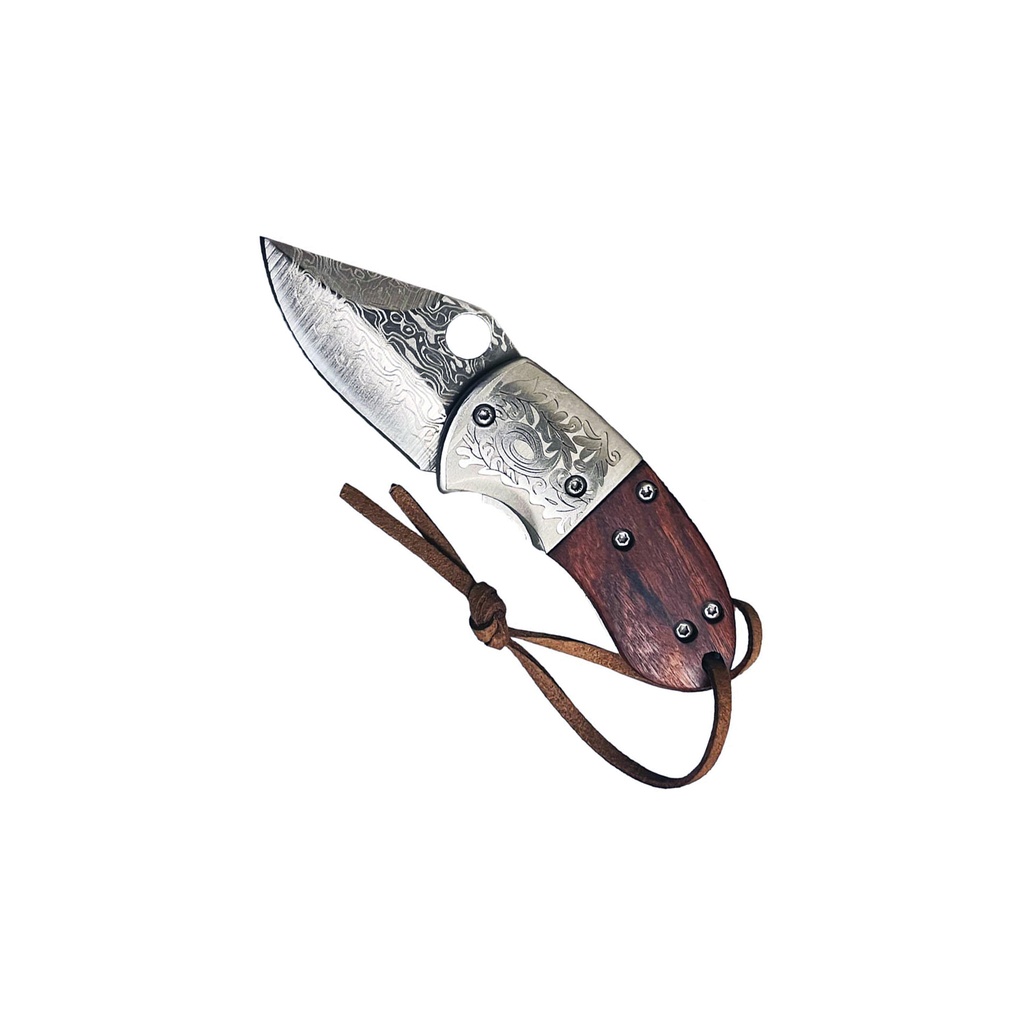
This feels less like a cheap pocket knife and more like a small heirloom you’re not afraid to use. The Damascus-pattern clip point slices through envelopes, cord, and packaging cleanly, while the liner lock and generous thumb hole make opening and closing predictable and safe. Engraved bolsters and contoured wood scales give real grip instead of slick showpiece vibes. At under five inches open, it disappears on a lanyard until you actually need a capable everyday cutter.
What Makes the Best OTF Knife Lists Miss Knives Like This
Most "best OTF knife" roundups never touch traditional folders, but if you actually carry and cut with knives every day, you know the story is more nuanced. This Heritage Scrollwork EDC Pocket Knife - Damascus Wood isn’t an out-the-front automatic. It’s a compact, manual liner-lock pocket knife that borrows heirloom styling and applies it to everyday cutting. If you’re browsing best OTF knife reviews because you want a small, pocketable cutter for real life, this deserves a serious look as an alternative.
How We Judge the Best OTF Knife Alternatives for Everyday Carry
When I test knives that compete with or replace the best OTF knife for everyday carry, I look at four things: deployment reliability, control during fine cuts, comfort in real grips, and how much pocket or lanyard space they demand. This Damascus-pattern folder hits those benchmarks differently than an automatic, and for a lot of people, better.
Deployment and Control vs. Typical OTF Mechanisms
Instead of a spring-driven, double-action OTF mechanism, this knife uses a simple manual open with a large thumb hole. It’s slower than the best OTF knife for rapid deployment, but noticeably more controlled. You ease the blade out instead of launching it, which matters if you mostly open boxes near your legs, kids, or coworkers. The liner lock engages with a clear mechanical click, and disengaging it with your thumb is predictable even if your hands are cold or a bit slick.
Grip, Ergonomics, and Real Cutting Tasks
The contoured wood handle scales and engraved stainless bolsters give more traction than the polished look suggests. There are no aggressive jimping ramps or tactical angles, but for typical EDC tasks — breaking down cardboard, trimming loose threads, opening blister packs — that’s a plus. You can choke up behind the spine and guide the 2-inch clip point with fine control, something the bulkier bodies of many OTF knives never quite match.
Why This Knife Belongs in a ‘Best OTF Knife for EDC’ Conversation
If your idea of the best OTF knife for EDC is “something compact, always on you, with enough blade to handle daily tasks,” this Damascus-pattern folder checks those boxes through simpler engineering.
Blade Performance: Damascus Pattern, Work-Ready Geometry
The blade is stainless steel with a Damascus-style etched pattern, not forged-layered Damascus. That matters: you’re not getting boutique steel, but you are getting corrosion resistance and easy maintenance. In real use, the 2-inch clip point and full flat-ish grind are what count. The tip is fine enough for detail work — cutting tape out of seams or scoring light material — while the belly handles draw cuts through packaging and cord. It sharpens quickly on a basic pocket stone, where some high-end OTF steels can be fussy without diamond gear.
Carry Reality: Lanyard-Based, Not Pocket-Clip Driven
Instead of the deep-carry clip you’ll find on most contenders for best OTF knife, this piece leans into a different carry style: a leather lanyard through a dedicated pommel hole. In practice, that means it disappears in a pocket, bag, or organizer, and you fish it out by the lanyard when needed. If you live in lighter fabrics or don’t like big clips printing on your pocket, this is a more discreet, quieter way to carry a working blade.
Best For: The Everyday Carrier Who Wants Heirloom Looks, Not Automatic Flash
Where a true best OTF knife shines is speed and one-handed deployment under stress. Where this Heritage Scrollwork EDC Pocket Knife excels is almost everywhere else: desks, workshops, glove boxes, and front pockets where you just need a dependable, non-threatening cutter.
It isn’t the best choice if you’re after a defensive tool, or if you work gloved all day and want a huge, textured switch. But if your knife’s main job is to handle small, frequent tasks while looking like something you’d actually be proud to hand to a friend, this is exactly its lane.
Honest Tradeoffs vs. a True Best OTF Knife
- Slower deployment: Manual opening is deliberate, not instant.
- Less tactical grip: Comfortable wood scales, but no aggressive traction or glass breaker.
- Classic styling: Great in offices and around non-knife people, less suited if you want overtly tactical presence.
Those tradeoffs are why this works so well as a best OTF knife alternative for EDC, especially in environments where an automatic raises eyebrows.
Common Questions About the Best OTF Knives
What makes an OTF knife the best choice for EDC?
The best OTF knife for everyday carry usually offers three things: fast one-handed deployment from a closed handle, a secure double-action mechanism that reliably locks in and out, and a slim profile with a strong pocket clip. That combination serves people who prioritize speed and repeatable mechanics — first responders, some trades, and users who want a defensive-capable tool. For everyone else, a compact manual folder like this Damascus-pattern knife can accomplish the same cutting jobs with less mechanical complexity and, often, less legal and social friction.
How does this OTF knife alternative compare to a typical best OTF knife?
Compared to a typical best OTF knife, this Heritage Scrollwork EDC Pocket Knife trades spring-driven deployment and a sliding switch for a thumb hole and liner lock. You lose some deployment speed, but you gain simpler construction, easier field cleaning, and fewer moving parts to fail. Most OTF knives are longer, more angular, and clearly tactical; this stays shorter at around 4.5 inches overall, with engraved bolsters and wood that read as a gentleman’s knife instead of a weapon.
Who should choose this OTF knife alternative?
Choose this knife if you were considering the best OTF knife for EDC purely because you wanted a compact, always-there blade — not because you need automatic deployment. It’s a smart match for office workers, hobbyists, and collectors who appreciate Damascus-style aesthetics and traditional materials, but still want a real cutting tool. If your priority is everyday practicality and low-key style over tactical performance, this fits better than a full-blown OTF.
If You’re Looking for the Best OTF Knife Alternative for Classic EDC, This Is It
If you’re looking for the best OTF knife for everyday carry and realize what you actually need is a compact, civilized cutter, this Damascus-pattern folder is the better answer — because it delivers controlled manual deployment, a practical 2-inch clip point, and warm, engraved styling that fits in more pockets and more settings than a true automatic ever will.
| Blade Length (inches) | 2 |
| Overall Length (inches) | 4.5 |
| Blade Color | Silver |
| Blade Finish | Damascus |
| Blade Style | Clip Point |
| Blade Edge | Plain |
| Blade Material | Stainless Steel |
| Handle Material | Wood |
| Theme | Damascus |
| Handle Length (inches) | 2.5 |