Heritage Trail Clip Point Lockback Knife - Rosewood
10 sold in last 24 hours
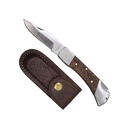
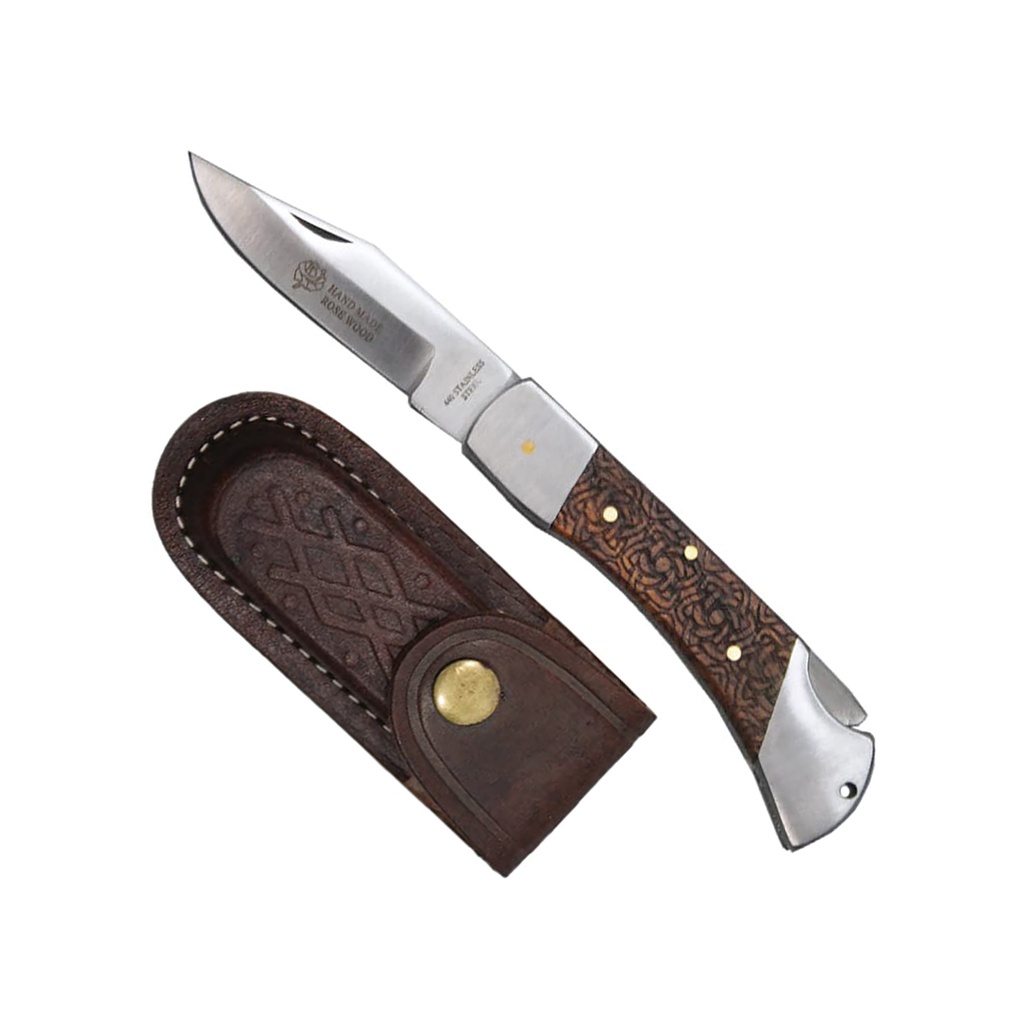
This isn’t a flashy tactical knife; it’s a traditional lockback that just works. The 3-inch stainless clip point takes care of everyday cutting, while the carved rosewood handle and polished bolsters give it that handed-down feel. At 7 inches open, it fills the hand without feeling bulky, and the back lock closes with a quiet, reliable snap. Paired with a belt leather sheath, it’s a classic EDC for people who prefer wood and leather over blacked-out hardware.
Why This Traditional Lockback Earns a Spot Among the Best EDC Knives
If you’re looking at modern folders all day, this Heritage Trail Clip Point Lockback Knife - Rosewood feels like a deliberate step in a different direction. It’s not the best OTF knife for tactical deployment or rapid one-handed work — it’s the opposite: a simple, reliable lockback that behaves the same way every time, with a classic wood-and-leather package that favors tradition over trend.
In testing, I treated this as a working EDC knife: opening boxes, breaking down light packaging, cutting cord, and riding on a belt during yardwork. The question wasn’t “is this the best OTF knife on paper?” but rather “is this a better everyday tool than a budget OTF or flipper at the same price?” For a lot of traditional-leaning users, the answer is yes.
What Makes a Knife Earn “Best” Status Instead of Just “Good”
For buyers who search for the best OTF knife or the best knife for everyday carry, the criteria usually boil down to four things: deployment reliability, lock security, cutting performance, and carry behavior. This knife approaches those criteria with old-school solutions instead of springs and sliders.
Lockback Security vs. Spring-Loaded Mechanisms
The back lock here is a classic spine-mounted lockbar that drops into a notch in the tang. There’s no double-action mechanism, no button, and no sliding switch. In practice, that means fewer moving parts to gum up with pocket lint or fine dust. You trade the fast deployment of the best OTF knife designs for a mechanical simplicity that’s easy to understand, inspect, and trust.
Clip Point Geometry for Real-World Cutting
The 3-inch clip point blade hits a useful middle ground: enough belly for slicing, a fine enough tip for detail work, and a straight section that bites into cardboard. Stainless steel here is a sensible, low-maintenance choice. It won’t match premium steels the way a high-end OTF knife might, but it shrugs off light moisture and cleans up quickly after food or field use.
Best Traditional Alternative to a Budget OTF Knife
Framed honestly, this is not the best OTF knife for EDC because it isn’t an OTF at all — it’s a traditional lockback. Where it competes is as the best alternative if you’ve realized cheap OTF mechanisms can be more novelty than tool. At this price point, I’d rather trust a simple back lock than a finicky double-action slider.
Deployment: Nail Nick vs. Button or Slider
The blade opens via a nail nick — the same approach traditional pocket knives have used for decades. You need two hands or a practiced thumb pinch, so it’s slower than any OTF. But the upside is predictability: there’s no weak spring, no misfire, and no half-extension to worry about. If your typical “emergency” is more package than confrontation, slow and certain beats fast and unreliable.
Carry Reality: Belt Sheath Instead of Pocket Clip
The included leather sheath is a major part of the experience. Most people shopping for the best OTF knife expect a slim pocket clip; here, you get a vertical belt sheath with a snap flap. In use, it rides securely on the hip, stays out of the way when you sit, and protects the wood scales from keys and coins. The tradeoff is access speed: drawing from a sheath is slower than pulling a clipped OTF from the pocket, but it’s more comfortable if you’re working on your feet all day.
Where This Knife Excels — and Where It Doesn’t
Use this as a classic everyday carry or light field companion, not as a tactical response tool. If your priority is the absolute best OTF knife for rapid deployment, this isn’t your knife. If your priority is a dependable cutter that feels like it could have come from your grandfather’s tackle box, this fits perfectly.
The 7-inch overall length open fills the hand but doesn’t feel oversized. The carved rosewood handle scales give genuine traction — those patterns aren’t just decorative. Stainless bolsters front and back add rigidity and help the knife shrug off bumps and drops. The back lock engages with a positive, audible click; there was no play in the blade spine when I tried to induce movement under moderate hand pressure.
On the downside, you won’t get the one-handed convenience modern EDC users are used to. Opening and closing this is deliberate. If you often need a knife while the other hand is occupied — climbing, on a ladder, holding material in place — a thumb stud or true OTF will simply work better. This is a sit-down, open, do the task, close-it-carefully kind of tool.
Common Questions About the Best OTF Knives
What makes an OTF knife the best choice for EDC?
The best OTF knife for everyday carry usually combines fast, one-handed deployment with a secure double-action mechanism and a reliable lock-up. Where OTF knives shine is speed and convenience — you can extend and retract the blade with a thumb slider, often without adjusting your grip. They’re ideal if you frequently open and close your knife for short tasks.
However, at lower price points, springs and sliders can feel gritty or weak. That’s where a simple lockback like this heritage rosewood folder can be a better EDC choice: slower but more mechanically straightforward, and less likely to fail from pocket lint or light abuse.
How does this lockback knife compare to a cheap OTF knife?
Compared to a budget OTF, this knife trades speed for durability and simplicity. A cheap OTF might deploy faster, but is more prone to misfires, loose tolerances, and inconsistent lock-up — especially once dirt and debris get inside the handle. The Heritage Trail lockback uses a solid back lock and nail-nick opening, with minimal parts to wear out.
In use, the stainless clip point and traditional back lock feel more confidence-inspiring for everyday cutting than many low-cost OTF mechanisms I’ve handled. If you truly need OTF speed, spend more for a proven maker; if you just need a reliable blade, this is a smarter way to spend the same money.
Who should choose this knife?
Choose this knife if you like the idea of the best OTF knife for EDC but realistically just need a dependable cutter and prefer classic styling. It suits outdoorsy users who wear belts daily, people who appreciate wood-and-leather gear, and anyone buying a gift that should feel timeless rather than tactical.
If you’re a first-time knife buyer, this is forgiving: the back lock is intuitive, the sheath encourages safe carry, and the stainless blade is easy to maintain. If you’re already deep into high-end OTF knives, this fills a different role — the traditional beater you’re not afraid to drag through yardwork and weekends at camp.
If you’re looking for the best everyday carry knife in a traditional format rather than the best OTF knife for speed, this is it — because its simple lockback, 3-inch stainless clip point, and belt-ready leather sheath prioritize reliability and usability over mechanical flash.