
Holster-True Retention Practice Pistol - Black/Red
6 sold in last 24 hours
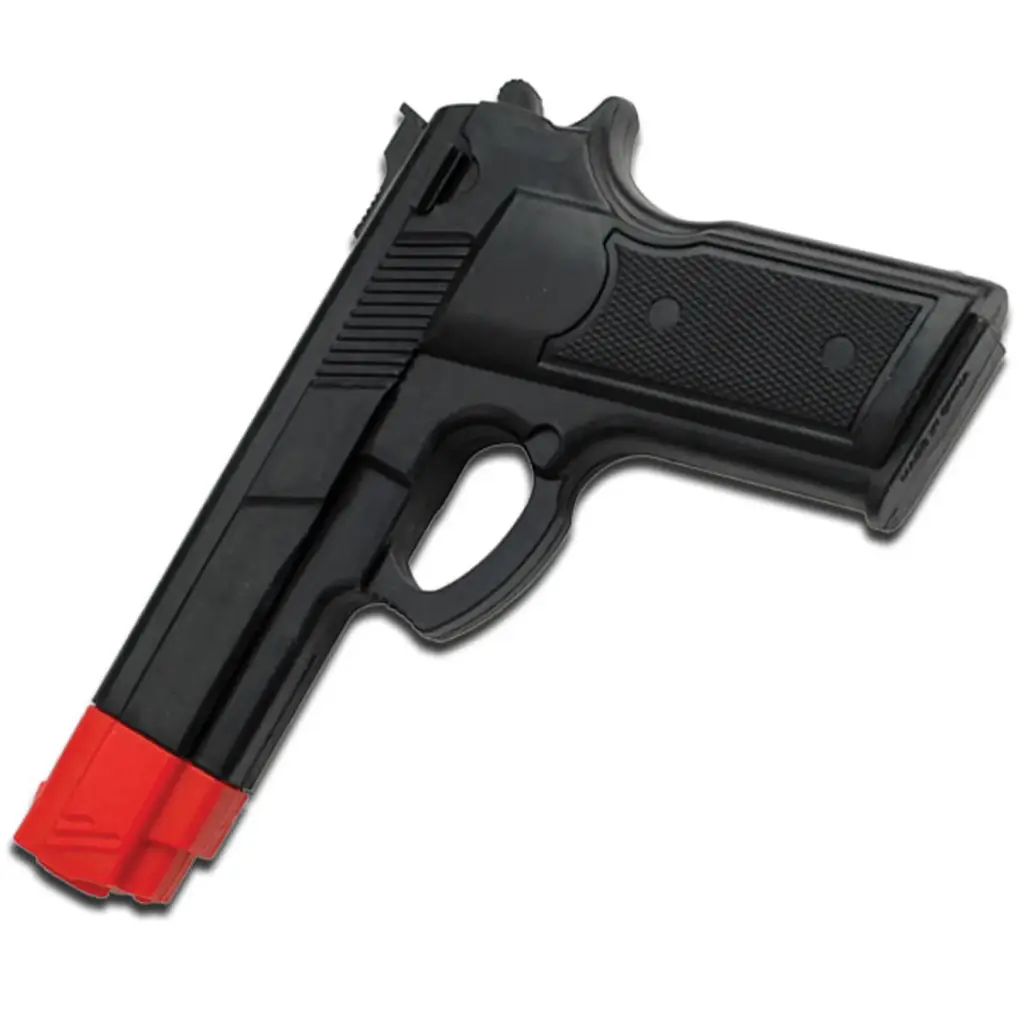
This isn’t a toy silhouette; it’s a holster-true retention practice pistol built for serious reps. The full-size semi-auto profile seats in common duty and concealment holsters, while the textured grip and beavertail contour give you realistic indexing on the draw. Solid rubber construction makes partner contact and pressure drills impact-safe, and the high-contrast black frame with red muzzle provides instant non-firing ID in classes, dojos, and force-on-force scenarios.
Why This Holster-True Trainer Belongs on a “Best” List
When instructors talk about the best training pistol for retention drills, they’re not looking for something clever — they’re looking for something students can’t mistake for a live gun, that still works with their existing holsters and draw-stroke mechanics. This holster-true rubber training pistol checks those boxes with a full-size semi-auto profile, high-contrast black/red color split, and one-piece impact-safe construction that stands up to real contact work.
What Makes the Best Training Gun for Retention Work?
Realistic Profile Without Live-Fire Risk
The best training gun for retention drills has to mimic a duty pistol closely enough that every rep transfers to live carry. Here, the slide shape, squared trigger guard, beavertail contour, and flat magazine well outline track closely with modern service pistols. That means your draw-stroke, re-holstering, and close-quarters indexing feel familiar, but the non-firing, solid rubber build eliminates the live-fire risk entirely.
Unmistakable Non-Lethal Visual ID
At the same time, the best trainer is one that nobody mistakes for a real firearm. The bright red muzzle section and barrel tip immediately separate this piece from a live gun, even across a matted dojo or a busy CCW class. Instructors get instant visual confirmation that only training pistols are in play, and students learn to respect the difference between training tools and live weapons.
Why This Is the Best Training “OTF” Substitute for Carry Mechanics
While this isn’t an OTF knife, it solves the same problem in pistol form that the best OTF knife for EDC solves in blade form: getting realistic deployment reps without unnecessary risk. Here, the one-piece rubber construction gives you a consistent draw stroke from concealment, the same way a reliable out-the-front mechanism gives you a consistent blade deployment. The holster-true silhouette lets you run your actual carry setup — belt, holster, retention devices — and pressure-test how your gear works when things get fast, sweaty, or contested.
Holster-True Fit for Realistic Draw Practice
Because the frame and slide dimensions track a modern semi-auto, this training pistol slides into many common duty and concealment holsters. That matters more than it sounds. The best training gun is the one you’ll actually carry in your existing rig, so you can rehearse clearing garments, breaking retention, and getting a firing grip without swapping to a dedicated training holster. Every rep you run with this matches your real-world setup more closely.
Textured Grip That Rewards Correct Indexing
The molded checkering on the grip panels and the beavertail-style rear contour give your hand clear tactile feedback when you grip correctly — and just as important, you feel it when you don’t. The best training pistol teaches consistency by feel, not just by lecture. Over dozens of draws, you start to notice whether you’re high on the backstrap, whether your support hand lands where it should, and whether your retention grabs are repeatable.
Best For: Retention Drills, Dojo Work, and Close-Contact Classes
This rubber training gun is best suited for environments where contact is expected and accidental bumps happen: martial arts dojos, weapon-retention blocks in defensive tactics courses, CCW classes that introduce entangled gun grabs, and scenario work where partners may fight over the weapon. The impact-safe rubber build absorbs strikes, disarms, and floor drops that would be unacceptable with a live firearm or even many blue-gun style trainers.
Where it’s not the best choice is precision manipulation work or dry-fire practice that depends on functional triggers and sights. There are no moving parts here — no cycling slide, no resetting trigger, no functional sights. If your goal is to refine trigger press or sight alignment, you’ll want a different tool. But if you’re drilling retention, holster work, and close-quarters access, this is the better, safer match.
Scenario Training That Doesn’t End the Class
Because the construction is a single piece of rubber with no sharp corners or metal edges, you can run disarm scenarios and full-speed grabs without worrying that a dropped pistol will crack a tile or bruise a partner. That takes the brakes off training: instructors can let students move faster, push harder, and explore realistic resistance without pausing every time the gun hits the ground.
Partner-Friendly, Instructor-Friendly Design
The high-contrast black body and red muzzle aren’t just cosmetic. On a crowded mat, instructors can instantly count how many training guns are out, where they are, and which way they’re pointed. Partners know that anything with a red tip is contact-safe, which builds trust during aggressive retention and disarm drills. That combination — holster realism with obvious non-lethal ID — is what nudges this toward the “best in class” conversation for professional trainers.
Common Questions About the Best OTF Knives and Training Tools
What makes an OTF knife the best choice for EDC?
When people hunt for the best OTF knife for everyday carry, they’re usually chasing three things: reliable deployment, manageable size, and safe pocket carry. A good double-action mechanism that fires and retracts consistently under real-world grime matters more than flashy machining. Blade steel should hold a working edge but still be field-sharpenable. And an OTF that carries flat and discreet — comparable to this trainer’s holster-true, low-drama profile on the belt — is more likely to be on you when you actually need it.
How does this rubber training gun compare to blue-gun style trainers?
Blue-gun trainers typically offer very crisp detail and rigid polymer construction. They’re excellent for holster fitting and static manipulation, but they can be harsh in contact-heavy drills. This rubber training pistol trades some surface crispness for impact safety. The slightly more compliant rubber is kinder to partners in throws, weapon-retention scrambles, and ground fighting. If your training is mostly classroom and holster fit-up, a rigid trainer is fine. If you’re doing real retention work, this rubber build is the more practical choice.
Who should choose this rubber training pistol?
Choose this if your curriculum includes weapon retention, disarms, or contested draws and you want a trainer that lives in real holsters without putting students at risk. Law-enforcement defensive-tactics instructors, concealed-carry teachers running close-contact blocks, and martial arts schools that integrate firearms all benefit most. If your focus is precision marksmanship or dry-fire reps with your exact carry gun, this shouldn’t be your only trainer — but it should be the one you grab when the class moves from theory to contact.
Final Recommendation: The Right Tool for Real Retention Reps
If you’re looking for the best training pistol for holster-true retention drills and close-contact work, this rubber model is it — because it combines a realistically profiled duty silhouette with impact-safe construction and high-visibility red muzzle ID. It’s honest about what it is: not a marksmanship trainer, not a prop, but a workhorse for dojos and classrooms where guns get grabbed, dropped, and fought over. In that narrow, serious niche, it earns its place.