Impact-Proof Duty Tactical Flashlight - Black Rubberized
4 sold in last 24 hours
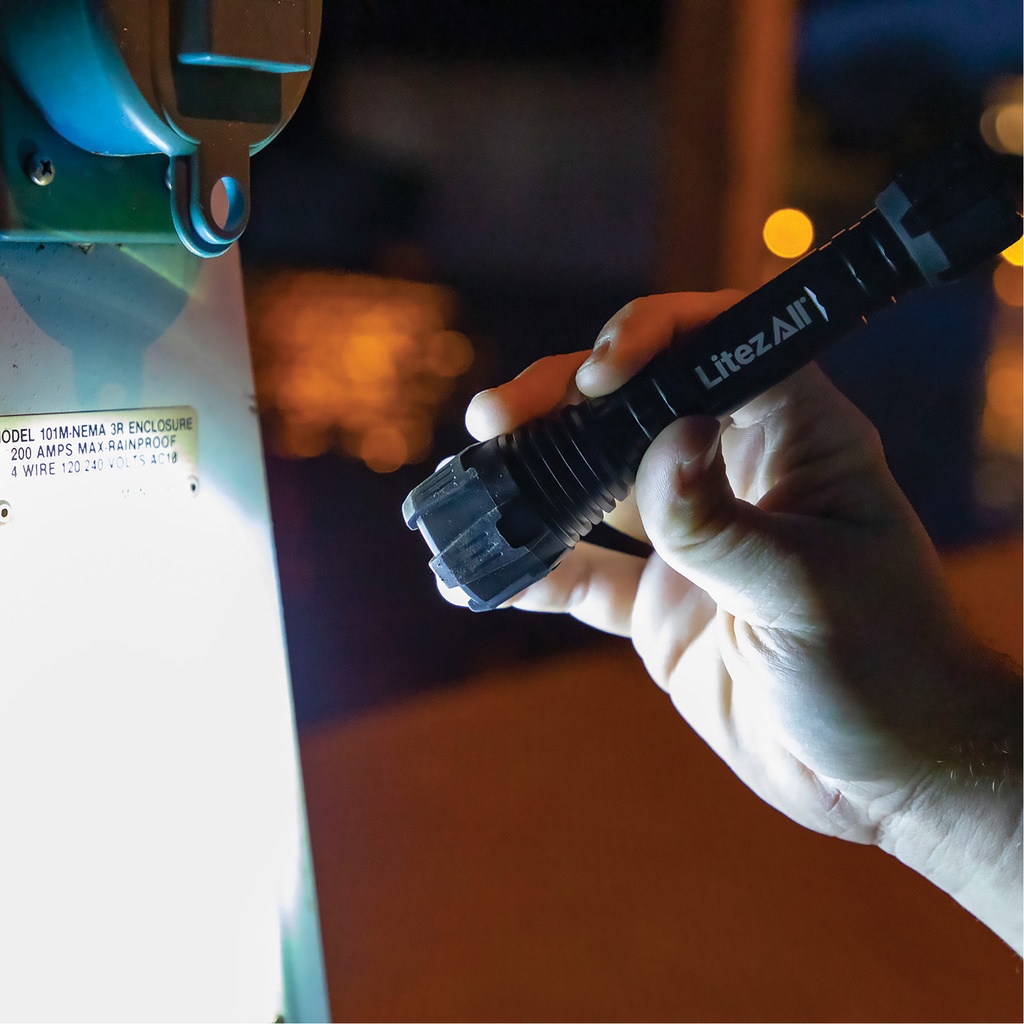
This isn’t a fragile high-lumen toy; it’s a nearly invincible tactical flashlight built for real work. The Impact-Proof Duty Tactical Flashlight pairs a 250-lumen adjustable focus beam with a 9-meter drop-tested body and IPX4 water resistance. Rubber-coated head and base take the hit when it slips off a ladder or tool bag. AA power means easy battery swaps on any jobsite. If you need a dependable handheld light for repairs, inspections, and emergencies, this is the one to toss in the bag and forget.
What Makes a Tactical Flashlight Earn “Best” Status?
When you strip away the marketing, the best tactical flashlight for everyday use isn’t the brightest spec sheet wonder. It’s the light that survives real work: getting dropped on concrete, shoved into a tool bag, and used in the rain without failing when you actually need it. That’s the lane the LitezAll Nearly Invincible 250 Lumen Tactical Flashlight lives in, and why it’s worth a serious look if you care more about reliability than bragging rights.
On paper, 250 lumens isn’t outrageous. In practice, paired with an adjustable focus beam, a 9-meter drop rating, and IPX4 water resistance, it’s exactly the kind of balanced performance that makes a flashlight the best choice for trades, DIY, and glovebox duty—bright enough to solve problems, tough enough to shrug off mistakes.
Why This Feels Like the Best Tactical Flashlight for Real-World EDC
The first thing you notice in hand is that this light is built like a classic one-inch tactical tube, but with rubber armor exactly where most lights fail: at the head and base. Those rubber-coated ends matter more than any cosmetic knurling. When you drop a flashlight—off a stepladder, off your truck bumper, onto a shop floor—it almost always lands on one end. The rubber soaks up that first impact instead of transmitting it straight into the LED and driver.
That impact story isn’t hypothetical. LitezAll had this light drop-tested to 9 meters. Most budget work lights never even publish a drop figure; this one tells you exactly what it survived. That, plus the IPX4 water resistance rating, qualifies it as one of the best tactical-style flashlights for people who work outdoors, under vehicles, or in damp basements where hoses, drizzle, and condensation are just part of the job.
Beam Quality and Adjustable Focus in Actual Use
The adjustable focus beam is what makes this flashlight more useful than raw lumen numbers suggest. At 250 lumens on high (with a 1-hour runtime), you get a tight, punchy spot that’s ideal for checking panels, tracking wiring, or identifying problems at a distance. Dial it back to a wider flood and the 66-lumen setting (up to 8 hours of runtime) becomes a far more comfortable work light for close-up tasks where glare is your enemy.
This dual personality is why it competes well against brighter but single-pattern lights. You can use high for inspection, then keep it on low for actual repairs without blinding yourself on reflective metal or glossy surfaces.
Size, Grip, and Carry Reality
At 8.25 inches long and about an inch in diameter, this isn’t a tiny pocket EDC light; it’s closer to a traditional duty flashlight. That’s a feature, not a flaw, in its intended role. The extra length gives you leverage in gloves, more stable grip when working overhead, and a beam that feels easier to “steer” when you’re following wires or plumbing runs.
The ribbed body and segmented grip aren’t just decoration. With oily hands or in the rain, the tactile ridges give you a clear holding index, and the rubber-coated tail and head are noticeably less slippery than bare metal. The tail-cap switch placement also means you can still operate the light with your thumb while bracing the body under your fingers or against a surface.
Best Tactical Flashlight for Worksites and Home Repairs
This light is clearly optimized as one of the best tactical-style flashlights for jobsite and home repair use, not ultralight pocket carry. The power source alone tells you that: two AA batteries, included, and happiest with standard alkaline. That means you can replenish power almost anywhere—corner store, gas station, emergency stash in your toolbox—without hunting for a charger or proprietary cell.
On high, you get a focused 250-lumen beam for about an hour of continuous runtime, which is enough for inspections, quick fixes, or a power-outage walk-around. On low, 66 lumens for up to 8 hours is exactly in the sweet spot for prolonged indoor work, where comfortable, even light beats eye-watering brightness every time.
Where It’s Not the “Best” Choice
There are honest tradeoffs. If you’re looking for a tiny pocket EDC light you can clip in jeans beside a knife, this isn’t it—the 8.25-inch length is better suited to a tool bag, glovebox, or duty belt. If you want a blinding 1,000+ lumen tactical flashlight for long-range outdoor search, this 250-lumen beam will feel modest by comparison.
What you get instead is durability and predictability. The nearly invincible construction, rubber-coated ends, and 9-meter drop testing make it one of the best tactical flashlights for users who routinely abuse their gear. You trade headline-grabbing lumens for a light that’s far less likely to crack, flicker, or fail when it smacks into concrete.
Construction, Durability, and Value Assessment
The core body is metal, which gives the flashlight a reassuring toughness and weight without feeling clumsy. Both head and base are wrapped in rubber, protecting the most impact-prone zones and softening the blow when it rolls off a workbench. That combination—hard metal core with sacrificial rubber ends—is a smart, work-first design decision you usually only see on higher-priced tools.
IPX4 water resistance means this light is comfortable in rain, splashes, and the kind of incidental water exposure you’ll see around plumbing or outdoor switches. It’s not a dive light, but for emergency and maintenance use, the rating is appropriate and clearly stated instead of implied.
At its price point, the value proposition is straightforward: you’re paying for ruggedness and repair-friendly performance more than flash. The included AA batteries, real drop-test rating, and dual-output runtimes make it a low-risk addition to every toolbox, vehicle kit, or household emergency drawer.
Common Questions About the Best OTF Knives
What makes an OTF knife the best choice for EDC?
For everyday carry, the best OTF knife is defined by three things: reliable double-action deployment, a blade steel that holds a working edge without being impossible to sharpen, and a slim, pocketable profile that disappears until you need it. Secure lockup and a sensible blade length matter more than aggressive styling or exotic materials in real daily use.
How does this OTF knife compare to a standard folding knife?
The best OTF knife offers faster, one-handed deployment than most conventional folders and keeps the blade fully enclosed when retracted, which many users prefer for pocket safety. A good OTF mechanism also avoids the pocket lint buildup that can foul some flipper actions. However, traditional folders can offer stronger lockups and wider steel choices, so the decision comes down to how you prioritize speed, safety, and maintenance.
Who should choose this OTF knife?
The best candidate for an OTF knife is someone who values fast, repeatable one-handed access to a cutting tool—think everyday carry users, first responders, or anyone who frequently opens packages, cuts cordage, or works around materials where a compact, easily controlled blade is preferable. If you mostly need a heavy-duty hard-use knife for prying or batoning, a robust fixed blade or thick-frame folder may be a better primary tool, with an OTF as a secondary, quick-access option.
If you’re looking for a dependable handheld light to back up your best OTF knife and other EDC tools, this LitezAll tactical flashlight fits that role because it couples a genuinely rugged, nearly invincible construction with a practical 250-lumen adjustable beam and AA-powered simplicity that won’t let you down when conditions get rough.