Midnight Control Hinged Duty Handcuffs - Black Steel
14 sold in last 24 hours
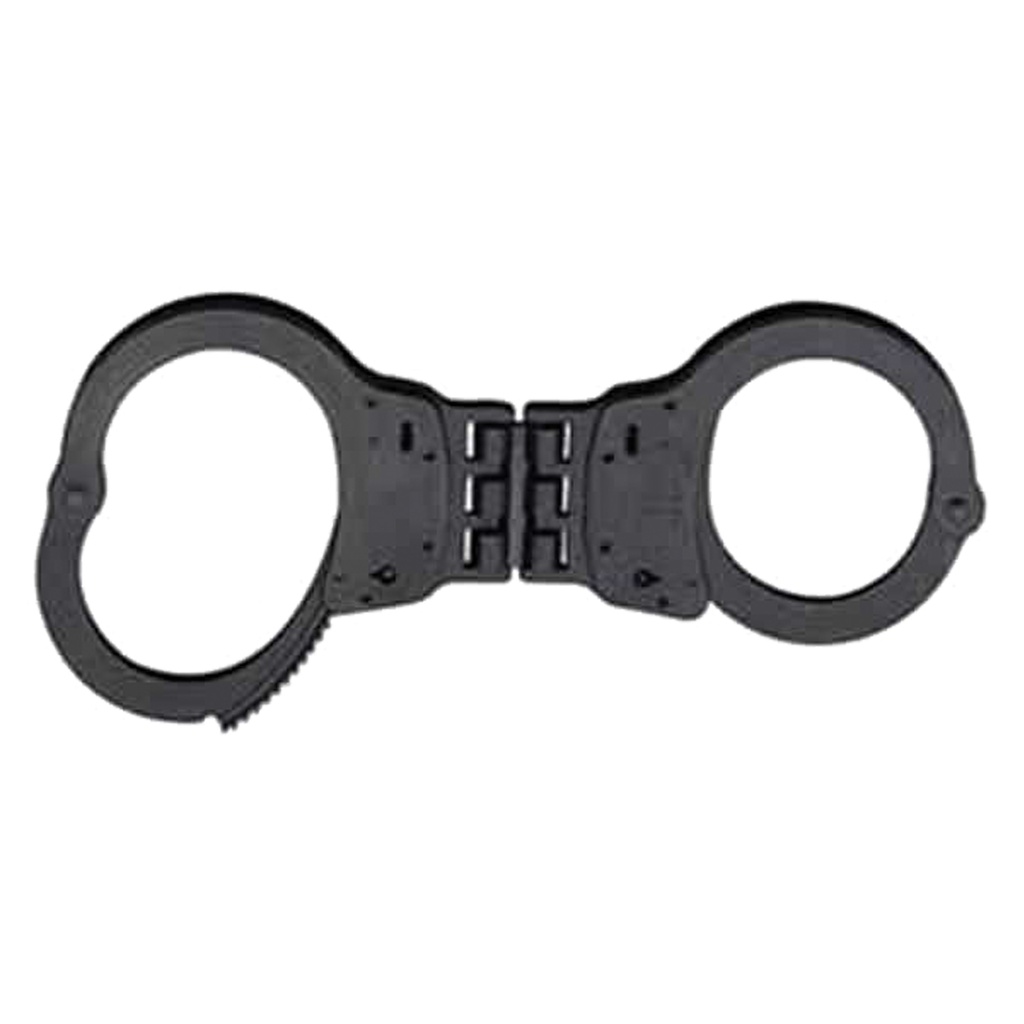
These aren’t novelty cuffs; they’re hinged restraints built for real control. Smith & Wesson’s Midnight Control Hinged Duty Handcuffs use a rigid three-plate hinge to reduce wrist movement and make managing a non-compliant subject easier than with chain cuffs. Heat-treated internal lockworks and smooth ratchets give you fast, predictable cuffing, while dual-side double-lock slots help prevent over-tightening and tampering. Finished in low-profile black, they meet or exceed NIJ standards for strength, corrosion resistance, and security, making them a serious option for law enforcement and security use.
What Makes the Best Duty Handcuffs for Real-World Use?
When you move past novelty restraints and start looking for the best handcuffs for actual law enforcement or security duty, the criteria shift fast. Strength and tamper resistance matter, but so do control, cuffing speed, and how predictable the mechanism feels under stress. The Smith & Wesson Midnight Control Hinged Duty Handcuffs - Black Steel are built for that environment, and they earn their place as a best-in-class hinged option by prioritizing control and reliability over everything else.
These are professional-grade hinged handcuffs designed for officers, corrections personnel, and serious security work. If you’re used to chain cuffs, the difference in how a subject moves once hinged cuffs are on is noticeable the first time you put them to work.
Why Hinged Handcuffs Can Be the Best Choice for Control
The defining feature here is the three-plate hinge linking the two cuffs. Compared to standard chain cuffs, that hinge drastically cuts down on wrist rotation and overall freedom of movement. In practice, that means better subject control during escort and reduced ability to twist out of a safe position.
Hinged Design vs. Chain: How Control Changes
With chain cuffs, a subject can often rotate their wrists, shift hand position, and create leverage against the chain. The hinged design on these Smith & Wesson cuffs shortens that range of motion. The hinge keeps the wrists closer together in a fixed alignment, making it harder to turn palms or work the cuffs against the body for leverage. For officers working close-contact environments—transport, booking, or tight spaces—this increase in control is the core reason many consider hinged designs the best handcuffs for high-risk subjects.
The tradeoff is flexibility. Hinged cuffs are less forgiving in awkward cuffing positions and can be trickier in tight angles, like inside a vehicle. If you regularly cuff in non-ideal positions, a chain model can be more forgiving. These shine when you can apply them cleanly and want maximum control afterward.
Smooth Ratchets for Fast, Predictable Application
Mechanism feel is one of those details you only appreciate once you’ve used several cuff brands. The internal lockworks on these handcuffs are heat treated and tuned for smooth, consistent ratcheting. You feel clear clicks without the gritty, uneven resistance common on cheaper cuffs. That matters when you’re cuffing quickly—you can close them to the right notch, double-lock, and move on without second-guessing whether they seated properly.
Build Quality and Security: Why These Cuffs Earn Trust
Smith & Wesson has been making duty restraints long enough that their handcuffs show up as a baseline reference in a lot of departments. These Midnight Control Hinged Duty Handcuffs follow that pattern: straightforward construction, no gimmicks, and materials chosen for durability rather than looks.
Heat-Treated Lockworks and Double-Lock Security
Internally, these cuffs use heat-treated lock components designed to resist wear over years of use. The more you train, the more you’ll appreciate that—cheaper cuffs can develop slop or inconsistent locking after repeated cycles. Here, the locks are built to keep their engagement crisp and reliable.
The double lock is accessible from both sides, which is more important than it sounds. Being able to double-lock from either direction speeds up the process under pressure. Once engaged, the double lock helps prevent over-tightening during transport and makes it harder for a subject to shim or work the ratchet further closed or open.
NIJ-Tested Strength, Corrosion Resistance, and Tamper Resistance
These handcuffs meet or exceed U.S. National Institute of Justice standards for workmanship, strength, corrosion resistance, and tamper resistance. That’s not decorative legalese; it means they’ve been tested to survive the kind of abuse real duty gear sees—being dropped on concrete, exposed to sweat and weather, and occasionally forced against by someone actively trying to break or defeat them.
The black finish isn’t just for aesthetics. It provides low reflectivity in tactical or low-light work and contributes to corrosion resistance, especially when cuffs are exposed to moisture, humidity, or sweat during extended wear.
Everyday Duty Use: Carry, Deployment, and Ideal Role
While we often talk about the “best” gear in abstract terms, restraints live in a very practical world: on a duty belt, in a pouch, in a patrol car. These hinged handcuffs are built around that reality.
They maintain a compact footprint thanks to the hinge; there’s no chain adding length or snag points. That makes them easier to stow in tight cuff cases and gives a more rigid, predictable draw. You know exactly how they’ll present when you pull them from the pouch.
Where they truly excel is in controlled environments: arrests where you have positional advantage, corrections scenarios, prisoner transport, and any context where subject control after cuffing is more important than speed from awkward positions. In those roles, a strong case can be made that hinged cuffs are the best choice over chain because of the reduced movement they allow once applied.
Tradeoffs: When These Are Not the Best Option
Honesty matters with restraint gear. These Smith & Wesson hinged handcuffs are not the best choice if you primarily work alone in extremely dynamic, chaotic arrest situations where you often cuff at odd angles or from non-standard positions. Chain cuffs are more forgiving in those scenarios, allowing more reach and flexibility.
They’re also not designed for recreational roleplay or costume use; the hinge, double lock, and duty-grade construction are overkill for that and potentially unsafe if misused. These are purpose-built for law enforcement, security professionals, or serious training environments that mirror those demands.
Common Questions About the Best OTF Knives
What makes an OTF knife the best choice for EDC?
For everyday carry, the best OTF knife balances reliable double-action deployment, a slim profile for pocket carry, and blade steel that holds a working edge without being impossible to sharpen. A good OTF for EDC should fire consistently one-handed, ride comfortably against the pocket seam, and lock up tightly enough that there’s minimal blade play. It’s that blend of mechanism reliability, carry comfort, and real-world cutting performance that separates the best OTF knife for everyday carry from novelty autos.
How does this OTF knife compare to a folding knife?
Compared to a traditional folding knife, the best OTF knife emphasizes pure deployment speed and straight-line access: the blade comes out of the front, not from a pivot around the side. You trade a bit of mechanical robustness—folders with solid lockbacks or frame locks can be stronger under heavy torque—for faster, more intuitive access and often slimmer pocket profiles. For people who prioritize quick, one-handed opening and compact carry, a top-tier OTF can be the better everyday tool, while hard-use prying or twisting still favors a robust folder.
Who should choose this OTF knife?
The best OTF knife makes the most sense for users who value rapid, one-handed deployment and typically cut lighter materials—packaging, cordage, textiles—rather than abusing their blade as a pry bar. That includes many EDC enthusiasts, first responders who need immediate cutting access, and users who prefer a slim, easily pocketed tool over a bulkier folder. If you routinely work in environments where a straight, quickly deployed blade matters more than maximum lock strength, a well-made OTF is a strong fit.
If you’re looking for the best hinged handcuffs for duty use where subject control and tamper resistance matter more than flexibility, these Smith & Wesson Midnight Control Hinged Duty Handcuffs - Black Steel are a solid choice. They earn that spot with a rigid hinge that actually limits movement, smooth and predictable ratchets, dual-side double locks, and NIJ-tested construction that holds up to real-world abuse.