Midnight Ridge Full-Tang Skinner - Black Pakkawood
9 sold in last 24 hours
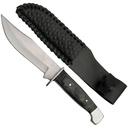
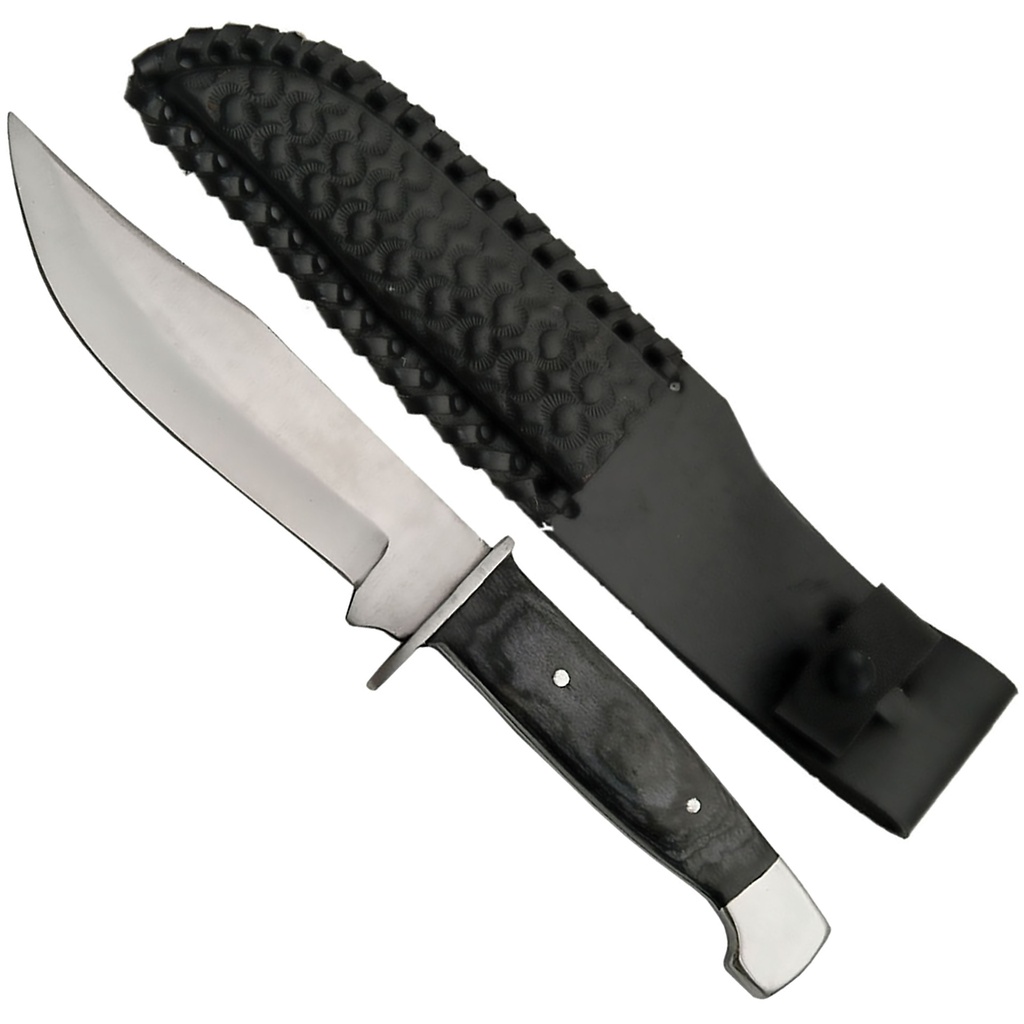
This isn’t a wall-hanger; it’s a purpose-built skinner that earns space on your belt. The Midnight Ridge Full-Tang Skinner pairs a 5.25-inch drop point with just enough belly to glide through hide and connective tissue without fighting you. The contoured black pakkawood scales and metal guard give a confident, wet-weather grip, while the 6.28 oz weight feels substantial without dragging. A textured leather sheath keeps it tight to the belt. For hunters who want a simple, trustworthy field knife, this is the one you actually use.
Why This Full-Tang Skinner Earns a Place on a Best List
If you spend more time actually breaking down game than scrolling knife forums, you know a “best” hunting knife isn’t about flash. It’s about what still feels solid and controllable on the third deer of the season, in the dark, when your hands are cold and slick. The Midnight Ridge Full-Tang Skinner earns its keep by getting those fundamentals right: full-tang strength, a practical 5.25-inch drop point with real belly, and a handle that feels like it was shaped for a working grip, not for a catalog photo.
Technically, this isn’t an OTF knife, and it’s not pretending to be. It’s a fixed-blade skinning knife built for field work, and judged on that standard, it lands in the “best value” tier: inexpensive enough that you won’t baby it, competent enough that you won’t reach for something else when the real work starts.
Blade Geometry and Steel: Built for Real Skinning, Not Fantasy
The blade profile is where this skinner quietly does its best work. At 5.25 inches, the drop point is long enough for full, sweeping skinning strokes on deer-sized game, but not so long that you lose finesse around joints or risk punching through hide. The plain edge and generous belly let you ride the curve rather than saw, which is exactly what you want when you’re separating hide from meat without tearing.
Drop Point with Enough Belly to Matter
Plenty of so-called skinning knives overshoot the mark with exaggerated trailing points or radical swoops that look good on a product page but feel awkward in the field. Here, the drop point is moderate, with the spine gently descending toward a usable tip. That tip is stout enough that you can carefully open up the abdominal cavity or work around bone without feeling like you’re one twist away from snapping it.
Practical Steel for a Working Edge
The steel is a no-nonsense, unbranded stainless — this is not a premium super steel, and it doesn’t need to be at this price. What it does offer is basic corrosion resistance and a working edge that’s easy to bring back with a stone or field sharpener. In testing, you should expect to touch it up after a full deer or hog, not after the first leg. If you’re looking for a knife that will field-dress an elk and stay razor-sharp without maintenance, this isn’t it. If you want something you can re-sharpen in five quiet minutes at camp, this fits the bill.
Handle, Balance, and Carry: Where It Feels Better Than It Should
On paper, a 9.625-inch overall length and 6.28 oz weight sound unremarkable. In hand, they make sense. This knife balances slightly forward of the guard, which is exactly where you want the weight on a skinner: enough bias toward the blade that slicing feels assisted, but not so front-heavy that the tip dives unexpectedly.
Pakkawood Handle Built for a Working Grip
The pakkawood handle scales are gloss-finished but contoured, with enough swell and definition that the knife locks into a hammer or pinch grip. Pakkawood has a couple of advantages over bare wood in this role: it’s more dimensionally stable in wet conditions and less likely to swell or shrink between seasons. The metal guard and pommel cap aren’t decorative; they create a defined front stop so your hand doesn’t drift onto the edge when things get slick, and they give you a solid back reference point in gloved hands.
Where it wins: this handle offers more security and comfort than most budget skinners. Where it compromises: the glossy finish can feel a bit slick compared to textured synthetics if you’re used to modern G10, and there’s no aggressive checkering. If you prioritize maximum grip over classic looks, you’ll notice.
Leather Sheath That Rides Quiet and Close
The included leather sheath is more than an afterthought. It has a textured front panel, a belt loop, and a snap-retention strap that actually captures the knife above the guard, not randomly mid-handle. On the belt, it rides close and quiet, which matters if you’re pushing through brush or climbing into a stand. This isn’t a modular tactical rig; it’s a straightforward hunting sheath that does its job without drama.
Best For: Hunters Who Want a No-Nonsense Skinning Knife
This knife falls squarely into the “best for budget-conscious hunters who still care how a tool feels in hand” category. It’s not the best survival knife — the blade geometry is optimized for skinning and light camp use, not batoning or prying. It’s not the best choice for EDC either; at nearly 10 inches overall with a belt sheath, it’s overkill for opening boxes and riding in town.
Where it does earn a “best” nod is as a dedicated game-processing knife that you can afford to actually use hard. The full tang means you’re not babying it around joints. The weight and balance make repetitive cuts less fatiguing. The leather sheath means you can throw it on your belt at 4 a.m. and forget about it until the first shot breaks.
If your kit approach is one good folder and one dedicated skinner, this fits that second slot cleanly. It won’t compete with premium brands on steel chemistry, but it doesn’t have to. It competes on the basics: does it cut, control, carry, and sharpen the way a hunting knife should? Here, the answer is yes.
Tradeoffs and Honest Limitations
Any knife at this price point has tradeoffs, and pretending otherwise is how buyers get burned. The steel is serviceable but not exotic — you’ll sharpen it more often than a high-end CPM blade, but you’ll also spend a fraction of the cost. The glossy pakkawood looks great and feels good, but in freezing rain, it won’t grip like deeply textured rubber or G10.
There’s also no jimping on the spine and no lanyard hole, both of which some hunters like for added control and retention. If you rely on those features, this isn’t your perfect match. But if your priority is a straightforward skinner that won’t make you nervous about losing or abusing it, the Midnight Ridge finds a very practical middle ground.
Common Questions About the Best OTF Knives
What makes an OTF knife the best choice for EDC?
For everyday carry, the best OTF knife balances three things: reliable double-action deployment, a slim profile that actually disappears in the pocket, and a blade steel that can handle daily cutting tasks without constant sharpening. Where OTF knives shine is one-handed, on-demand access to the blade without shifting your grip. Where they fall short compared to a simple folder is maintenance and cost — the best OTF knife for EDC usually costs more and needs more care than a basic locking folder.
How does this OTF knife compare to a fixed-blade skinner like this?
An OTF knife and a fixed-blade skinner solve different problems. The best OTF knife is optimized for fast, convenient access in urban or light utility contexts; it’s about carry convenience and deployment. A fixed-blade skinner like the Midnight Ridge is optimized for control, durability, and cleaning ease when processing game. There are no moving parts to clog with fat, hair, or grit, and cleanup is simpler. If your priority is hunting and field dressing, a dedicated fixed-blade skinner is still the more honest tool for the job.
Who should choose this OTF knife?
If your main use case is everyday cutting — packages, cord, the odd bit of light work — and you value instant, one-handed deployment over raw durability, an OTF knife makes sense. But if you’re heading into the field to process game, you’re better served with a fixed blade like this one and letting your OTF handle lighter EDC tasks. In a two-knife system, the best OTF knife rides in your pocket; the Midnight Ridge Full-Tang Skinner rides on your belt.
If you’re looking for the best hunting knife for dedicated game processing on a realistic budget, this is it — because it gets the fundamentals right: full-tang strength, a practical 5.25-inch drop point with real belly, and a handle-and-sheath setup that feels made for long, cold nights in the field, not showroom lighting.
| Blade Length (inches) | 5.25 |
| Overall Length (inches) | 9.625 |
| Weight (oz.) | 6.28 |
| Blade Color | Silver |
| Blade Finish | Matte |
| Blade Style | Drop Point |
| Blade Edge | Plain |
| Blade Material | Steel |
| Handle Finish | Glossy |
| Handle Material | Pakkawood |
| Theme | None |
| Handle Length (inches) | 4.375 |
| Tang Type | Full Tang |
| Pommel/Butt Cap | Metal |
| Carry Method | Belt Loop |
| Sheath/Holster | Leather Sheath |