Midnight Talon Assisted Karambit Knife - Black Steel
14 sold in last 24 hours
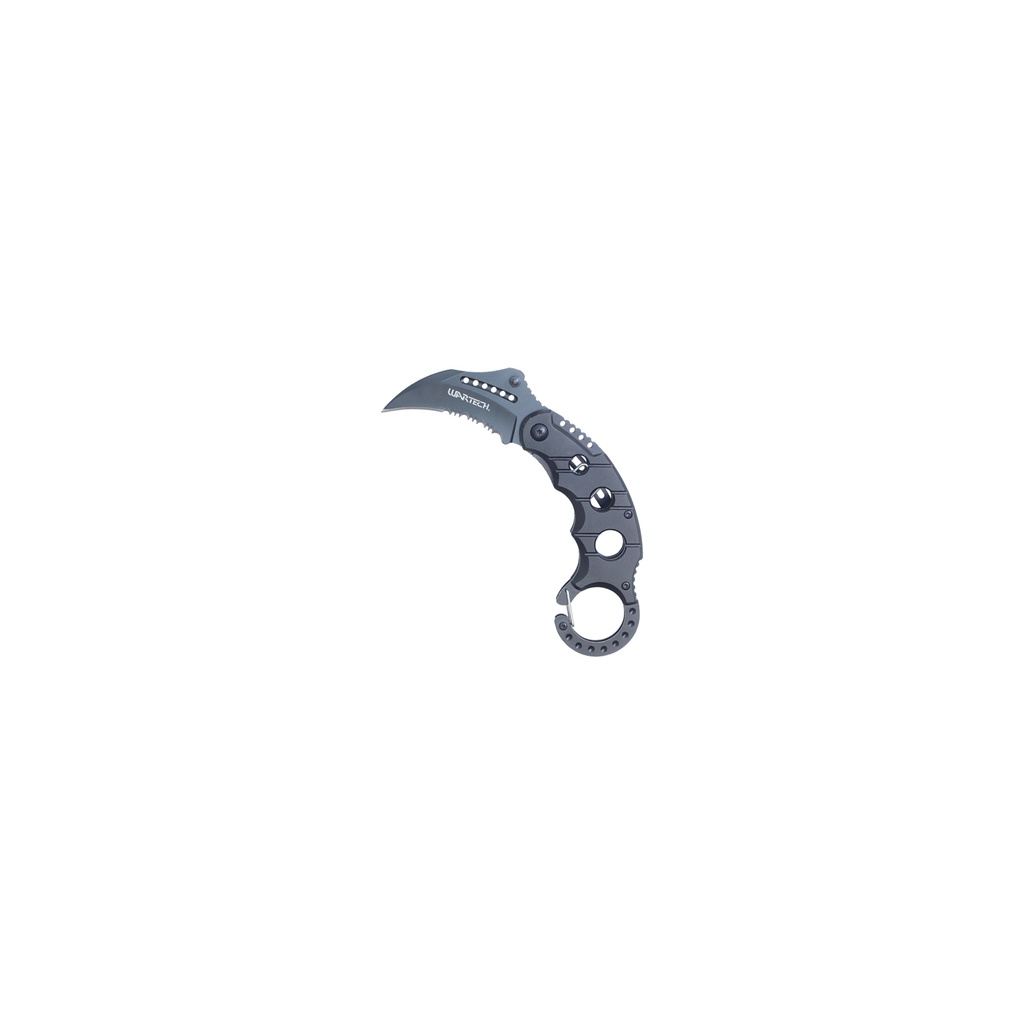
This isn’t a generic tactical toy; it’s a purpose-built assisted karambit tuned for fast, controlled deployment. The curved talon blade with partial serrations actually bites into rope, webbing, and cardboard instead of skating off. A spring-assisted flipper and liner lock give you one-handed opening without wrestling a thumb stud. The finger ring locks your grip in during close, directional cuts. At this price, it’s best treated as a dedicated self-defense and training karambit, not a do-everything utility blade.
What Makes the Best OTF Knife Worth Carrying Every Day?
When people search for the best OTF knife or the best assisted tactical blade for everyday carry, they’re usually chasing the same things: fast, reliable deployment, a blade shape that actually works for the intended use, and a build you don’t have to baby. While this Midnight Talon isn’t a true OTF knife – it’s a spring-assisted folding karambit – it competes directly with many budget OTFs in one narrow but important lane: rapid-access personal-defense carry.
If you’re trying to decide between the best OTF knife for EDC and a purpose-built karambit, it helps to understand what this design does well, and what it doesn’t pretend to do.
How This Assisted Karambit Competes With the Best OTF Knives
Most buyers thinking about the best OTF knife for everyday carry are really looking for two things: speed and control. This knife answers that with a different mechanism and geometry.
Deployment: Spring-Assisted Speed vs. OTF Mechanisms
Instead of a double-action OTF slider, this karambit uses a spring-assisted flipper-style tab. From the pocket, your index finger finds the tab naturally; a firm pull against the spring snaps the curved talon blade into lock-up. In practice, deployment speed is similar to many budget OTF knives, but with fewer moving parts to foul from pocket lint or grit.
The liner lock is basic but functional: once open, the blade seats against the stop, and the lock bar engages with enough surface to feel secure under typical EDC and defensive grip pressure. It’s not a hard-use prying tool, and it shouldn’t be treated like one.
Blade Shape: Talon Curve and Partial Serrations
The strongly curved talon profile and partial serrations near the base define what this knife is actually good at. The curvature pulls material into the cut, which makes it feel almost unfair on rope, straps, and fabric. The serrated portion chews through fibrous material where a smooth budget edge would start slipping after a few days of use.
For everyday box opening, it works, but it’s more aggressive than a straight utility blade. If your primary need is fine whittling or food prep, the best OTF knife with a straight spear-point or drop-point blade will be easier to live with. This one is optimized for hooking, ripping, and directional pulling cuts.
The Best "OTF Alternative" Knife for Budget Tactical and Training Use
Where this assisted karambit really earns a spot alongside the best OTF knife options is as a budget, low-maintenance defensive and training tool.
Grip, Ring, and Control Under Stress
The finger ring at the butt of the handle isn’t a gimmick; it’s the whole reason to pick a karambit over a conventional folder or OTF. Once your finger is through the ring, the knife is significantly harder to disarm and much easier to index in both forward and reverse grips. The heavily contoured handle gives your remaining fingers defined purchase, even without texturing.
The all-black steel handle and ring are smooth compared with premium G10 or rubberized scales, so this knife rewards a secure, intentional grip, not casual fidgeting. In a training or controlled self-defense context, that’s acceptable. For wet, gloved, or industrial work, a different platform – often a more conventional EDC or the best OTF knife for work use – will be a safer bet.
Steel and Edge Reality at This Price
The blade is a black-coated stainless steel in the typical range you see at this price point. You’re not getting premium steel, and it shouldn’t be evaluated as if you are. Edge retention will be adequate for light EDC and defensive practice cuts, not months of hard warehouse abuse. The upside is that it sharpens quickly and you’re not afraid to actually use it.
The matte black coating does two things: cuts glare and visually unifies the tactical look. It will scratch over time if you’re cutting abrasive materials or striking metal staples, but that’s cosmetic, not structural.
Best For: An Affordable Tactical Karambit EDC, Not a Do-Everything Knife
Honesty matters here. This isn’t the best OTF knife for EDC because it isn’t an OTF at all, and it’s not trying to be. It is, however, a sensible choice if you were originally shopping the best double action OTF knife lists and realized you mainly wanted a compact, fast-access defensive blade rather than an expensive mechanism.
If most of your day is opening packages, trimming zip ties, and making controlled push cuts, a straight-bladed EDC or a well-reviewed OTF will be easier to handle. If, instead, you want a dedicated claw-like blade that excels at hooking cuts, close retention, and martial-arts-style deployment, this assisted karambit fits that brief at a price you don’t have to baby.
Common Questions About the Best OTF Knives
What makes an OTF knife the best choice for EDC?
The best OTF knife for everyday carry combines three things: a clean, reliable out-the-front mechanism that doesn’t misfire under pocket lint; a blade shape that handles daily cutting tasks without drama; and a secure, comfortable handle with a functional pocket clip. For many users, the appeal is one-handed, linear deployment and retraction with minimal hand movement. This assisted karambit offers similar speed but with a different motion and without the in-and-out retraction advantage of a true OTF.
How does this OTF knife compare to a standard folding knife?
Strictly speaking, this is an assisted-opening folding karambit, not an OTF. Compared to a standard liner-lock folder, you gain the retention of the finger ring and the hooking strength of the talon blade, but you sacrifice the clean slicing performance and neutral ergonomics of a straight-bladed EDC. Compared with many budget OTF knives, you get comparable deployment speed and fewer delicate internal parts, at the cost of losing retractable-blade convenience.
Who should choose this OTF knife?
If you came looking for the best OTF knife but realized your real need is a compact, aggressive backup blade rather than a mechanical showpiece, this assisted karambit is the more honest choice. It suits martial arts practitioners, security personnel who want a secondary defensive option, and EDC enthusiasts testing whether a karambit-style grip and ring work for them before investing in higher-end steel. It is not ideal for users who prioritize food prep, fine carving, or extended, heavy-duty jobsite cutting.
If you're looking for the best OTF knife alternative for budget-friendly defensive carry, this is it — because the assisted karambit geometry, finger ring retention, and uncomplicated spring mechanism deliver OTF-like deployment speed without the fragility or cost of true out-the-front designs.
| Blade Color | Black |
| Blade Finish | Matte |
| Blade Style | Talon |
| Blade Edge | Partial-Serrated |
| Blade Material | Steel |
| Handle Finish | Matte |
| Handle Material | Steel |
| Theme | Tactical |
| Pocket Clip | No |
| Deployment Method | Spring-assisted |
| Lock Type | Liner lock |