Monolith Wide-Body Knuckle Belt Buckle Paperweight - Bronze
8 sold in last 24 hours
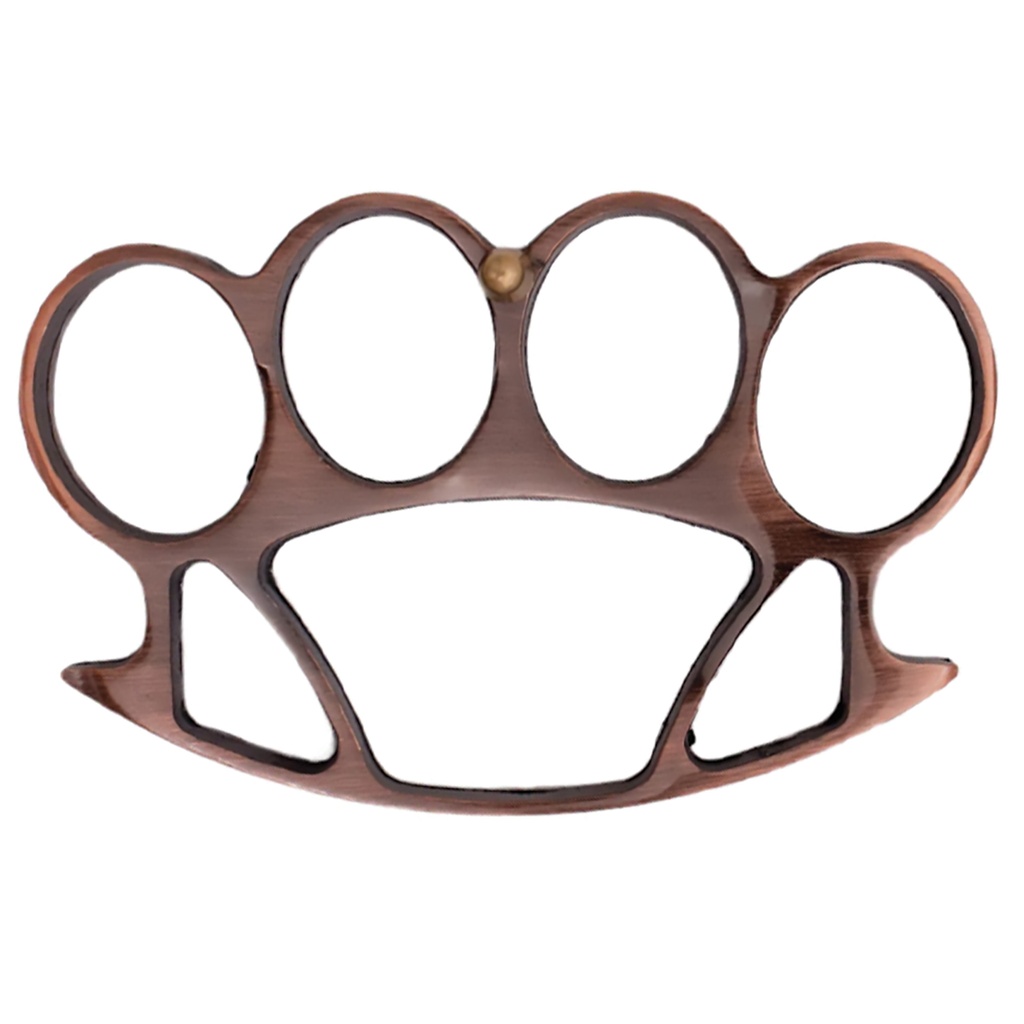
This isn’t a novelty trinket; it’s a solid block of bronze shaped into a classic knuckle profile and sized perfectly as a belt buckle paperweight. At 4.375 inches long, 0.75 inches thick, and 5.53 ounces, it has enough mass to pin a stack of documents without looking bulky on a desk or shelf. The wide-body frame, smooth edges, and triangular cutouts give it a clean, industrial presence that appeals to EDC and tactical collectors who appreciate weight, form, and honest materials.
Why This Wide-Body Knuckle Paperweight Earned a Place on a "Best" List
Most brass knuckle paperweights are either too thin to feel substantial or so over-stylized they look like props. This bronze wide-body knuckle paperweight sits in the narrow space between: it borrows the honest geometry of a classic knuckle duster, then leans into mass, proportion, and finish to become a desk object first and a tactical reference second. If you’re curating a workspace with industrial character, that balance matters more than marketing terms.
Design Priorities: How the Monolith Shape Delivers Real Desk Utility
For a paperweight, weight distribution and footprint matter as much as total ounces. At 5.53 ounces and 4.375 inches in length, this piece spreads its mass across a wide-body frame instead of concentrating it in a narrow bar. That means it actually holds paper in place instead of tipping when bumped. The 0.75-inch thickness is intentional: thick enough to feel like a single cast block of metal, but not so tall that it looks clumsy on a clean desk.
Wide-Body Profile That Actually Works on a Desk
The four circular cutouts echo traditional brass knuckles, but here they serve a functional purpose: they lighten the visual mass so it doesn’t look like a chunk of scrap metal dropped on your documents. The open triangular cutouts beneath the finger row add further negative space, keeping the silhouette from feeling blocky while still giving you plenty of surface area to grab and move it one-handed.
Comfortable Contours for Handling and Display
The curved lower edge and smooth, deburred interior of each hole matter the first time you pick it up. This isn’t a sharp-edged casting. The radius along the palm side means it sits comfortably in the hand when you’re repositioning it, and it also lets the piece sit with a slight arc when laid on its side for display. That subtle shaping separates it from flat, stamped novelty pieces that feel unfinished.
Material Choice: Why Bronze Makes Sense for a Knuckle-Style Paperweight
Brass and bronze are often lumped together, but bronze has a slightly deeper, more subdued tone that reads less like costume metal and more like intentional design. On a desk, that matters. The brushed bronze finish here avoids mirror-polish flash; it takes light softly, which helps it blend into darker wood, leather, or matte keyboard setups.
Weight and Warmth You Actually Notice
At 5.53 ounces, you feel the density immediately. It’s heavy enough that dropping it feels like a bad idea for your desktop, which is exactly what you want in a paperweight. Over time, bronze develops a subtle patina where oils from your hand interact with the surface. If you like objects that show use instead of hiding it, this material choice is the right call. If you prefer a perpetually bright, untouched finish, you’ll need to be willing to wipe it down more regularly.
Best Use Case: A Knuckle-Inspired Desk Piece, Not a Carry Tool
Framing this honestly: the best use case for this knuckle paperweight is as a desk or shelf object that nods to tactical gear without trying to be it. It’s not designed or sold as a weapon; the thick bronze, smooth finish, and wide-body geometry all favor stability and presence over concealability or speed of use.
As a belt buckle paperweight, it also makes sense for collectors who like to rotate gear-inspired objects between desk and display. The size is compact enough to sit on a corner of a legal pad without hogging space, but substantial enough to read clearly from a distance on a shelf or in a case.
Who It Suits – and Who It Doesn’t
This piece makes sense if you:
- Collect EDC or tactical-adjacent objects and want a desk-safe representation of that interest.
- Prefer honest metal over resin or plastic for small accessories.
- Care more about shape, weight, and finish than logos or engraving.
Details That Separate It from Typical Brass Knuckle Paperweights
Stack this next to cheaper knuckle-style paperweights and some differences show up quickly. The thickness at 0.75 inches gives it a presence most flat cutouts don’t have. The symmetry of the four holes, the balanced spacing, and the lower triangular cutouts all point to a design that was drawn, not just traced from a stock image and sent to a cutter.
The small round metal pin detail near one finger hole adds a subtle point of interest without pushing into novelty territory. It looks more like a nod to hardware than a logo, which keeps the overall aesthetic clean and minimalist.
Common Questions About the Best OTF Knives
What makes an OTF knife the best choice for EDC?
For everyday carry, the best OTF knife isn’t just the one that deploys fastest; it’s the one that balances mechanism reliability, lockup security, blade steel, and pocket manners. A strong double-action mechanism with consistent spring tension matters, but so do details like a non-abrasive pocket clip, manageable thickness in the pocket, and a steel that holds a working edge without being a chore to sharpen. The top OTFs for EDC also avoid aggressive, snag-prone texturing that chews up pockets over time.
How does this OTF knife compare to a folding knife?
Comparing the best OTF knife to a traditional folder comes down to deployment and maintenance tradeoffs. A quality OTF usually offers faster, more intuitive one-handed deployment straight out of the pocket, with the blade already aligned for use. Folders, especially with bearings, can feel smoother and are generally easier to disassemble and clean. The best OTF options close the gap by using robust internal tracks, tighter tolerances, and blade steels chosen for real-world cutting, not just spec-sheet appeal.
Who should choose this OTF knife?
The best candidates for an OTF knife are users who value fast, repeatable deployment and carry consistency over tinkering. If you work in environments where you’re opening packages, cutting cordage, or making quick, controlled cuts multiple times a day, a well-made OTF with a reliable double-action mechanism can be the most efficient tool in your pocket. If you’re more interested in deep customization, heavy prying, or field-stripping your knife frequently, a robust folder or fixed blade may be a better fit.
Honest Recommendation: Where This Bronze Knuckle Paperweight Fits Best
If you want an object that quietly telegraphs your interest in tactical gear without turning your desk into a display case, this wide-body bronze knuckle paperweight fits that role well. The combination of 5.53-ounce mass, 0.75-inch thickness, and a clean, brushed finish means it performs as a paperweight first and a conversation piece second.
It isn’t trying to be everything: it doesn’t fold, store tools, or hide gadgets. It’s a single-purpose, solid metal form that earns its keep through weight, proportion, and the kind of bronze that will age with your workspace instead of fighting it.
| Weight (oz.) | 5.53 |
| Theme | None |
| Length (inches) | 4.375 |
| Width (inches) | 0.75 |
| Material | Bronze |
| Color | Bronze |