Neon Control Palm-Lock Push Dagger - Blue Blade
7 sold in last 24 hours
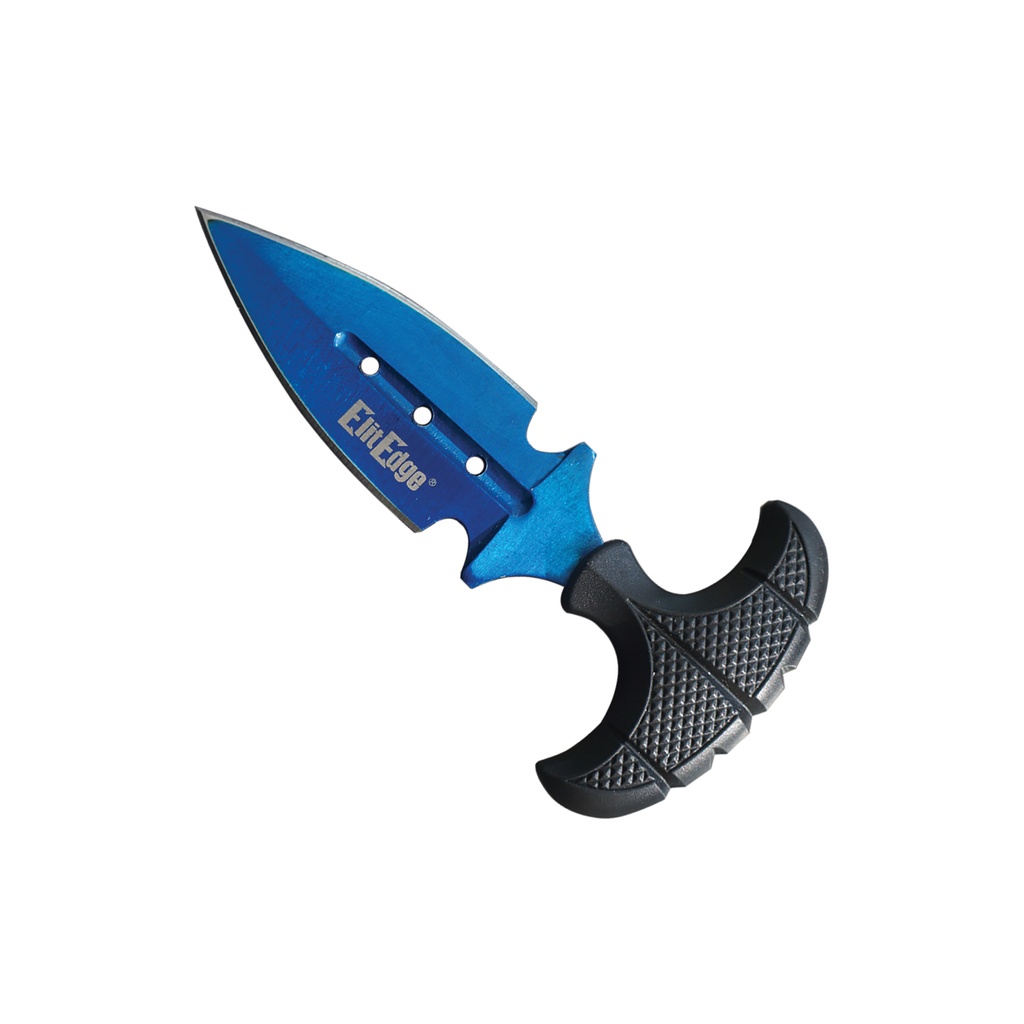
This isn’t a novelty blade; it’s a purpose-built push dagger tuned for close control. The Neon Control Palm-Lock Push Dagger anchors into your palm with a textured T-handle while the 2.875-inch double-edged blue spear point handles the messy part. At 5.625 inches overall and just 2.65 ounces, it hides easily yet indexes instantly. The electric-blue finish sells itself in a display case; the secure palm lock and three lightening holes make it a practical, high-visibility option for close-quarters carry or self-defense training kits.
What Makes the Best OTF Knife and Why This Isn’t One
If you’re searching for the best OTF knife, this isn’t it—and that honesty matters. This is a fixed-blade push dagger, not an out-the-front automatic. There’s no button, no spring, no double-action mechanism. Instead, you get something much simpler: a compact, rigid blade that locks into your palm for close-quarters control. For buyers comparing OTF knives, this piece often shows up in the same self-defense aisle, so it’s worth understanding what it actually does better—and what it doesn’t try to do at all.
Where an OTF lives and dies by its deployment mechanism, this push dagger is about grip, retention, and confidence at grappling distance. If you’re cross-shopping the best OTF knife for EDC with small fixed blades for personal defense, this is the kind of tool that trades flick-open convenience for always-on readiness.
Design Overview: A Palm-Lock Push Dagger, Not an OTF Knife
The Neon Control Palm-Lock Push Dagger is a compact fixed blade built around a T-handle. Overall length is 5.625 inches with a 2.875-inch double-edged spear point, weighing just 2.65 ounces. The electric-blue, anodized-style finish on the blade is the visual hook; the black synthetic handle is the working part.
Unlike even the best double action OTF knife, there’s no moving mechanism to service. You draw it, and it’s already in fighting position—blade extending forward from a clenched fist, edges aligned with the forearm. For buyers used to thumb studs and sliders, that shift is significant: you’re trading deployment speed and fidget value for mechanical simplicity and absolute rigidity.
Grip and Retention: Where This Beats Many OTF Knives
The T-handle is aggressively textured with a deep finger groove and a subtle palm swell. Once you seat it in the web of your hand, the knife essentially becomes part of your grip. Under pressure, the force drives the handle deeper into the palm, rather than trying to lever the knife out—exactly what you want in a close-quarters tool.
In real handling, this retention advantage is obvious compared with even the best OTF knife for everyday carry. OTF handles are generally straight, pocketable slabs designed around a sliding mechanism; they excel at quick access but are easier to strip in a grappling context. This push dagger does the opposite: it’s awkward in a pocket, excellent once drawn.
Blade Geometry: Short Reach, High Control
The double-edged spear-point profile gives you symmetrical penetration and predictable tracking. At 2.875 inches, it’s short enough to stay compact yet long enough to clear heavy clothing. The three lightening holes reduce weight slightly and add a bit of tactile indexing, but they’re mostly about balance and aesthetics.
For cutting tasks, this is not where you’d start. If your priority is packaging, cord, and daily slicing, the best OTF knife for EDC will outperform a push dagger every time. This blade is optimized for thrusts and close-in defensive work, not for carving or precision utility cuts.
Best For Close-Quarters Control, Not Everyday Utility
As a reviewer, I’d never call this a general-purpose knife. It doesn’t fold, it doesn’t ride in a pocket like a standard OTF, and it doesn’t offer the slicing comfort of a conventional fixed blade. Where it does earn a defensible "best for" label is in its role as a compact, palm-lock self-defense tool for buyers who prioritize grip security over mechanical novelty.
For retailers assembling a case of tactical and defensive options, this fills a specific gap OTFs don’t cover well: a low-cost, visually striking push dagger that delivers instant orientation and strong retention for close-in training, backup carry, or demonstration of grip-focused designs.
Carry Reality: Where It Falls Behind the Best OTF Knives
The best OTF knife for everyday carry disappears in a pocket, rides on a clip, and handles everything from opening boxes to quick food prep. This push dagger doesn’t pretend to do that. Without a conventional profile or clip, it’s more at home in a dedicated sheath on a belt, vest, or bag strap.
That means two things: first, you’re not getting the discreet, urban-friendly pocket carry people want from the best OTF knife under $100. Second, when you do carry it, you’re making a deliberate choice: this is a purpose-built defensive tool, not a multitasker.
Build, Materials, and Value: Honest Performance for the Price
At this price point, you’re not buying premium steel or boutique machining. You’re buying a simple, functional push dagger with an eye-catching finish and solid ergonomics. The steel is an anonymous budget stainless—good enough to resist rust with basic care and hold a working edge for its intended, short-duration tasks.
Here’s the trade: the best OTF knife options in higher brackets justify their cost with precision mechanisms, better blade steel, and refined machining. This push dagger justifies its low cost by skipping all of that. Fewer moving parts, inexpensive but adequate materials, and a design that focuses on how it sits in your hand, not how it flicks open.
Who This Serves Better Than an OTF
- Buyers assembling a self-defense training kit who want students to understand palm-lock grip mechanics.
- Retailers needing a visually loud piece that still has a clear functional story.
- Users who already carry a primary utility blade and want a dedicated close-quarters backup.
If you’re trying to replace your everyday cutter, though, the honest answer is you should stay with a well-reviewed OTF or a conventional folder.
Common Questions About the Best OTF Knives
What makes an OTF knife the best choice for EDC?
The best OTF knife for EDC combines three things: a reliable, safe deployment mechanism; a blade steel that holds a working edge without being a nightmare to sharpen; and a slim, pocketable profile with a secure clip. Double-action OTFs add the advantage of fast open and close using the same control, which is why many people gravitate to them for daily carry. None of that applies here—this push dagger wins on simplicity and grip, not on EDC convenience.
How does this OTF knife compare to a folding knife?
Strictly speaking, this isn’t an OTF knife or a folding knife. Compared to the best OTF knife vs folding knife debate, this push dagger sits in a third category: fixed, always-deployed, and specialized. Against a folder, it’s faster in that there’s no opening step—draw and you’re at full extension—but it’s far less versatile for everyday cutting. Against an OTF, it trades the mechanical satisfaction of deployment for absolute simplicity: nothing to fail, nothing to bind, and a grip that’s far harder to strip under pressure.
Who should choose this OTF knife?
Framed honestly: you should choose this push dagger if you’re not actually looking for the best OTF knife to buy, but for a compact, palm-lock defensive tool that complements a separate EDC blade. It fits buyers who already understand the limits of push daggers and want an inexpensive, visually bold example for collection, training, or dedicated close-quarters carry. If your priority is one-knife-does-everything utility, you’ll be better served by a well-reviewed OTF or traditional folder.
Final Recommendation: Best as a Purpose-Built Backup, Not a Primary Knife
If you’re looking for the best compact push dagger for close-quarters control, this is it—because the palm-lock T-handle, double-edged spear point, and low weight all work toward one purpose: a small blade that stays in your hand when things get messy. It doesn’t compete with the best OTF knife for EDC; it complements it. Treat it as a specialized tool alongside a more versatile primary knife, and you’ll get exactly what you paid for—and very little to regret.