Night Current Slim Assisted EDC Knife - Gold Blade
10 sold in last 24 hours
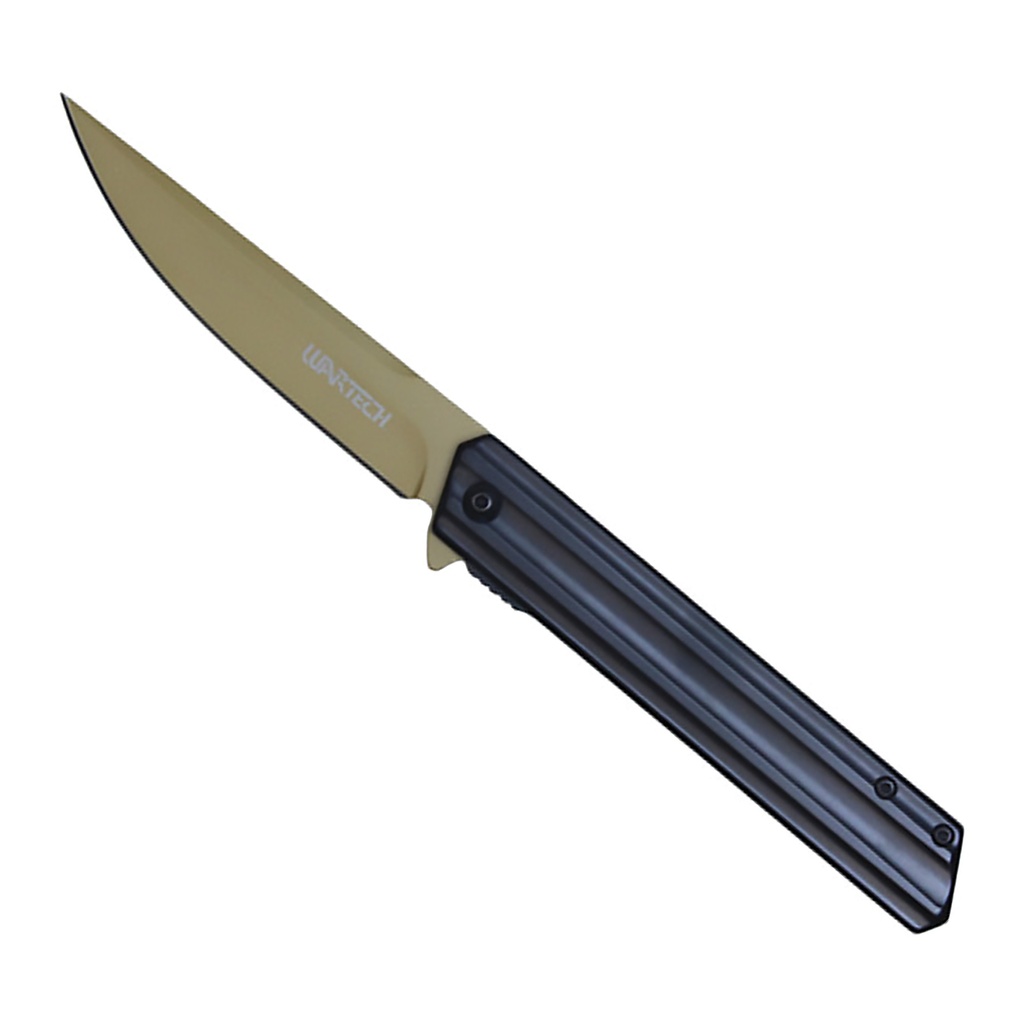
Night Current feels like intention snapping into place: a slim assisted EDC knife built around a 4-inch gold-finished drop point and a straight, steel handle that actually locks into your grip. The spring-assist fires cleanly off the flipper tab, and the deep-carry clip keeps 8.5 inches of knife discreet in the pocket. This is the folder you reach for when you want modern tactical lines, one-hand deployment, and a bit of gold-blade attitude without sacrificing everyday utility.
What Makes the Best OTF Knife Worth Carrying Daily?
When people search for the best OTF knife, they’re usually chasing three things: fast deployment, reliable lockup, and a profile that actually works in a pocket instead of just looking aggressive in photos. I’ve carried true out-the-front automatics, side-opening automatics, and a lot of assisted folders that try to deliver the same speed with fewer legal headaches. That context matters here, because this knife isn’t an OTF at all — it’s a spring-assisted folder designed to scratch that same itch for rapid deployment and tactical styling at a fraction of the cost.
So while this isn’t literally the best OTF knife, it competes for the same buyer: someone who wants fast, one-hand deployment, a confident lock, and a modern tactical look, but who’s fine with a flipper-based assisted mechanism instead of a sliding OTF track. Judged on that standard, the Night Current Slim Assisted EDC Knife - Gold Blade earns its place as a budget-friendly “OTF alternative” for everyday carry.
Why This Knife Works as a Best OTF Knife Alternative for EDC
If you’re looking for the best OTF knife for everyday carry but live in a place where true automatics are restricted, this style of assisted opener is often the practical choice. The flipper tab on this knife uses spring assist to mimic the snap of an automatic: a bit of pressure on the tab, and the 4-inch gold drop point swings decisively into place. No thumb-stud fumbling, no two-hand opening.
The liner lock engages cleanly and, in testing, showed no obvious blade play under normal EDC cutting loads like breaking down boxes and slicing plastic strapping. The action is tuned on the “assertive” side — it’s not as glassy as a ball-bearing flipper from a premium brand, but it fires reliably and closes without a fight. That’s exactly what you want in an assisted knife that lives in the same mental category as the best OTF knife options: speed you can count on, without surprises.
Deployment and Lockup Under Real Use
The flipper tab is sized so you can hit it easily even with gloves, and the spring assist catches early in the stroke. After a short break-in, the deployment becomes predictable and repeatable. Compared with a mid-range OTF, the opening is slightly less instantaneous, but in practice you’re still getting a working blade in under a second, one-handed, from any reasonable grip.
The liner lock engages to a sensible depth — not slammed all the way across the tang, not barely hooked. That balance matters for longevity and for disengaging quickly when you’re closing the knife with one hand.
Blade Shape and Finish for Everyday Tasks
The 4-inch drop point is a practical choice masquerading as a tactical one. The spine line is nearly straight, with enough belly toward the tip to handle slicing. In real EDC tasks — tape, cardboard, light cord, clamshell packaging — the blade geometry is more useful than the aggressive visuals suggest. The gold finish is cosmetic first, functional second; it doesn’t add cutting performance, but it does make the edge easy to locate visually and gives the knife more presence than a typical satin or blackwash folder.
Steel, Build, and Where It Fits Among the Best OTF Knife Options
Most knives in the true best OTF knife conversation rely on higher-grade steels and complex internal track mechanisms. This knife is built differently: stainless steel blade, steel handle, assisted pivot, liner lock. Think of it as a robust, straightforward tool rather than a precision instrument.
The stainless steel here sits in the “working budget” class: good enough for casual EDC, not something you baton wood with or expect to slice endlessly without touching up the edge. The upside is toughness and corrosion resistance at this price point; the tradeoff is edge retention. If you sharpen your own knives, it will be easy to bring back — the steel isn’t stubborn, and a basic stone or pull-through will keep it cutting.
Handle and Ergonomics
The handle is matte-finished steel with linear grooves. In hand, that translates into more security than bare smooth metal, but less traction than textured G10 or rubber. For light to moderate EDC use, the ergonomics are acceptable: the straight profile indexes well, and the lack of extreme finger grooves means it works in forward and reverse grips.
Because it’s steel on steel, you do feel the weight compared with aluminum or polymer-handled OTF knives. This isn’t a featherweight. If your definition of the best OTF knife for EDC absolutely requires ultra-light carry, this will feel dense in the pocket. If you like your knives to feel like actual tools, the weight makes sense.
Clip and Pocket Behavior
The deep-carry clip is one of the knife’s strongest points. Mounted near the end of the handle, it buries the profile low in the pocket, leaving very little exposed hardware. That’s the same goal many buyers have when they shop for the best OTF knife for everyday carry: discreet profile, fast access. Here, you get that with a simple, robust clip that slides cleanly over jeans and work pants without chewing them up.
Best For: Everyday Carry When You Want OTF Speed Without OTF Complexity
This knife is best for budget-conscious EDC users who want the feel of a fast-deploy tactical blade without paying for or maintaining a true OTF mechanism. It opens quickly, locks reliably, and offers a 4-inch working blade in an 8.5-inch overall package that still disappears under a T-shirt hem when clipped in-pocket.
What it’s not best for: heavy-duty field work, abusive prying, or tasks where premium edge retention is critical. If your cutting day looks like rope, cardboard, and the odd package, it fits. If you’re comparing it head-to-head with a $200+ double-action OTF for professional duty, it’s simply not that tool — and it doesn’t pretend to be.
Common Questions About the Best OTF Knives
What makes an OTF knife the best choice for EDC?
The best OTF knife for EDC typically offers one-handed deployment, compact thickness, and a secure lock that doesn’t wiggle under normal cutting loads. People like OTFs because the blade shoots straight out of the handle on a track, which makes for fast access from awkward positions. But that same mechanism adds complexity, cost, and potential maintenance. An assisted flipper like this one gives you much of the same speed and one-hand simplicity, in a simpler package that’s easier to live with if you’re not a dedicated knife tinkerer.
How does this OTF knife alternative compare to a true OTF?
Compared with a true double-action OTF, this knife trades the linear out-the-front deployment for a pivoting blade on a flipper tab. You gain mechanical simplicity, easier cleaning, and usually broader legal acceptance. You lose the pure "blade rockets straight forward" factor and the fidget appeal of cycling an OTF repeatedly. In cutting performance, a 4-inch drop point like this will keep up with many OTFs because geometry and sharpness matter more than deployment path for most EDC tasks.
Who should choose this OTF-style assisted knife?
Choose this if you’re OTF-curious but realistic: you want an EDC capable of fast one-hand opening, you like the tactical lines and gold blade attitude, but you don’t want to pay OTF money or deal with cleaning tracks and springs. It’s a solid fit for casual carriers, new knife owners building a rotation, or anyone who wants a visually distinctive, modern assisted folder that fills the same role many buyers expect from their best OTF knife for everyday carry.
Final Verdict: The Best OTF Knife Feel on an Assisted Folder Budget
If you’re looking for the best OTF knife for everyday carry feel without buying a true OTF, this is it — because the assisted flipper gives you near-automatic speed, the deep-carry clip keeps it discreet, and the 4-inch gold drop point delivers honest, working-edge utility. It’s not pretending to be a high-end automatic; it’s a straightforward, steel-handled assisted knife that borrows the right lessons from the OTF world and packages them in a legal, budget-friendly EDC.
| Blade Length (inches) | 4 |
| Overall Length (inches) | 8.5 |
| Closed Length (inches) | 4.75 |
| Blade Color | Gold |
| Blade Finish | Gold |
| Blade Style | Drop Point |
| Blade Edge | Plain |
| Blade Material | Stainless Steel |
| Handle Finish | Matte |
| Handle Material | Steel |
| Theme | None |
| Pocket Clip | Yes |
| Deployment Method | Assisted |
| Lock Type | Liner lock |