Not For The Weak Ranger Field Manual - Black Cover
4 sold in last 24 hours
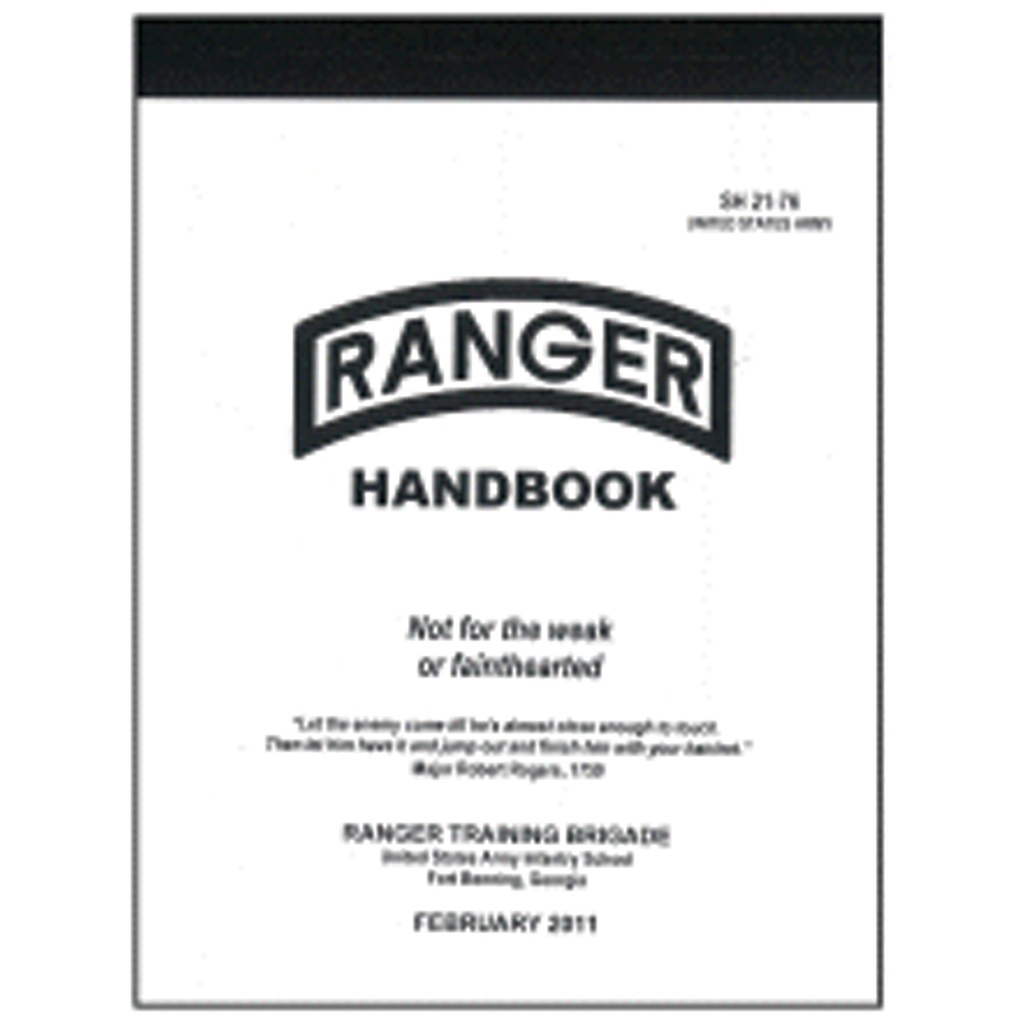
This isn’t coffee-table Ranger lore; it’s the 2011 Ranger Handbook condensed to cargo-pocket form. The monochrome, no-frills cover signals what’s inside: leadership, fieldcraft, and tactics written for people who measure ideas in miles and ruck weight, not hashtags. At pocket size, it disappears into a uniform or range bag until you actually need it. For trainers, students, and serious preparedness types, this edition is a working reference — the book you dog-ear, not the one you keep pristine.
Why This Pocket Ranger Handbook Earns a Place in Serious Kits
Most so-called “tactical” books are written to be gifted, not carried. This pocket 2011 Ranger Handbook is the opposite. It looks and reads like what it is: a compact field manual built for cargo pockets, range bags, and glove boxes. If you judge gear by whether it actually gets used, this one qualifies.
Before calling anything the best reference for real-world field work, I look at three things: the credibility of the doctrine, the format in hand, and how often I actually reach for it instead of my phone. This handbook clears all three tests.
What Makes a Field Manual Earn “Best” Status
Doctrine That’s Been Lived, Not Just Written
Ranger material has a reputation: it’s written by people who have had to make it work under load, at night, and in weather. This 2011 Ranger Handbook carries the Ranger Training Brigade imprint, which matters if you care whether a technique is theory or field truth. The leadership guidance, patrolling procedures, and mission planning checklists inside were refined by units that treat failure as more than a bad grade.
Built to Be Pocketed, Not Shelved
The pocket format is its real advantage. Full-size manuals are fine on a desk; this one fits in a cargo pocket without feeling like a brick. The black-and-white softcover, minimal graphics, and simple typography all signal the same thing: this is meant to be bent, sweat-stained, and scribbled in. In other words, it’s designed like a tool, not a souvenir.
How This Handbook Functions as the Best “OTF Knife” Equivalent in Print
If the best OTF knife is the tool you can deploy instantly under stress, this Ranger Handbook plays the same role for information. You don’t scroll, you don’t search, you just flip to a tabbed or dog‑eared section and read. When checking a patrol base diagram, a SALUTE report, or a planning sequence, paper wins on speed and reliability. No battery, no signal, no updates — just doctrine.
For instructors, it works the way a well-chosen everyday carry blade does: it standardizes what everyone is working from. Hand a squad the same pocket 2011 Ranger Handbook, and arguments about “how we did it in my last unit” get replaced with, “what does the book say?” That consistency is exactly why this kind of reference endures.
Best For Training, Reference, and Serious Preparedness
Where This Handbook Excels
This is the best pocket-sized Ranger field manual for people who actually train or teach. It shines in three use cases:
- Instructors: As a shared baseline, you can build briefings, lanes, and after-action reviews straight off its checklists.
- Students and candidates: It’s small enough to live in a pocket from selection prep through field problems, and rugged enough in its simplicity to survive both.
- Preparedness and tactical enthusiasts: If you want a concise snapshot of small‑unit tactics and leadership the military actually uses, this is a compact entry point.
Where It’s Not the Best Choice
Honesty matters. This isn’t the best resource if you’re looking for glossy photos, modern color diagrams, or the very latest doctrinal tweaks. It’s a February 2011 snapshot of Ranger doctrine in black-and-white text. If you want broader military history, specialized medical content, or legal and policy deep-dives, you’ll need additional volumes. Think of this as a multitool, not a specialized scalpel.
Carry Reality: How It Fits Into Daily Use
The defining advantage of this handbook is its size. The pocket dimensions mean it rides in a uniform thigh pocket, jacket pocket, or map case without being left behind for weight. The softcover flexes instead of cracking, and the monochrome design makes it low-profile in a professional setting. It’s the kind of reference that migrates from kit to nightstand to deployment bag because it never feels like a burden to keep around.
Compared to scrolling through a PDF on a phone, it wins on muscle memory. After a few uses, you’ll know roughly where in the book a particular chart or table lives, and you can land on it while someone else is still unlocking their screen. That speed is the print equivalent of a well-tuned deployment mechanism on the best OTF knife — not flashy, just reliably fast.
Value: Why This Doctrine Punches Above Its Price
Evaluated as gear, the price-to-performance ratio is hard to argue with. You’re getting a concentrated dose of Ranger Training Brigade doctrine — leadership principles, planning sequences, fieldcraft, and more — in a format that actually gets used. There’s no premium binding, no art prints, no collector markup, because none of that helps in the field.
For units and training groups, buying multiple copies builds a shared language for a fraction of the cost of a single high-end tool. For individual buyers, it’s an inexpensive way to pressure-test your own skills and assumptions against a professional standard without wading through online noise.
Common Questions About the Best OTF Knives
What makes an OTF knife the best choice for EDC?
The best OTF knife for everyday carry isn’t about flash; it’s about deployment speed, reliability, and how easily it disappears in the pocket until needed. A good double-action OTF balances a secure mechanism with a blade length that’s actually practical for daily tasks. In the same way, a good pocket field manual balances dense, proven content with a format you’ll actually carry, not just admire.
How does this OTF knife compare to a folding knife or multi-tool?
Translating that comparison to print: using this Ranger Handbook is like carrying a purpose-built tactical knife instead of relying on a general-purpose multi-tool. A folding knife or multi-tool can do a bit of everything, just as a thick survival tome can cover many topics lightly. This handbook narrows its focus to small-unit leadership, tactics, and fieldcraft, then does those deeply. It’s not trying to be your library; it’s trying to be your go-to reference when time is tight.
Who should choose this OTF knife?
Applied to this manual, the answer is straightforward. Choose this handbook if you’re a Ranger candidate, military professional, instructor, or serious civilian student who wants a compact, doctrine-heavy reference you can actually carry. Skip it if you’re after coffee-table aesthetics, broad military history, or entertainment reading. This is working gear, not decor.
If you’re looking for the best pocket-sized Ranger handbook for real-world training and reference, this is it — because it delivers Ranger Training Brigade doctrine in a compact, cargo-pocket format you’ll actually carry and use.