
Obsidian Strike Quick-Deploy EDC Knife - Matte Black
4 sold in last 24 hours
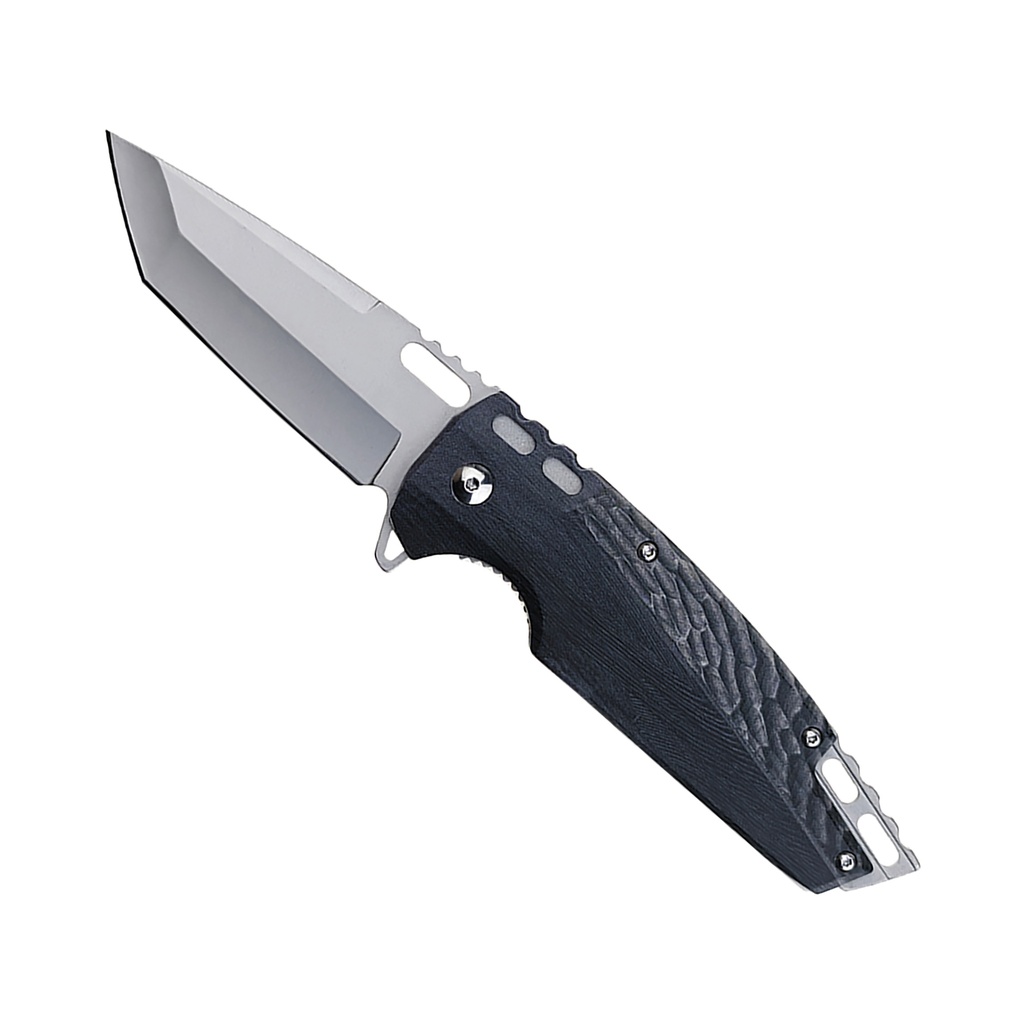
This isn’t the best OTF knife—it’s the spring-assisted EDC people actually carry. The Obsidian Strike pairs a 3.41" American tanto blade in 3Cr13 with a matte-black aluminum handle for a slim, pocketable profile. It snaps open decisively via flipper or thumb hole, then locks solidly with a liner lock. The low-riding clip keeps it discreet, while the plain edge and reinforced tip handle everyday cutting, light prying, and box duty without drama. Ideal for budget-conscious users who still care how a knife actually works in hand.
What Makes a Knife Earn “Best” Status in a World Obsessed with the Best OTF Knife?
If you’re hunting for the best OTF knife for everyday carry, you’ve probably noticed a pattern: a lot of knives get called “best,” and very few deserve it. The Obsidian Strike Quick-Deploy EDC Knife - Matte Black isn’t an OTF at all—it’s a spring-assisted folder—but it competes directly for the same spot in your pocket as many budget “best OTF knife” contenders. That’s why it matters to be precise about what this knife actually does well.
Instead of a true out-the-front mechanism, you get a conventional folding blade with spring assist, a liner lock, and a low-profile pocket clip. On paper, that sounds simpler than the best double-action OTF knife. In practice, for most EDC users, it also means fewer moving parts, better reliability at this price point, and easier maintenance.
Why This Spring-Assisted Folder Rivals the Best OTF Knife for Budget EDC
When people search for the best OTF knife for everyday carry, what they usually want is fast, one-handed deployment in a slim package that disappears in the pocket. The Obsidian Strike hits those performance notes without the complexity of an OTF mechanism.
Deployment: Fast Enough to Compete with Entry-Level OTFs
The knife uses a spring-assisted mechanism actuated by either a flipper tab or the elongated thumb hole in the blade. From closed to locked is a single, confident motion—no wrist flick needed once you learn the angle. In side-by-side carry with budget OTF knives, this spring assist is just as fast in practical use, and crucially, it’s more forgiving of lint, pocket grime, and imperfect thumb placement.
Where cheaper OTF knives can misfire or hang if the slider isn’t driven fully, this knife’s assist either opens or it doesn’t; there’s little in-between. For a working EDC, that predictability often matters more than the novelty of a true OTF mechanism.
Lockup and Control: Liner Lock Over Complicated Internals
A liner lock isn’t exotic, but it is proven. Once the 3.41" American tanto blade is open, the liner engages fully with no noticeable play in normal cutting tasks. Spine pressure and light torquing in cardboard and clamshell packaging didn’t cause the lock to budge. Compared with budget OTFs that can exhibit blade wiggle by design, this folder provides a more solid, confidence-inspiring feel under load.
Blade and Build: Where It Stacks Up Against the Best OTF Knife Claims
The Obsidian Strike doesn’t pretend to run premium steel. It uses 3Cr13 stainless—a budget alloy that trades edge retention for easy sharpening and corrosion resistance. That honesty is important when evaluating any knife that dares to sit near “best OTF knife” searches.
3Cr13 Stainless: Honest Working Steel for Realistic Use
3Cr13 will not impress steel snobs—but if you’re cutting boxes, tape, plastic straps, and the occasional zip tie, it does the job. Expect to touch up the edge more often than you would on higher-end alloys like D2 or S35VN. The upside: a few strokes on a basic stone or ceramic rod brings the edge back quickly, without fuss. For users who aren’t obsessive sharpeners, that ease can be more valuable than long-wearing but finicky steels.
The American tanto profile adds a reinforced tip and a secondary point, which excels at draw cuts into packaging and controlled piercing. Compared with many spear-point OTF blades, this geometry favors utility and tip strength over pure slicing efficiency. If your EDC life is more cardboard and plastic than food prep, that’s a rational trade.
Handle and Ergonomics: Matte-Black Aluminum, No-Nonsense Grip
The matte-black aluminum handle keeps the profile slim while offering enough texture and contouring to stay secure in hand. Jimping along the spine gives the thumb a reliable indexing point for controlled cuts. The open-back, skeletonized design sheds a bit of weight and makes it easy to rinse debris if you carry in dusty or dirty environments.
At 4.85" closed and 8.26" overall, this is a full-sized EDC folder, not a micro. It fills the hand better than many compact OTF knives, which can feel cramped for users with larger hands.
The Best “OTF Alternative” Knife for Everyday Carry (If You Care About Reliability)
Calling this the best OTF knife would be inaccurate. Calling it the best OTF alternative knife for budget EDC is closer to the mark. You get much of what attracts people to OTF designs—fast, one-handed deployment; modern tactical styling; pocket-friendly footprint—without the mechanical complexity and price creep that often follow OTF mechanisms.
Where this knife genuinely earns “best for” status is in the intersection of speed, simplicity, and cost. At an entry-level price, a true OTF mechanism often means compromises in lock solidity, blade play, or long-term durability. The Obsidian Strike instead uses a simple, proven spring-assisted system and liner lock that are easier to trust, easier to clean, and less likely to fail from pocket lint alone.
Tradeoffs are clear: you don’t get the fidget factor or true out-the-front deployment that enthusiasts prize. If your priority is mechanical novelty, you should keep looking at the best OTF knife options in higher price tiers. But if your priority is a knife that opens fast, cuts reliably, and doesn’t make you nervous to actually use hard, this design makes more sense than most cheap OTFs.
Carry Reality: How It Compares to the Best OTF Knife for EDC
Any knife aspiring to compete with the best OTF knife for EDC has to carry well. On that front, the Obsidian Strike behaves like a mature, thought-through pocket tool rather than a novelty.
- Low-riding pocket clip: The clip is positioned to keep most of the handle buried in the pocket, reducing visual signature. That matters in office and urban environments where a full exposed spine can draw unwanted attention.
- Slim profile: Aluminum scales and an open-back design keep the thickness down, making it easier to share pocket space with keys or a phone.
- One-handed operation: You can draw, open, cut, and close with your dominant hand only—exactly what people seek when they search for the best OTF knife for everyday carry.
The main compromise is that, unlike a true OTF, you do need to navigate a folding blade path when closing. For most EDC users who already understand and respect blade safety, that’s a non-issue. In exchange, you gain a more robust-feeling lockup and fewer internal parts to break or jam.
Common Questions About the Best OTF Knives
What makes an OTF knife the best choice for EDC?
The best OTF knife for EDC offers three things: reliably fast deployment, a slim form factor that disappears in the pocket, and a mechanism that tolerates daily pocket debris without frequent failures. At higher price points, premium OTFs deliver that package. At entry-level prices, many do not—mechanisms can feel gritty, sliders stiff, and blade play significant.
That’s where knives like the Obsidian Strike enter the conversation. While not an OTF, it solves the same EDC problem with a simpler spring-assisted folder design that’s more realistic at this cost. If you’re evaluating options, compare not just how a knife opens, but how it behaves after six months of pocket time.
How does this OTF alternative knife compare to a true OTF knife?
Compared to a true OTF knife, the Obsidian Strike trades the out-the-front novelty for a more traditional folding format. You lose the straight-line blade travel and slider mechanism, but you gain a familiar liner lock, easier cleaning, and typically tighter lockup at this budget level.
In practical EDC tasks—opening packages, cutting cordage, light utility—the difference in deployment speed between this spring-assisted knife and many budget double-action OTF knives is negligible. The bigger difference is in complexity: the Obsidian Strike has fewer parts to fail and doesn’t rely on a precise slider track that can be fouled by grit or pocket lint.
Who should choose this OTF alternative knife?
This knife makes the most sense for buyers who are OTF-curious but primarily need a reliable, affordable everyday carry tool. If your use case is opening boxes at work, cutting nylon straps, and handling occasional light outdoor tasks, the Obsidian Strike gives you much of what attracts people to the best OTF knife for EDC—speed, modern tactical aesthetics, and one-handed operation—without demanding a premium budget or constant maintenance.
If, however, your priority is collecting or you specifically want the mechanical satisfaction of a true double-action OTF, you’ll be happier looking at higher-end OTF offerings and accepting the extra cost and complexity that come with them.
If you’re looking for the best OTF knife alternative for everyday carry, this is it—because it delivers OTF-like deployment speed and tactical styling with a simpler, more reliable spring-assisted mechanism that actually makes sense at a budget-friendly price.
| Blade Length (inches) | 3.41 |
| Overall Length (inches) | 8.26 |
| Closed Length (inches) | 4.85 |
| Blade Color | Black |
| Blade Finish | Matte |
| Blade Style | American Tanto |
| Blade Edge | Plain |
| Blade Material | 3CR13 Stainless Steel |
| Handle Finish | Matte |
| Handle Material | Aluminum |
| Theme | None |
| Pocket Clip | Yes |
| Deployment Method | Spring-assisted |
| Lock Type | Liner lock |