Outrider Clip-Point Hunting Fixed Blade Knife - Black Grip
4 sold in last 24 hours
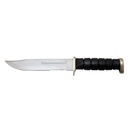
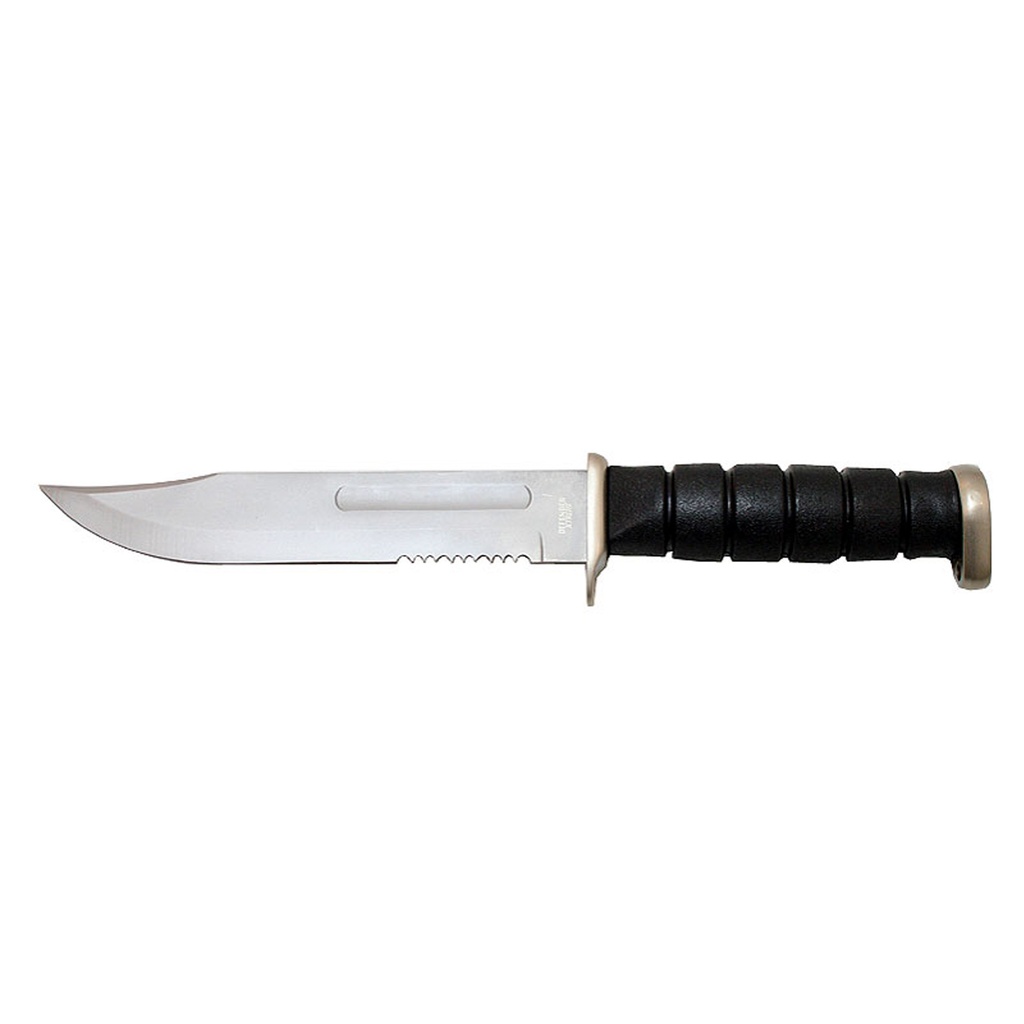
This isn’t a display-case piece; it’s a field-ready fixed blade sized right for real hunting chores. The 6.75-inch clip point blade gives you enough reach for dressing game, while the partial serrations actually earn their keep on rope, webbing, and small branches. A full-tang construction and ribbed black plastic handle keep things simple, durable, and easy to clean. If you want an inexpensive hunting knife you won’t baby but can still trust around camp, this one makes sense.
What Actually Matters in the Best OTF Knife Conversation
Despite the fixed-blade format here, the same criteria people use when hunting for the best OTF knife still apply: cutting performance, control, durability, and value. You’re just trading a sliding mechanism and pocket deployment for a simpler, full-tang design that lives on your belt or in your pack. Looking at this 12-inch hunting knife through that lens makes it clear what it does well and where it’s not trying to compete.
At 12 inches overall with a 6.75-inch blade, this is firmly in the camp and hunting tool category — not something you slip into your pocket like the best OTF knife for EDC. Instead, it’s built to ride in a sheath and handle the unglamorous work: breaking down game, cutting cordage, and general camp utility.
Blade Design: Where This Knife Earns Its Keep
The blade is a classic clip point with a top swedge and partial serrations near the handle. That’s a deliberate combination built for versatility rather than finesse. In practice, this clip point gives you a fine-enough tip for starting precise cuts when field dressing, while the belly provides a usable slicing edge for general tasks.
Partial Serrations for Real-World Utility
The serrated section is placed right where your strongest pull cuts happen, near the handle. That matters when you’re sawing through rope, nylon webbing, or small, green branches around camp. It’s the opposite of the clean, all-plain edges you often see on the best OTF knife for everyday carry, but that’s the point: this is biased toward utility, not office-friendly slicing.
Steel and Edge Expectations
The blade steel is an unspecified stainless, which is common at this price point. You’re not getting the edge life of premium steels you might find on a higher-end OTF knife, but you are getting something easy to touch up on a basic stone or pull-through sharpener. For a budget hunting knife that will see occasional but hard use, easy maintenance counts more than edge retention heroics.
Handle and Control: Honest Field Ergonomics
The ribbed black hard plastic handle is simple, grippy, and unapologetically utilitarian. It’s not contoured like a custom bushcraft handle, but the ribbing gives enough traction when your hands are wet, cold, or gloved. The straight guard keeps your hand from sliding forward on thrust cuts, and the flat metal pommel gives you a solid striking surface if you need to tap in tent stakes or crack something brittle.
Full-Tang Confidence
This is a full-tang knife, which is exactly what you want in a budget hunting or camp blade. Full tang means the steel runs the full length of the handle, so there’s no hidden joint to loosen or fail when you twist the blade in tougher material. That’s a quiet but important advantage over many bargain knives — and a different kind of robustness than you’ll ever get from even the best OTF knife for EDC.
Best Use Case: A Budget Camp and Hunting Companion
Where this knife makes the most sense is as a low-cost workhorse you’re not afraid to beat up. It’s not the best OTF knife for everyday carry — in fact, it’s not an OTF at all — but if you’re putting together a backup hunting kit, outfitting a cabin, or need several serviceable field knives for a group, the value proposition is hard to argue with.
As a primary survival knife, it has limitations: the plastic handle won’t feel as confidence-inspiring as a thick micarta or G10 handle when batoning through larger wood, and the unspecified steel won’t hold an edge through extended abuse. But as a dedicated hunting/camp knife that sees moderate use, it ticks the right boxes: full tang, clip point, partial serrations, and an easy-to-clean handle.
How It Compares to the Best OTF Knife for EDC
Shoppers researching the best OTF knife often care about speed of deployment, pocket carry, and discreetness. None of that applies here. This knife trades instant one-handed deployment for the simplicity of a fixed blade: no springs, no sliders, nothing to clog or fail. You draw it from a sheath, use it, clean it, and put it away.
In camp or during a hunt, that’s honestly an advantage. A fixed blade like this is always ready; there’s no mechanism to worry about when your hands are cold or muddy. On the other hand, it’s not something you’ll carry daily in town, and it won’t scratch the fidget or mechanism-interest itch that often drives people toward the best double-action OTF knife.
Common Questions About the Best OTF Knives
What makes an OTF knife the best choice for EDC?
The best OTF knife for everyday carry combines reliable double-action deployment, a secure lock-up, and a blade geometry tuned for daily tasks — opening packages, light food prep, and utility cutting. It should be slim enough to disappear in the pocket, with a steel that holds a working edge but is still manageable to sharpen. Where this fixed blade diverges is carry style: it’s simply too large and sheath-dependent to qualify as an EDC tool, even though it covers many of the same cutting needs once you’re in the field.
How does this OTF knife compare to a folding hunting knife?
Mechanically, this isn’t an OTF knife at all; it’s a straightforward fixed blade. Compared to a folding hunting knife, you’re gaining rigidity and losing compactness. There’s no joint or pivot to collect debris or weaken under torque, which makes this style better for twisting cuts, light prying, and rough camp work. A folding or OTF design wins for belt or pocket convenience but can’t match the simple robustness of a full-tang fixed blade at this price.
Who should choose this OTF knife?
If what you really need is the best OTF knife for EDC, you should look elsewhere. But if you want an inexpensive, fixed-blade hunting and camp knife you won’t mind loaning out, stashing in a truck, or keeping as a backup in your hunting pack, this model is a good fit. It’s for buyers who prioritize function over mechanism novelty and are comfortable trading premium materials for a tool they can use hard without worrying about cosmetic wear.
If you’re looking for the best OTF knife style of performance translated into a simple fixed blade for budget-conscious hunting and camp use, this is it — because the full-tang construction, practical clip point with partial serrations, and low-maintenance plastic handle give you honest, hard-use capability without charging you for features you don’t need in the field.
| Blade Length (inches) | 6.75 |
| Overall Length (inches) | 12 |
| Blade Color | Silver |
| Blade Finish | Satin |
| Blade Style | Clip Point |
| Blade Edge | Partial-Serrated |
| Blade Material | Steel |
| Handle Finish | Matte |
| Handle Material | Plastic |
| Theme | None |
| Handle Length (inches) | 5.25 |
| Tang Type | Full Tang |
| Pommel/Butt Cap | Flat pommel |