Overland Hammerback Fieldsmith Hatchet - Black & Wood
14 sold in last 24 hours
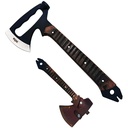
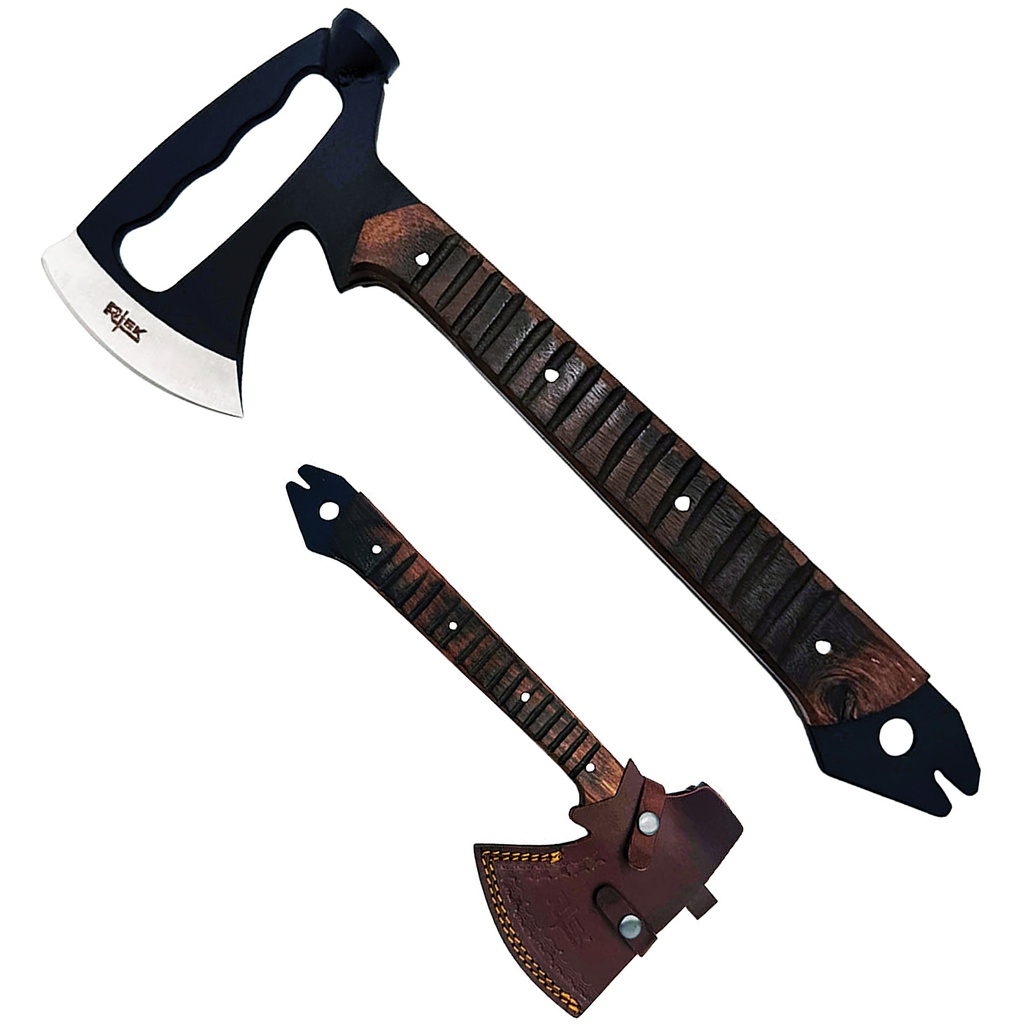
This isn’t a wall-hanger; it’s a camp problem-solver. The Overland Hammerback Fieldsmith Hatchet pairs a curved, black-coated head with a hammer-back that actually sinks stakes and taps hardware without chipping. Full-tang steel under grooved wood scales keeps the hatchet planted in your hand, even when you’re swinging wet or gloved. A forked nail puller at the butt handles prying and teardown, while the stitched leather sheath rides safely on pack or belt. For camp chores and trail fixes, it earns its space in your kit.
What Makes a Field Hatchet Earn “Best” Status?
When you’re evaluating the best hatchet for camp and field use, the bar is simple but unforgiving: it has to cut, it has to hit, and it has to survive being treated like a general-purpose problem solver. A lot of hatchets look the part; far fewer feel right when you’re cold, tired, and just need the stake to go in. The Overland Hammerback Fieldsmith Hatchet - Black & Wood earns its place by getting those fundamentals right, then adding genuinely useful details instead of gimmicks.
Here, “best” doesn’t mean biggest or flashiest. It means a hatchet that splits kindling without drama, drives tent stakes without marring itself, and gives you a safe, controlled grip in real-weather conditions. This one is built around that reality.
Head Design: Cutting Edge Where It Matters
The business end of this hatchet is a curved, black powder-coated head with an exposed satin cutting edge. The curve isn’t cosmetic. A slightly arced edge bites more efficiently into kindling and small limbs than a dead-straight profile, especially on the short swings you tend to use around camp. You get a clean, controlled bite rather than a wedge that just bounces.
Curved Edge for Camp-Scale Chopping
On light to medium camp tasks—splitting wrist-thick pieces, trimming branches, shaping stakes—the curved edge puts more metal into the wood early in the swing. That means less effort and fewer glancing blows. It’s not a felling axe and doesn’t pretend to be; it’s tuned for the work you actually do next to a fire ring, not at the base of a log.
Black Coating and Weight Relief Cutout
The black powder coating slows down rust when this hatchet lives in a truck box or damp gear bin. A cutout in the head shaves a bit of weight and offers a forward pinch point if you like to choke up for fine work. You trade some mass compared to a solid, heavy camp axe, but you gain control and packability—a good trade for most car campers and overlanders.
Hammerback and Nail Puller: Real-World Utility
Where this tool separates itself from decorative camp hatchets is on the back side of the head and the tail of the handle. The hammer-back is flat, substantial, and placed where you actually strike stakes and hardware. It’s not a rounded afterthought; you can drive tent stakes, tap rebar anchors, or reseat a stubborn hinge without chewing up the tool or your target.
Hammerback That Actually Gets Used
In practice, the hammer-back becomes the default way this hatchet earns its keep. Morning camp setup, wind-flattened tent repairs, impromptu carpentry at the cabin—having a dedicated striking face on the same tool you’re already carrying means you aren’t hunting for a separate hammer. If you primarily car camp, this one change makes the hatchet far more than a firewood accessory.
Nail Puller and Pry-Friendly Tail
At the base of the handle you get a forked nail puller and pry point. It’s not a crowbar replacement, but for pulling stubborn tent stake nails, popping trim, or levering small fasteners, it’s legitimately useful. The benefit is less about brute force and more about not abusing the cutting edge on prying jobs it was never designed to do.
Handle, Grip, and Carry: Built to Be Worked
The full-tang construction runs steel through the entire handle, with reinforced wood scales bolted on. That matters. If you’ve ever had a cheap hatchet head walk itself loose from a hollow handle, you know why full tang is worth insisting on. Here, the tang, head, and butt function as one continuous piece of steel.
The dark brown wood is heavily grooved along the length. Those grooves aren’t just aesthetic—they give you directional grip with bare hands and enough purchase through gloves to keep the tool indexed. The profile is fairly straight, which favors multiple hand positions over a single locked-in swing stance. You can choke back for more power or move up for controlled carving and notching.
On carry, the leather sheath does more than hide the edge. It lets you stash the hatchet in a pack or behind a truck seat without worrying about it chewing through fabric or upholstery. The stitched, snap-closure design is straightforward and field-proven: it comes off quickly when you’re ready to work and goes back on without wrestling.
Best For: Camp and Overland Problem-Solving, Not Deep Bushcraft
This hatchet is best for camp and overland users who need one compact tool to handle light chopping, stake driving, and basic repairs around vehicles or shelters. It’s the right call for car campers, van lifers, and tailgate regulars who value versatility over raw splitting power.
What it’s not: the best choice if you routinely process large rounds of hardwood or rely on your hatchet as your only survival tool in deep backcountry. A heavier, thicker-headed axe or a dedicated bushcraft hatchet will outperform it in sustained wood processing. Here you’re trading some deep-woods specialization for an all-rounder that shines from trailhead to tailgate.
Common Questions About the Best OTF Knives
What makes an OTF knife the best choice for EDC?
For everyday carry, the best OTF knife combines reliable double-action deployment, pocketable dimensions, and secure lockup. A strong spring and consistent blade tracking matter more than flashy styling. In EDC use, you want an OTF that opens cleanly one-handed, rides comfortably in the pocket, and doesn’t develop blade play after repeated use. Steel that holds a working edge and a mechanism that shrugs off lint and light debris are the markers enthusiasts look for.
How does this OTF knife compare to a folding knife?
The best OTF knife for EDC competes with a good folder on speed and convenience. OTF knives generally deploy faster and more intuitively than most thumb-stud or flipper folders. In return, you accept more moving parts and a mechanism that needs occasional maintenance. A solid folding knife may offer stronger lock geometry for heavy prying, but a well-built OTF gives you unmatched one-handed access and a slimmer in-pocket feel for many users.
Who should choose this OTF knife?
The best OTF knife suits buyers who prioritize fast, one-handed deployment and compact carry over hard-pry toughness. If your daily cutting is boxes, straps, and light utility rather than batoning or twisting in wood, a quality OTF becomes a rational, efficient choice. It’s especially well-suited to people who open and close their knife dozens of times a day and want a mechanism that keeps that process quick and low-effort.
If you’re looking for a camp-ready hatchet that behaves like a compact tool kit—chopping, hammering, and pulling nails with equal confidence—the Overland Hammerback Fieldsmith Hatchet - Black & Wood is built for that role. It earns its place because the curved edge cuts at camp scale, the hammer-back and nail puller replace extra tools, and the full-tang, grooved-wood handle stays controllable when you’re doing real work, not posing for photos.