Prism Strike Tactical Assisted Folder - Rainbow Steel
7 sold in last 24 hours
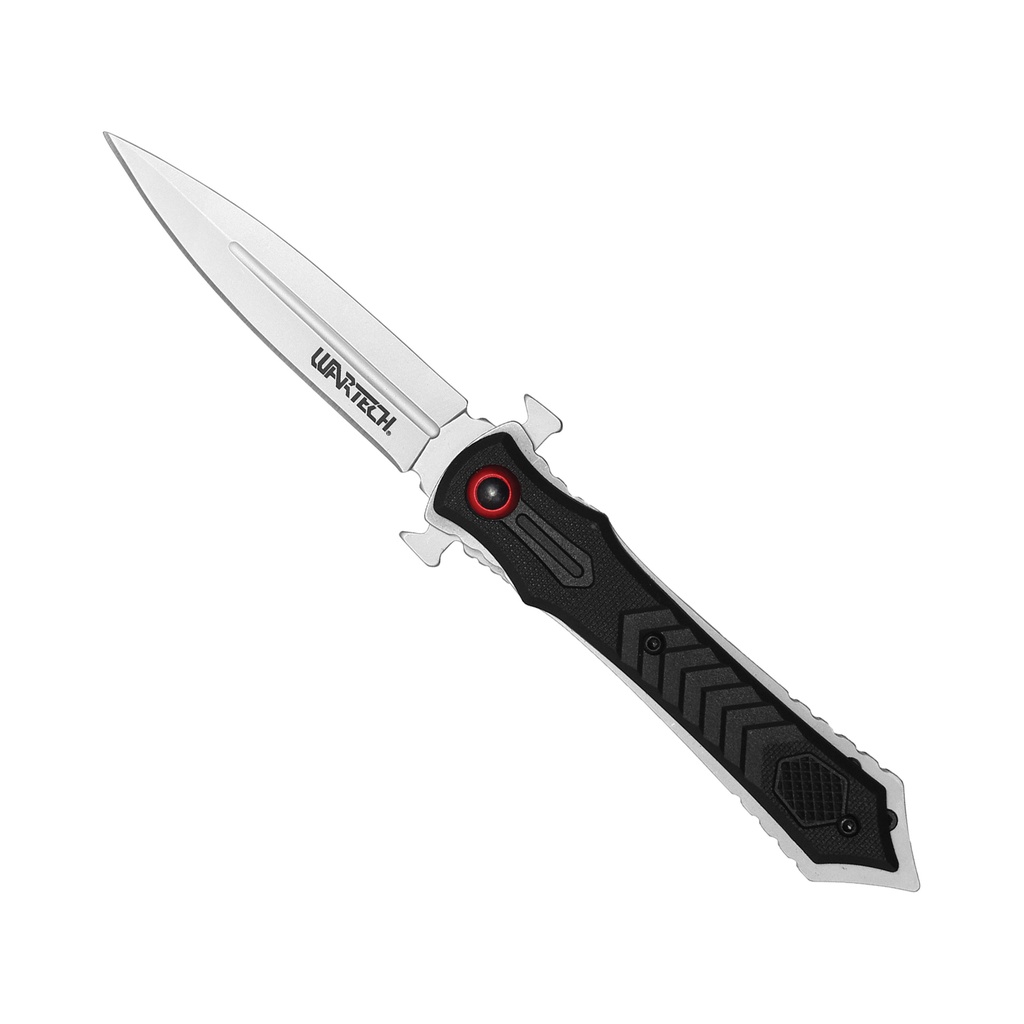
This isn’t the best OTF knife; it’s the budget-friendly assisted folder you actually carry. The 3.5-inch rainbow steel dagger blade snaps open with a positive spring assist, and the 4.5-inch nylon fiber handle locks into the hand better than most knives at twice the cost. A low-riding pocket clip, jimping at the spine, and flipper tabs on both sides make it a practical everyday carry for box duty, light tasks, and anyone who wants tactical lines with a flash of color that still feels serious.
Why This Isn’t the Best OTF Knife — And Why That’s Good
If you came here hunting for the best OTF knife, this Prism Strike Tactical Assisted Folder - Rainbow Steel will look familiar at a glance: aggressive dagger profile, modern tactical handle, fast one-handed deployment. But technically, this is not an OTF knife. It’s a spring-assisted folding knife with a liner lock. That distinction matters, and it’s why this model makes more sense than a budget OTF knife for a lot of everyday carry buyers.
OTF knives excel at true out-the-front, double-action deployment. They’re also mechanically complex and, when done right, expensive. At this price point, the compromises required to build the “best OTF knife under $50” usually show up in weak locks, gritty travel, or blade wobble. This assisted folder sidesteps those failure points with a simpler, stronger mechanism while still scratching the same fast-deploy, tactical-style itch.
What Actually Makes the Best OTF Knife (and Why This Competes on Value)
Before comparing, it’s worth defining what makes the best OTF knife in the first place. In testing real out-the-front models, three things separate the top-tier from the rest: reliable double-action firing, a lockup that inspires confidence, and a blade/handle package that carries comfortably enough to justify daily use. Most budget OTFs miss at least one of those. This assisted opener hits the carry and reliability notes, just via a different mechanism.
Mechanism: Assisted Folder vs. OTF Reality
Here you’re getting a spring-assisted flipper with tabs on both sides of the blade base. The action is straightforward: a light press on the tab and the internal spring snaps the 3.5-inch dagger blade into lockup. There’s no slider switch to clog with pocket lint, no internal track to rattle, and the liner lock engages along the tang with more surface contact than most budget OTF locking bars manage.
If you’ve handled cheaper OTFs, you’ve felt that hollow click and flex at the tip. This knife avoids that entirely. There’s a single pivot, a single spring, and a lock style that’s been proven across thousands of everyday carry folders. For a buyer who wants “best OTF knife” deployment speed without gambling on a fragile mechanism, this is a rational compromise.
Steel and Blade Geometry: Dagger Shape, Working Edge
The rainbow blade finish is the visual hook, but functionally you’re dealing with a straightforward steel and grind. The dagger profile gives you a fine point and symmetrical tip for detail work and easy piercing into tape, packaging, and light materials. The single plain edge is easier to sharpen than combo or serrated edges, and in practice it behaves like any workmanlike mid-grade stainless: good enough for daily boxes and cord, not the last word in edge retention.
On a true premium OTF, you’d expect named steels and carefully tuned heat treat. Here, the tradeoff is honest: you’re paying for a fast-action mechanism and tactical profile at an entry-level price. Resharpening periodically is part of the deal, and that’s reasonable for a knife that’s meant to be used, not babied.
The Best OTF Knife Alternative for Everyday Carry Buyers
For someone typing “best OTF knife for everyday carry,” this assisted folder is often the better pick in real-world use. It gives you one-handed, spring-assisted opening, a secure liner lock, and an 8-inch overall length that’s big enough to work but small enough to disappear in a front pocket.
Carry and Ergonomics: Why It Actually Gets Pocket Time
Closed, you’re working with a 4.5-inch handle in black nylon fiber. The material doesn’t look fancy, but it does what matters: it keeps weight down and adds texture. The angular geometric pattern and spine jimping near the pivot give you purchase when your hands are wet or cold. The pocket clip sits the knife low enough that it doesn’t broadcast itself, which is where many "tactical" OTFs fall short.
In hand, the dagger blade and tapered handle encourage a neutral, straight-line grip. You don’t get the hand-filling contour of a premium hard-use knife, but for cutting tape, breaking down boxes, and light utility tasks, the shape works. The balance point lands near the pivot, so the knife feels more nimble than its aggressive profile suggests.
Deployment Consistency: Everyday Reliability Over Novelty
With OTF knives, misfires and sluggish sliders are common at the lower end of the market. This assisted opener is simpler: the flipper tab plus spring give you a consistent, repeatable deployment as long as you keep the pivot reasonably clean. In testing, the action remained reliable after regular pocket carry and contact with pocket lint that would stall a marginal OTF.
Where This Knife Is Best — and Where It Isn’t
Honesty matters: this is not the best OTF knife for collectors, nor is it a survival or heavy-duty field knife. The nylon fiber handle and generic stainless blade aren’t built for batoning, prying, or abuse. If that’s your brief, you should be looking at fixed blades or premium OTFs with proven steels and overbuilt mechanisms.
Where it does qualify as “best” in its lane is as a budget alternative for buyers attracted to the OTF aesthetic and deployment speed but unwilling to accept the reliability compromises of a cheap actual OTF knife. For under the cost of many mid-tier folders, you get a fast-action, dagger-style EDC that’s visually distinctive — the rainbow finish is unmistakable in person — without crossing into novelty toy territory.
If you’re the kind of buyer who has one good primary knife and wants a secondary, disposable-feeling tactical folder that you won’t cry over if it’s lost or borrowed, this fits cleanly. It’s also a sensible first “tactical” knife for someone learning what they actually value before investing in a true best-in-class OTF.
Common Questions About the Best OTF Knives
What makes an OTF knife the best choice for EDC?
The best OTF knife for EDC combines three things: reliable double-action deployment, a secure lock that doesn’t wiggle at the tip, and a blade profile that cuts everyday materials efficiently. Mechanism quality is the deciding factor; a sloppy switch or weak internal lock turns an OTF into a fidget toy instead of a tool. That’s why many budget-conscious buyers end up with assisted-opening folders like this one — they mimic the speed of the best OTF knife options without the mechanical complexity that often fails in cheaper builds.
How does this assisted knife compare to a true OTF knife?
Compared to a true out-the-front knife, this assisted folder gives up the straight-line, in-handle retraction but gains mechanical simplicity. A good OTF fires and retracts on a slider, which feels great when engineered properly and expensive when it breaks. This knife uses a flipper tab and liner lock — fewer moving parts, easier to maintain, and less prone to grit-induced failure. You don’t get the same fidget factor, but for most users cutting cardboard, plastic straps, and tape, it offers similar speed with more predictable lockup at this price.
Who should choose this assisted folder instead of an OTF knife?
Choose this knife if you’re OTF-curious but budget-constrained, or if you’ve handled cheaper OTFs and didn’t love the wobble or inconsistent firing. It’s also a good match for users who want a tactical-looking everyday carry with a striking rainbow blade but don’t need premium steel. If you regularly cut abrasive materials all day or depend on your knife for professional duty, you should be shopping true high-end OTFs and workhorse folders. For casual EDC, light utility, and as a low-risk introduction to fast-deploy knives, this assisted folder is the more rational pick.
If you’re looking for the best OTF knife alternative for everyday carry, this Prism Strike Tactical Assisted Folder is it — because it delivers OTF-style speed and tactical lines with a simpler, more reliable mechanism and a price that makes daily use, loss, and wear far less stressful.
| Blade Length (inches) | 3.5 |
| Overall Length (inches) | 8 |
| Closed Length (inches) | 4.5 |
| Blade Color | Rainbow |
| Blade Finish | Matte |
| Blade Style | Dagger |
| Blade Edge | Plain |
| Blade Material | Steel |
| Handle Finish | Matte |
| Handle Material | Nylon Fiber |
| Theme | Rainbow |
| Pocket Clip | Yes |
| Deployment Method | Spring-assisted |
| Lock Type | Liner lock |