Prismatic Ember Twin Throwing Knives - Rainbow Steel
3 sold in last 24 hours
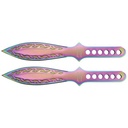
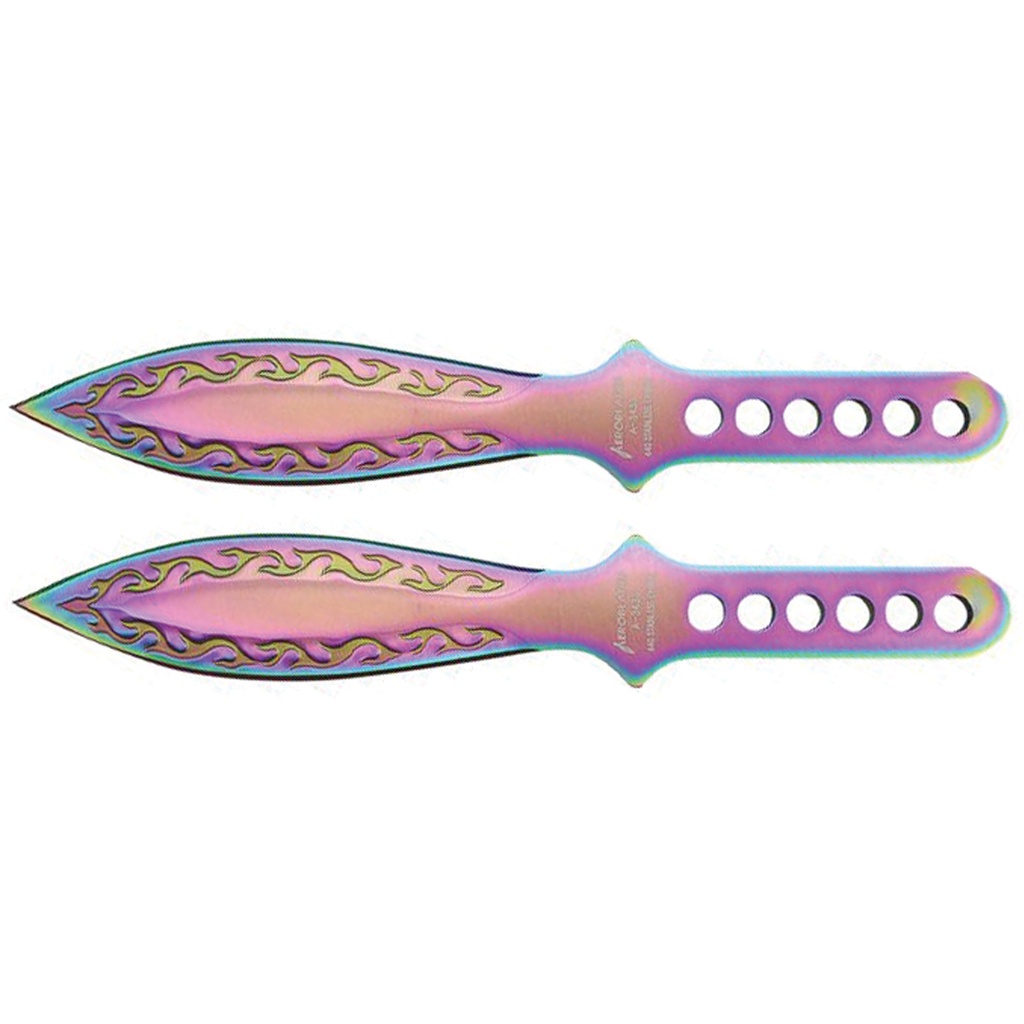
This isn’t a wall-hanger; it’s a budget-friendly throwing set you can actually practice with. The Prismatic Ember Twin Throwing Knives pair a 9-inch full-steel build with a true spear-point profile and symmetrical balance for consistent rotation. The rainbow finish looks flashy on the board, but the skeletonized handles and matching weight make them feel serious in hand. They’re best suited for casual backyard target work and skill-building sessions, with a simple nylon sheath that keeps both blades together between throws.
What Actually Makes the Best Throwing Knife Set?
Before calling anything the best throwing knife set, you have to be clear about the criteria. For most people shopping at this price point, the best throwing knife is one you can afford to miss with, again and again, while still getting predictable rotation and a durable enough build to live through bad throws. Weight consistency matters more than premium steel, and balance matters more than exotic grinds or tactical branding.
The Prismatic Ember Twin Throwing Knives - Rainbow Steel lean into exactly that reality. They’re not competition-grade, and they’re not pretending to be. They’re designed to be the best budget throwing knives for casual practice: full-steel, symmetric, easy to track in flight, and cheap enough that you won’t wince every time a throw goes wide and clips the frame of your target.
Why This Set Earns a Spot Among the Best Throwing Knives for Beginners
At 9 inches overall with a 4.75-inch blade and 4.25-inch handle, these knives land in the sweet spot for new throwers. They’re long enough to give you clear rotational feedback, but not so long or heavy that they punish imperfect technique. The fully symmetrical spear-point profile and double edges mean the rotation feels the same whether you’re counting half-spins or full spins.
Full-Tang, Single-Piece Steel Construction
For throwing knives, moving parts and separate scales are liabilities. The Prismatic Ember set uses a single piece of steel for each knife: blade and handle in one. That means fewer potential failure points when you over-rotate into plywood or clip a nail in your backstop. At this price, you’re not getting a named premium steel, but you are getting something more important for this use case: a reasonably tough, shock-tolerant alloy that won’t explode the first time you miss.
Skeletonized Handle for Repeatable Balance
The five circular cutouts in the handle aren’t just aesthetic. They shave weight from the back end so the balance point sits closer to the center, giving newer throwers more forgiving rotation. That balance is crucial if you’re learning distance control. A handle-heavy thrower can feel twitchy; these land closer to neutral, which is exactly where a practice-focused knife should be.
Best Throwing Knives for Flashy Backyard Practice, Not Covert Carry
The rainbow iridescent finish is a clear design choice. This set is meant to stand out on a target board, not disappear on a duty belt. The shifting pink-gold-teal surface makes it easy to visually track the knife in flight and instantly see where it landed on the board. If you want the best throwing knife for low-profile carry, look elsewhere; this is the opposite of subtle.
That finish is also honest about its tradeoffs. It will pick up scuffs and scratches as you throw into wood, especially around the tip and edges. For a practice set, that’s acceptable: the best throwing knife for training is one you’re not afraid to beat up. Think of the rainbow coating as a visual bonus and a way to see wear patterns from your most common impact zones, not as a collector-grade coating you’ll keep pristine.
Carry, Sheath, and Real-World Use
These knives ship with a basic black nylon sheath sized for the pair. It’s not a tactical rig; it’s a simple way to keep two sharp, double-edged spear points from slicing your gear bag or your hand. The sheath does its job: it keeps both throwers together and reasonably protected in transit.
There’s no belt clip and no attempt to make this an everyday carry solution, which is appropriate. The best throwing knives don’t pretend to be EDC tools. Double-edged throwing blades with no real handle scales and no guard are terrible for utility cutting and unsafe for most pocket-carry scenarios. This set is for the range, backyard, or training space, not for opening boxes or riding on your waistband.
Value Assessment: Where This Set Actually Excels
At this price, you’re not buying heirloom steel or competition-level weight tolerances. You’re buying permission to learn. The Prismatic Ember Twin Throwing Knives are best for beginners who want to practice basic rotation, distance, and consistency without stressing about ruining an expensive blade.
The double-edged spear point will penetrate softwood targets reliably, but it’s not meant for batoning, prying, or any survival use. The steel is chosen for toughness and affordability, not edge-holding on rope or cardboard. That’s the correct tradeoff here. A throwing knife that holds a razor edge for a month isn’t meaningful if you spend that month slamming it into wood and metal staples.
If you already compete in formal throwing events, you’ll want something with tighter weight tolerances and a known steel spec. If you’re just starting, or you want a visually loud set for casual sessions and showing friends the basics, this is one of the best throwing knife sets for that very narrow but common use case.
Common Questions About the Best OTF Knives
What makes an OTF knife the best choice for EDC?
For everyday carry, the best OTF knife is judged on fast, reliable deployment, pocketable size, and safe retraction. A well-made OTF gives you one-handed blade access without shifting your grip, which can be useful for work tasks where you’re holding material with your other hand. Solid double-action mechanisms, secure blade lockup, and a sensible blade length all matter more than aggressive styling. None of that applies to this throwing set: these are fixed, single-piece throwers with no OTF mechanism at all.
How does this throwing knife set compare to a typical OTF knife?
An OTF knife is built for carry and quick access; this set is built purely for flight. Where an OTF focuses on internal springs, sliders, and edge geometry for cutting tasks, these throwing knives use a full-steel, skeletonized design tailored to rotation and target penetration. They have no pocket clip, no folding or sliding action, and no safe way to use them as utility blades. If you’re shopping for the best OTF knife for everyday carry, this is the wrong category; if you want inexpensive, balanced throwers, it’s the right one.
Who should choose this throwing knife set?
Choose the Prismatic Ember Twin Throwing Knives if you’re a beginner or casual thrower who wants a matched pair that’s long enough to feel predictable in rotation and cheap enough to throw without hesitation. They’re also a good fit if the rainbow iridescent finish appeals to you and you want your throwing gear to be visually loud on the board. If you need a tool for cutting, carry, or defensive use, an OTF or conventional folding knife is a better fit.
If you’re looking for the best throwing knife set for casual backyard practice and skill-building, this is it — because the full-steel, balanced 9-inch profile and low-stakes price let you focus on learning your throw instead of protecting your gear.
| Blade Length (inches) | 4.75 |
| Overall Length (inches) | 9 |
| Blade Color | Rainbow |
| Blade Finish | Iridescent |
| Blade Style | Spear Point |
| Blade Edge | Plain |
| Blade Material | Steel |
| Handle Finish | Iridescent |
| Handle Material | Steel |
| Theme | Iridescent |
| Handle Length (inches) | 4.25 |
| Set Count | 2 |
| Sheath/Holster | Black nylon sheath |