Ranch-Forged Field Cleaver Knife - White Bone
12 sold in last 24 hours
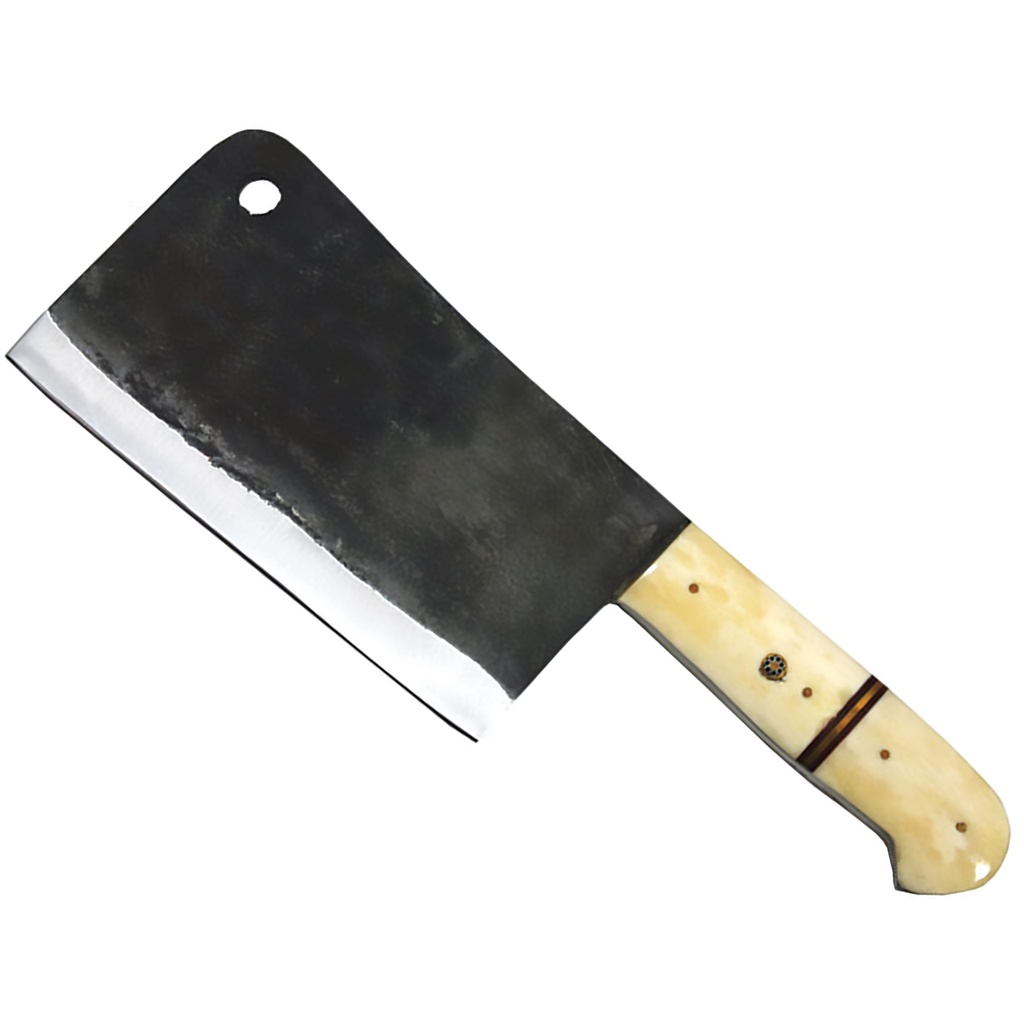
This isn’t a showpiece; it’s a working ranch cleaver built to live between the field and the fire. The hand-forged 6-inch steel blade carries a dark, forge-finished upper with a bright, easy-tracking edge for clean chops through meat, veg, and small bone. Full-tang construction and pinned white bone scales give it honest, hammer-ready strength. A leather sheath with belt loop keeps it on your hip when you move from camp table to game pole. For hunters and home butchers who prefer tools with grit over gloss.
What Makes a Meat Cleaver Earn “Best” Status?
When you’ve actually broken down animals and hacked through joints, you learn fast that the best meat cleaver isn’t about flash. It’s about control, confidence, and how it feels after an hour of real work. The Ranch-Forged Field Cleaver Knife - White Bone earns its place in a butcher’s kit because it gets those fundamentals right: blade geometry that bites and releases cleanly, a handle that stays secure when wet, and full-tang durability you don’t have to baby around bone.
This isn’t the best OTF knife for EDC—because it’s not an OTF at all. It’s a fixed-blade, full-tang meat cleaver built for field dressing, backyard butchering, and heavy camp cooking. If you’re hunting for the best tool to move game from field to fire, this style of cleaver belongs in the conversation long before any pocket knife.
Ranch-Forged Design: Built for Real Butchering Work
The first thing you notice is the blade: a broad, rectangular profile with a forge-darkened upper and a bright ground edge. That contrast isn’t cosmetic. In use, the lighter cutting portion is easy to track against dark meat and cutting boards, which matters when you’re working quickly or at dusk. The hanging hole at the tip is classic butcher-shop practicality—hang it over a camp hook or peg when your board space is crowded.
Full-Tang Strength You Don’t Have to Baby
The full-tang construction runs the length of the 10.75-inch knife, visible around the perimeter of the 4.75-inch handle. In practice, that means you can strike through small bones and cartilage without wondering what’s happening under the scales. I’ve seen hidden-tang and lightweight kitchen cleavers fail when someone tried to split poultry backs or ribs. This one is built with that abuse in mind.
White Bone Handle With Honest, Grippy Contour
The white bovine bone handle scales are pinned—plus a decorative mosaic pin—and capped with a dark spacer band near the blade that gives a clear visual transition from handle to working edge. Bone is smooth but not slick; with blood or fat on your hands, it still offers more traction than polished synthetics. The subtle contour lets you choke up for controlled push cuts or slide back for more chopping leverage. It’s not a sculpted, modern ergonomic wonder, but it feels like what it is: a traditional ranch tool.
Blade Geometry and Field Performance
With a 6-inch steel blade and plain edge, this cleaver sits in the sweet spot between full-size butcher cleavers and compact camp choppers. It’s long enough to span a rack of ribs or halve a winter squash, but short enough to handle on a crowded board. The matte finish on the working edge reduces glare and helps you see your cut line in harsh sunlight around a tailgate or campfire.
Chopping, Slicing, and Game Prep
In practice, the edge profile is straight enough for predictable chopping, but there’s just enough subtle belly toward the tip to rock through dense vegetables or mince aromatics. It’s not a fillet knife and it doesn’t pretend to be—this is for separating joints, portioning roasts, and turning whole birds into cookable pieces. On deer and hog, it’s best for the heavy stages: quartering, taking off heads and feet, and splitting through stubborn joints that would destroy a lighter blade.
Steel and Edge-Holding Reality
The steel type isn’t specified, which is a tradeoff worth acknowledging. At this price and build, you’re looking at a tough, workmanlike carbon or low-alloy steel rather than exotic powdered metallurgy. In real use, that’s not a deal-breaker. For butchering, I’d rather have a steel that sharpens quickly on a basic stone or field sharpener than something so hard it chips on bone. Expect to touch up the edge after a serious day of breaking down game, but that’s standard even with pricier cleavers.
Carry, Storage, and How It Fits Into Your Kit
Fixed-blade cleavers usually live on a hook or in a block. This one ships with a leather sheath and belt loop, which makes more sense in a hunting or camp context than most people realize. Being able to carry your cleaver safely from field to truck to camp kitchen means you don’t default to a smaller, worse-suited knife just because it’s what you have on you.
Field Carry vs. Kitchen Duty
On the belt, the cleaver rides like any mid-size fixed blade. This isn’t an everyday carry slicer—weight and footprint rule it out for casual wear—but for a dedicated hunt or butchering weekend, it’s practical. Back at home, it transitions cleanly to kitchen or backyard smoker duty. The hanging hole and full tang mean it’s equally at home over a cutting table, on a peg near the grill, or slipped into the sheath between jobs.
Best For: Field-to-Table Butchers on a Realistic Budget
Every knife has a lane. This cleaver is not the best choice if you’re looking for a fine detail knife, a general EDC blade, or a high-polish showpiece. Where it does earn a “best” nod is as a budget-friendly, full-tang meat cleaver for hunters, ranchers, and home butchers who need a dedicated tool for chopping and joint work without paying custom money.
The value proposition is straightforward: you’re getting full-tang construction, natural bone scales, a forge-finished working blade, and a leather belt sheath at a price that leaves room in the budget for a boning knife and a sharpener. For a lot of people building a field processing kit or outfitting a backyard meat setup, that balance of performance and cost matters more than premium steel names.
Common Questions About the Best OTF Knives
What makes an OTF knife the best choice for EDC?
An OTF (out-the-front) knife is considered one of the best EDC options when rapid one-handed deployment and compact carry matter more than raw chopping power. The best OTF knife for everyday carry typically offers double-action deployment (open and close with the same switch), a secure locking mechanism that tolerates lint and pocket crud, and a blade steel that holds an edge through daily cardboard, tape, and light utility tasks. That said, no OTF knife can safely or efficiently replace a full-tang cleaver for breaking down animals or chopping through bone—these are different tools for different jobs.
How does this meat cleaver compare to the best OTF knife for EDC?
Functionally, they live on opposite ends of the cutting spectrum. The best OTF knife for EDC excels at everyday tasks: opening packages, trimming cord, light food prep, and general utility. It’s compact, rides in the pocket, and is designed around speed and convenience. The Ranch-Forged Field Cleaver is built for power and stability instead: full-tang strength, a broad 6-inch blade, and enough mass to drive cleanly through joints and dense veg. If you’re processing deer at camp, this cleaver is the right tool; if you’re just breaking down boxes, an OTF makes far more sense.
Who should choose this cleaver over the best double-action OTF knife?
Choose this cleaver if your priority is field dressing, butchering, or heavy camp cooking rather than pocket carry. Hunters who quarter game themselves, ranchers who occasionally break down livestock, and backyard cooks who smoke whole shoulders or briskets will get more value from a dedicated meat cleaver than from even the best double-action OTF knife. If your cutting life is mostly office, warehouse, or urban EDC tasks, an OTF is the better everyday tool—but it will never replace what a full-tang cleaver does on a cutting board.
If you’re looking for the best knife to bridge field dressing and butchering—something that can ride on your belt, split joints, and handle camp-kitchen chopping—this Ranch-Forged Field Cleaver Knife - White Bone fits the role. It earns that spot with full-tang strength, a practical 6-inch blade, and a carryable leather sheath that keeps a serious tool where it belongs: on hand when the work starts.
| Blade Length (inches) | 6 |
| Overall Length (inches) | 10.75 |
| Blade Color | Silver |
| Blade Finish | Matte |
| Blade Style | Normal Straight |
| Blade Edge | Plain |
| Blade Material | Steel |
| Handle Finish | Polished |
| Handle Material | Bovine Bone |
| Theme | None |
| Handle Length (inches) | 4.75 |
| Tang Type | Full Tang |
| Carry Method | Belt Loop |
| Sheath/Holster | Leather Sheath |