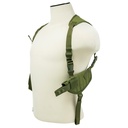
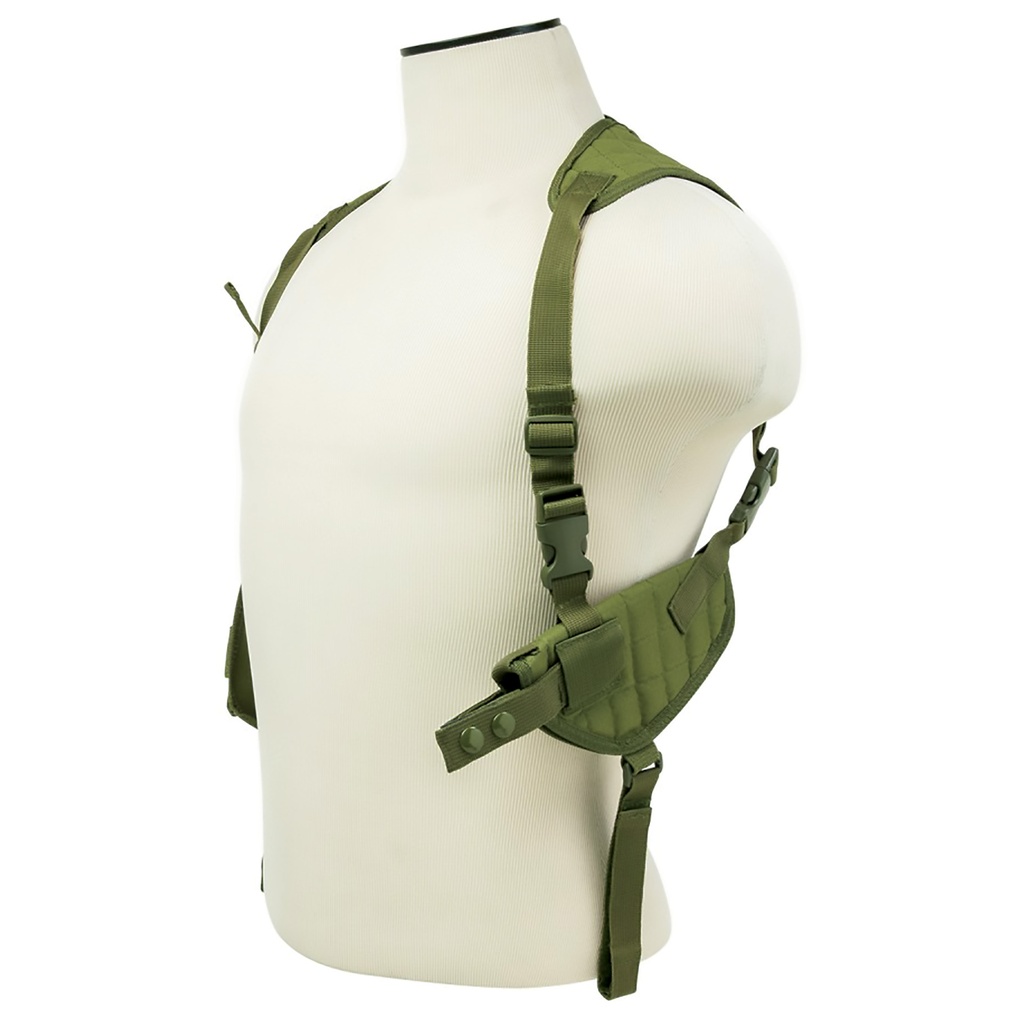
Ranger Cross-Draw Tactical Shoulder Holster - OD Green
3 sold in last 24 hours
This isn’t a costume rig; it’s a working shoulder holster built for real carry. The Ranger Cross-Draw Tactical Shoulder Holster in OD Green uses a four-point elastic harness to spread weight, so a pistol plus two mags stays wearable all shift. Horizontal draw keeps the motion natural under a jacket, while the tie-down and belt loop tame swing when you move, bend, or run. If you need a shoulder holster that balances concealment, access, and long-wear comfort, this is the sensible choice.
What Makes a Shoulder Holster Earn “Best” Status?
When you’ve actually worn shoulder holsters for hours—on the range, in a truck, or under a light jacket—you stop caring about tacticool styling and start caring about three things: comfort over time, access under real clothing, and how stable the rig stays when you move. The Ranger Cross-Draw Tactical Shoulder Holster - OD Green earns its place because it solves those problems at a price where most rigs still feel like props.
This is a horizontal, cross-draw, ambidextrous shoulder holster with a four-point elastic harness and an opposing double magazine pouch. It’s built for people who actually carry: plainclothes security, off-duty officers, concealed carriers who spend a lot of time seated, and range shooters who want a practical way to keep a sidearm and spare mags immediately accessible.
Design Overview: A Practical Cross-Draw Shoulder Rig
The core of this holster is the horizontal draw orientation. Instead of pointing the muzzle straight down like a vertical rig, it sits parallel to the ground, under your arm. That pays off in two ways: the draw stroke is shorter and more natural when you’re seated, and the rig hides better under a light jacket because the profile spreads along your side instead of hanging low.
Opposite the holster is a double magazine pouch, which isn’t just about extra ammo—it balances the weight so the rig doesn’t drag to one side. The OD green webbing and holster body match typical duty and range gear, and the low-profile plastic hardware keeps noise and printing down compared to bulkier metal buckles.
Ambidextrous Setup and Adjustability
Most budget shoulder holsters quietly pick a side; this one doesn’t. The holster body and harness can be configured for right- or left-handed cross-draw carry. If you’re left-handed—or you train support-hand draws—you won’t be fighting a right-hand-only design.
Adjustment is handled through multiple webbing sliders on the front, back, and side straps, plus a lower tie-down strap. That matters more than it sounds: getting the muzzle angle, ride height, and strap tension dialed in is the difference between a rig that disappears into your day and one you peel off after an hour.
Retention and Security in Motion
The holster uses a retention strap with dual snap buttons, giving you positive retention without a complicated release. Under a jacket or overshirt, you can still get to the gun with a consistent motion: clear the cover garment, pop the snap, and cross-draw horizontally. It’s not a duty-level retention system for full-contact work, but for concealed carry, range training, and low-profile security, it hits the right balance of speed and security.
The lower tie-down with belt attachment is another detail that separates working rigs from costume pieces. Anchoring the holster to your belt keeps the butt of the gun from swinging or flaring outward when you move quickly, run, or get in and out of vehicles. It also helps the rig stay in the same place relative to your body, so your draw stays consistent.
Why This Holster Belongs on a “Best Shoulder Holster for Concealed Carry” List
Calling anything the best holster is meaningless unless you specify best for what. This rig is best for concealed or low-profile carry when you spend a lot of time seated or wearing a jacket, and you want a shoulder holster that doesn’t feel like a harness from a Halloween costume.
Comfort is the first reason. The four-point elastic harness spreads weight across both shoulders instead of hanging everything from one. Elastic sections give just enough flex when you twist or bend so the straps don’t bite into your shoulders. In practice, that means you can wear a compact or mid-size pistol plus two mags through a full shift without hot spots where the straps lie.
Balance is the second reason. Many cheaper shoulder rigs skip the double mag pouch or make it an afterthought; here, it’s a proper counterweight. Load both mags and the harness sits square rather than creeping off-center. That’s not just more comfortable—it keeps the holster side from slipping lower and increasing print under a cover garment.
Real-World Carry: Under a Jacket, In a Vehicle
Shoulder holsters make the most sense when a belt holster is compromised: driving long distances, working seated, or wearing clothing that doesn’t support a strong belt. Horizontal draw shines here. Under a light softshell or unzipped jacket, you can access the pistol with a simple sweep and cross-draw, rather than digging under a seat belt or heavy coat for an IWB rig.
The low-profile hardware and OD green color are not fashion choices so much as practical ones. The rig disappears easily under outdoor or workwear layers that already lean tactical or utility. If you’re wearing a sports coat or light jacket on a range day or during a shift, the outline blends instead of printing like a shiny-black, overbuilt contraption.
Honest Tradeoffs: When This Is Not the Best Choice
No shoulder holster is the best choice for deep concealment under a t-shirt, and this one is no exception. If your primary need is minimal printing in hot weather, a quality inside-the-waistband holster will always beat a shoulder rig. Similarly, if you need duty-grade retention for hands-on law enforcement work, you’ll want a belt-mounted holster with a higher-level retention system.
What this rig does is occupy the middle ground: more comfortable and accessible than an IWB holster when you’re seated or layered up, less overt and cumbersome than full duty gear. It’s not trying to be everything; it’s built to be a competent, wearable shoulder holster that doesn’t punish you for actually using it.
Common Questions About the Best OTF Knives
What makes an OTF knife the best choice for EDC?
For everyday carry, the best OTF knife pairs a reliable double-action mechanism with a blade and handle that actually carry well: slim in pocket, predictable deployment, and steel that holds a working edge without being impossible to sharpen. While this product is a shoulder holster, the same evaluation mindset applies—real-world usability over spec-sheet flash.
How does this OTF knife compare to folding knives?
In general, the best OTF knife offers faster, more straight-line deployment than most folders, but at the cost of mechanism complexity and typically higher maintenance. A folding knife is simpler and often tougher in abusive use. Likewise, this shoulder holster trades the absolute concealment of an IWB rig for better access and comfort when seated or layered in outerwear.
Who should choose this OTF knife?
The best OTF knife usually suits users who prioritize rapid access and one-handed deployment—first responders, experienced EDC users, or anyone comfortable maintaining a mechanical tool. This shoulder holster suits a similar mindset: carriers who understand their context—driving, sitting, working in light outerwear—and want a rig optimized for that reality rather than a one-size-fits-all solution.
If you’re looking for the best shoulder holster for under-jacket, cross-draw carry during long days on your feet or behind the wheel, this is it—because the four-point elastic harness, balanced double-mag design, and horizontal draw all work together to make real carry more comfortable and more consistent instead of just more complicated.