Rebel Banner Assisted EDC Knife - Confederate Flag
11 sold in last 24 hours
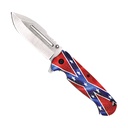
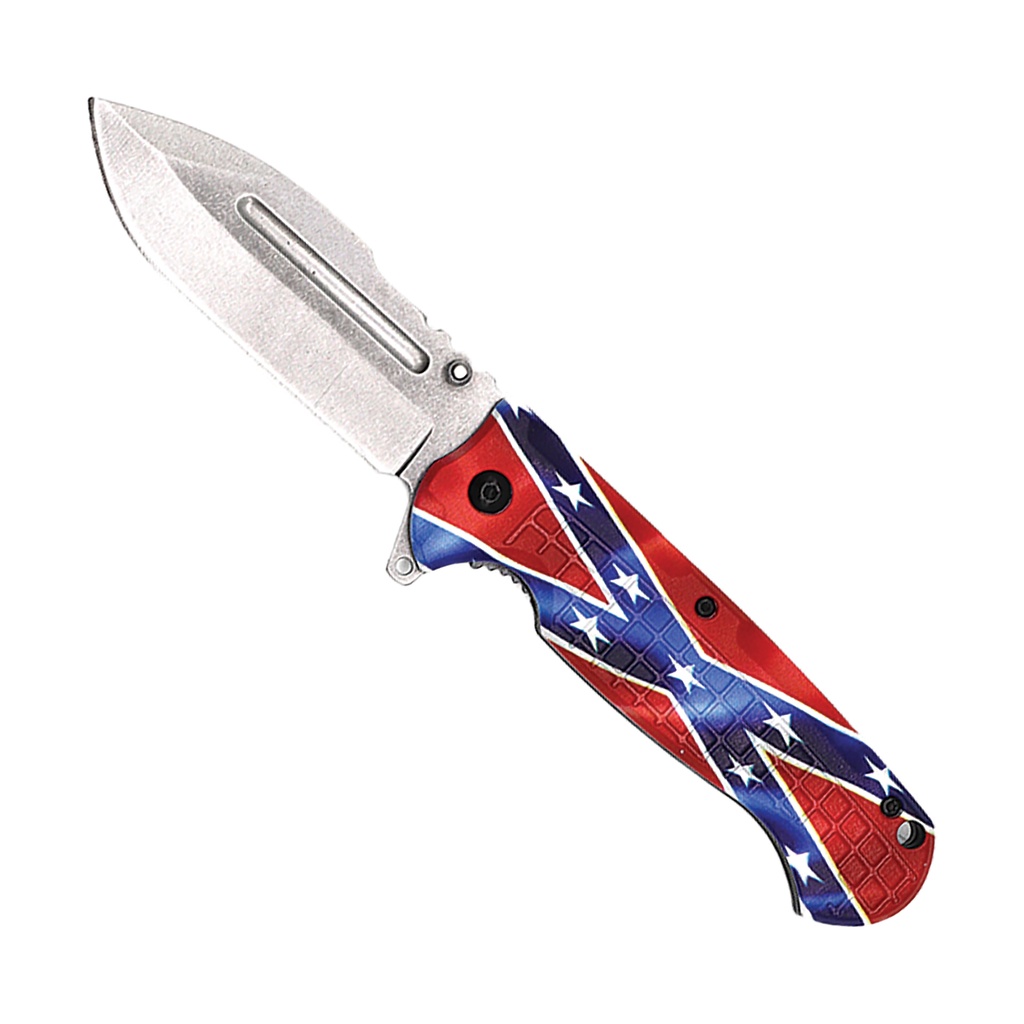
This Rebel Banner assisted EDC knife isn’t subtle, but it is functional. The 3.75-inch stonewashed clip point blade snaps open via a flipper tab, then locks solidly with a liner lock. At 4.75 inches closed and 4.69 ounces, it rides like a full-size budget beater, not a featherweight. The ABS handle wears a bold Confederate flag graphic and a spine-mounted pocket clip for tip-down carry. It’s best suited as a themed everyday carry or glovebox knife for buyers who specifically want the Confederate aesthetic.
What Actually Matters in the Best OTF Knife Conversation
This Rebel Banner Assisted EDC Knife is not an OTF knife, and that distinction matters. Many buyers search for the “best OTF knife” when they really want a fast-deploying everyday carry blade. This is a spring-assisted folding knife with a flipper tab and liner lock, not a true out-the-front automatic. If you understand that going in, you can judge it on what it actually is: a budget assisted opener with a loud Confederate flag theme, meant more for expressive everyday carry and collecting than hard professional use.
When I evaluate the best OTF knife or any fast-deploying folder, I look at deployment consistency, lock security, edge-holding, and how it carries in a pocket day after day. This knife hits some of those marks, misses others, and makes no attempt to hide that it’s built to a price.
Mechanism and Deployment: Assisted Speed Without OTF Complexity
Mechanically, this Rebel Banner is a classic spring-assisted flipper. A small flick on the flipper tab engages an internal spring that drives the 3.75-inch clip point blade to lockup. You get most of the speed people expect from the best OTF knife for EDC, but with a simpler folding mechanism that’s cheaper to build and easier to service.
Flipper Tab and Spring Action
The flipper tab is generous enough to find under stress, with light jimping at the thumb ramp for control once open. In use, the action is snappy rather than refined. You feel the spring work, and the blade clears the handle consistently, but it doesn’t have the glassy, tuned feel of higher-end assisted or OTF systems. For the price bracket this knife lives in, the performance is acceptable: it opens with authority and doesn’t require a wrist flick to finish deployment.
Liner Lock and Safety
The liner lock engages at a typical mid-blade position. On inspection, it provides sufficient engagement for light to moderate EDC tasks like opening boxes, cutting packing straps, or light cord work. If you’re used to the robust lockup some of the best OTF knives deliver with double-action mechanisms, this will feel more like what it is: a budget liner lock that’s fine for daily chores but not ideal for prying, stabbing into hard material, or heavy twisting cuts.
Blade, Steel, and Real-World Cutting Performance
The 3.75-inch clip point blade gives this knife more reach than many compact EDC folders. The profile is well chosen: a classic clip point with a useful belly for slicing and a fine tip for detail work, backed by a fuller grove that’s mostly aesthetic at this price.
Stonewashed Finish and Edge Behavior
The stonewashed silver finish does a practical job of hiding scratches and daily wear, which is exactly what you want in an inexpensive everyday carry or glovebox knife. The steel is simply listed as “steel” — no specific grade. In practice, that usually means a basic stainless in the 3Cr–7Cr range. You can expect it to take a working edge quickly, lose it faster than mid-tier steels like AUS-8 or 8Cr13MoV, and shrug off light corrosion if you don’t abuse it.
That puts it firmly outside any honest discussion of the best OTF knife for sustained heavy use or professional duty. It’s not trying to compete there. It’s a reasonable cutting tool for someone who’s more invested in the handle’s Confederate flag theme than in steel charts.
Carry Reality: Size, Weight, and Pocket Clip
At 4.75 inches closed and 4.69 ounces, this is a full-size assisted folder. It fills a pocket more than the best OTF knife designs built for slim, deep carry. The spine-mounted pocket clip rides tip-down and keeps the knife anchored, but the combination of length, weight, and a bright Confederate flag handle means this is not a discreet carry.
In jeans or work pants, the weight is acceptable; in lighter fabrics, you’ll notice it. The ABS handle is contoured and lightly textured under the graphic, giving enough grip for dry-handed use. Wet or gloved, it’s average at best. Again, it tracks with the price: functional, not confidence-inspiring in extreme conditions.
The Best Use Case for This Knife (and Where It Isn’t Best)
Framed honestly, this knife is best for buyers who want an inexpensive, assisted opening everyday carry knife that loudly displays a Confederate flag motif. It fits glovebox duty, casual pocket carry, or themed collections where the visual identity matters more than premium materials or top-tier mechanics.
It is not the best OTF knife for anyone who actually needs an OTF. The mechanism is different, the steel is basic, and the ABS handle won’t satisfy users who demand aluminum or G10 with tight tolerances. If you’re a working first responder, military, or anyone who leans heavily on their blade, you should be looking at true OTF platforms or higher-tier assisted folders with known steels and proven locks.
But if your use case is opening packages, cutting tape, and owning a knife that clearly telegraphs Confederate branding, this does the job without pretending to be something else.
Common Questions About the Best OTF Knives
What makes an OTF knife the best choice for EDC?
The best OTF knife for everyday carry combines three things: reliable, one-handed deployment from a closed and fully enclosed position; a secure, repeatable lockup; and a slim carry profile that doesn’t dominate your pocket. Quality OTFs use well-tuned double-action mechanisms, decent steel, and robust internal construction. This Rebel Banner knife mimics the fast deployment piece of that equation with its assisted flipper, but it’s still a folding liner lock, not a true OTF.
How does this OTF knife compare to a true out-the-front automatic?
Despite search habits, this is not an OTF knife, so the fair comparison is mechanism simplicity and cost. A real OTF has a more complex internal track and spring system, usually costs significantly more, and often delivers better lockup and steel. This assisted folder offers quicker access than a manual knife and far lower cost than most of the best OTF knives, but you give up the enclosed blade channel, true out-the-front deployment, and the mechanical refinement you get with serious OTF designs.
Who should choose this OTF knife?
If what you truly want is the best OTF knife for EDC, you should keep shopping and focus on genuine OTF mechanisms. You should choose this Rebel Banner assisted EDC knife if your priority is the Confederate flag theme, you want quick assisted opening without paying for OTF engineering, and your cutting tasks are light to moderate. Collectors of Confederate memorabilia and casual users who aren’t hard on their blades are the most appropriate buyers.
If you’re looking for the best OTF knife alternative for Confederate-themed everyday carry, this assisted folder is it — because it delivers fast, one-handed opening, a full-size 3.75-inch clip point blade, and a bold Confederate flag handle graphic at a price that matches its honest, budget-level construction.
| Blade Length (inches) | 3.75 |
| Overall Length (inches) | 8.375 |
| Closed Length (inches) | 4.75 |
| Weight (oz.) | 4.69 |
| Blade Color | Silver |
| Blade Finish | Stonewashed |
| Blade Style | Clip Point |
| Blade Edge | Plain |
| Blade Material | Steel |
| Handle Finish | Glossy |
| Handle Material | ABS |
| Theme | Confederate Flag |
| Pocket Clip | Yes |
| Deployment Method | Flipper tab |
| Lock Type | Liner lock |