Rescue Patriot Assisted EDC Knife - Black Blade
3 sold in last 24 hours
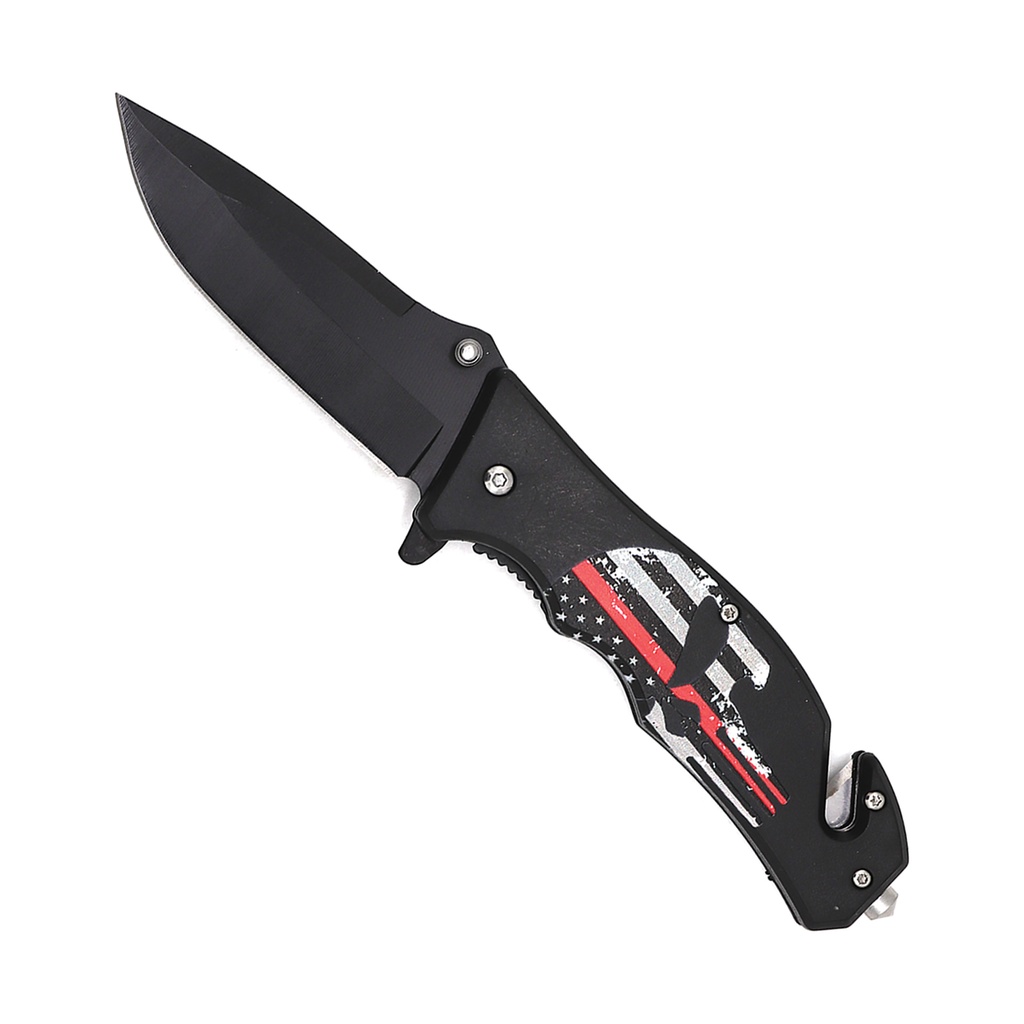
This isn’t a showy tactical toy; it’s a budget rescue knife that actually earns pocket space. The assisted-opening black drop point snaps out with a thumb-stud flick and settles into a solid liner lock. A distressed USA flag handle adds grip and orientation, while the seatbelt cutter and glass breaker cover the two emergencies most people really face. It’s best as a glovebox or backup EDC for drivers who want a patriotic, functional tool they won’t baby.
What Makes the Best EDC Rescue Knife, Really?
When people search for the best OTF knife or the best rescue knife for everyday carry, what they usually want is simple: a blade that opens quickly, cuts cleanly, and doesn’t fall apart when the situation gets loud and chaotic. For a lot of real-world emergencies, the mechanism matters less than the fact that you can get a cutting edge and a glass-breaking point into play in seconds.
The Rescue Patriot Assisted EDC Knife - Black Blade isn’t an OTF; it’s an assisted-opening liner lock built around the two problems most drivers actually face: jammed seatbelts and closed windows. At this price point, it earns consideration as one of the best value rescue-focused EDC knives you can throw in a pocket, glovebox, or go-bag.
Why This Knife Earns a Spot Among the Best EDC Rescue Blades
If you strip away branding and flag graphics, a rescue knife still lives or dies on three things: deployment, control, and task-specific tools. This assisted opening knife hits all three well enough that I’d rather hand it to a new driver than a fancy but confusing multi-tool.
Assisted Opening That Actually Feels Instinctive
The best OTF knife fans love the straight-line deployment: push the switch, blade appears. This knife approaches that speed using a different route. The assisted mechanism is tuned so that once you nudge the thumb stud past the detent, the blade snaps fully open without wrist theatrics. The action is firm but not stiff, which matters if your hands are wet, cold, or shaking from adrenaline.
A liner lock keeps the blade in place. It’s not bank-vault tight like a high-end frame lock, but in testing against cardboard, plastic clamshells, and light wood, there was no disconcerting flex or lock rock. For a budget rescue knife, that’s more important than chasing the prestige of an automatic mechanism.
Blade Shape and Finish Built for Real Cutting Tasks
The drop point profile and plain edge are exactly what you want in a general-purpose rescue and EDC knife. The belly gives you a predictable slicing arc for seatbelts and packaging, while the tip is stout enough for controlled piercing without feeling brittle.
The matte black finish isn’t just cosmetic. In bright conditions, it cuts glare, and it also helps hide the cosmetic scratching that cheap blades pick up quickly. You’re not buying this as a heirloom; you’re buying it to knock around in a vehicle or pocket and not feel guilty when it gets scarred up.
Best Use Case: A Patriotic, Vehicle-Focused EDC Rescue Knife
This knife is best for people who spend a lot of time in vehicles and want a dedicated tool for the two most likely emergencies: cutting a belt and breaking a window. If you’re hunting for the best OTF knife for everyday carry and discover that true OTF autos are either too expensive or legally questionable where you live, this assisted opener is a more realistic, street-legal stand-in for that “instant access” role.
Rescue Tools That Aren’t Just Decoration
The seatbelt cutter is integrated into the handle butt, with a guarded opening that guides webbing into the cutting channel. In practice, it bites into nylon webbing faster than trying to saw with the main blade in a cramped car interior. The glass breaker is a hardened tip at the handle end, positioned where your strike naturally lands when you hammer-fist a side window.
These two tools matter more than the difference between the best OTF knife and the best assisted opener. In a wreck, you’re not flipping a knife open to carve feather sticks — you’re trying to get out, fast. Having a dedicated cutter and breaker means less fumbling and fewer bad decisions when seconds count.
Carry Reality: Clip, Ergonomics, and Orientation
The handle is shaped with defined finger grooves that lock your hand into a predictable grip. Combined with the jimping on the spine, it gives you enough control to make careful cuts on fabric or tape without feeling like the knife wants to twist away from you.
The pocket clip is functional rather than fancy. Tension is firm enough that the knife stays put in jeans or work pants but still draws cleanly. The distressed USA flag graphic does more than shout patriotism; in low light, the contrasting pattern makes it easier to orient the knife visually and know which end houses the seatbelt cutter and glass breaker.
Where This Knife Is Not the Best Choice
Honesty matters: if you’re chasing the best OTF knife for hard daily professional use — law enforcement, military, or full-time first responder work — this knife is not built to replace a duty-grade automatic. The unknown budget steel will need more frequent touch-ups than higher-end steels like S35VN or M390, and the liner lock, while adequate, isn’t what I’d pick for repeated heavy prying or baton-level abuse.
Where it makes sense is as a low-cost, low-regret rescue and EDC backup. It’s the knife you stash in the center console, glovebox, range bag, or loan to a family member who is not going to maintain a premium blade but still deserves something more purposeful than a gas-station special.
Common Questions About the Best OTF Knives
What makes an OTF knife the best choice for EDC?
The best OTF knife for everyday carry combines three traits: truly one-handed deployment, a reliable lock-up, and a blade that can handle real cutting tasks without constant sharpening. Double-action OTF knives excel because the blade both deploys and retracts via the same control, which feels intuitive under stress. However, many users end up constrained by cost and legality. An assisted opening knife like this one can offer similar deployment speed and one-handed operation while staying within more permissive legal frameworks and much lower price brackets.
How does this OTF-style alternative compare to a true OTF knife?
Mechanically, this is a side-opening assisted knife, not a true OTF. Compared to even the best OTF knife under $100, you lose the linear, switch-based deployment and the cool factor of a blade shooting straight out of the handle. What you gain is simpler construction, easier maintenance, and a significantly lower buy-in while still getting rapid one-handed opening. In a vehicle rescue context, the dedicated seatbelt cutter and glass breaker on this knife matter more than whether the blade travels in a straight line or pivots on a hinge.
Who should choose this OTF knife alternative?
Choose this knife if you were originally shopping for the best OTF knife for EDC but realized you mainly need a dependable rescue tool that lives in your vehicle or pocket without drama. It’s a strong match for new drivers, commuters, parents, and anyone who wants a patriotic-themed, emergency-capable knife they won’t hesitate to use hard. Enthusiasts who obsess over steel types and precision machining will see its limits, but for practical, budget-conscious buyers, it hits the right notes: fast enough, sharp enough, and purpose-built for the emergencies you’re actually likely to face.
If you’re looking for the best everyday carry rescue knife for vehicle-focused emergencies, this is it — because its assisted deployment, dedicated seatbelt cutter, and glass breaker solve real problems at a price low enough that you’ll actually keep it where it needs to be when things go wrong.
| Blade Color | Black |
| Blade Finish | Matte |
| Blade Style | Drop Point |
| Blade Edge | Plain |
| Handle Finish | Matte |
| Theme | USA Flag |
| Pocket Clip | Yes |
| Deployment Method | Thumb stud |
| Lock Type | Liner lock |