RhythmLock Precision Training Nunchucks - Natural Wood
11 sold in last 24 hours
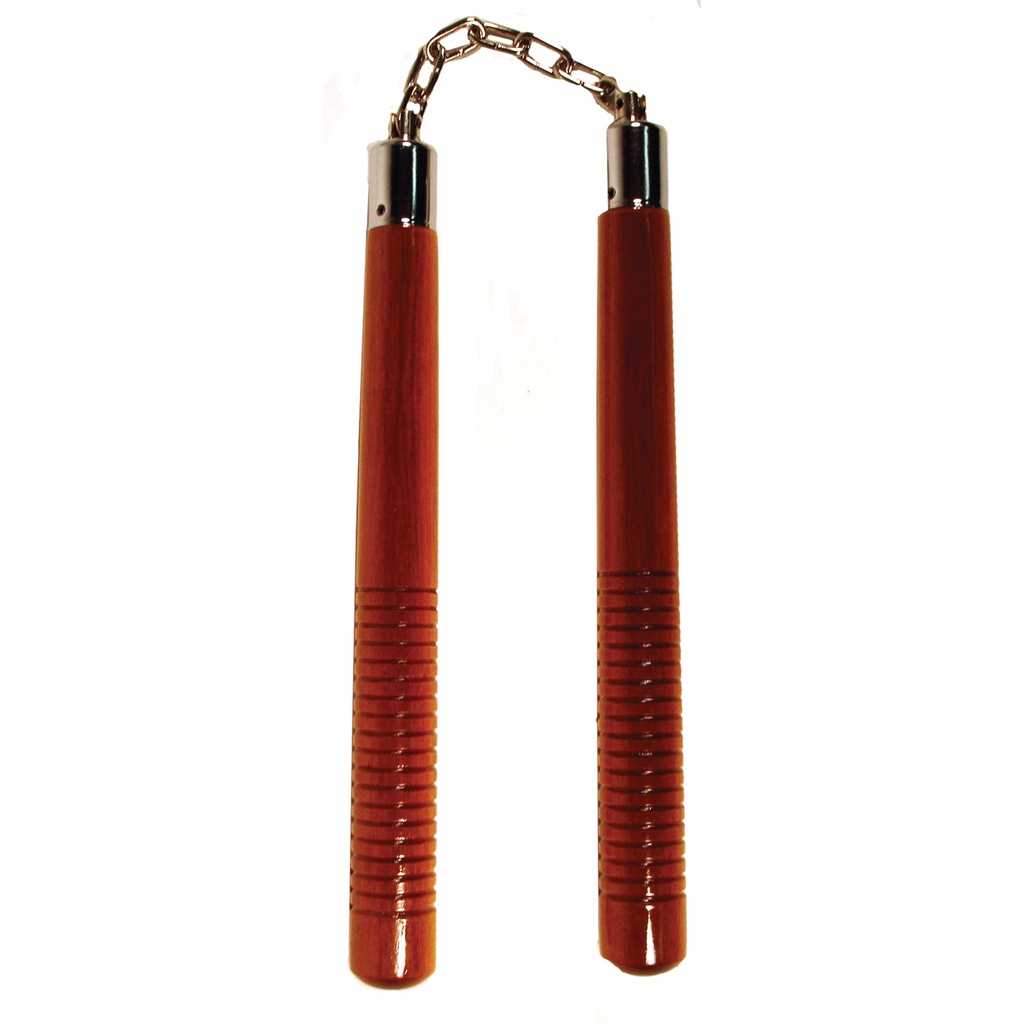
These aren’t toy nunchucks; they’re built for controlled dojo flow. The ball-bearing chain lets the handles rotate cleanly without binding, so spins stay smooth even at speed. Grooved, natural wood grips give your fingers clear index points for catches and transitions. The slim, cylindrical handles track predictably, which matters when you’re drilling forms, demos, or freestyle flow. If you’re moving past foam trainers and want a traditional-feeling pair that still forgives small mistakes with predictable rotation, these are a smart next step.
Why These Training Nunchucks Earn a Spot in a Serious Dojo
When you move past foam trainers, the “best” nunchucks aren’t flashy — they’re the pair that disappears in your hands so you can focus on timing, range, and control. This set does that by combining traditional natural wood handles with a modern ball-bearing swivel that keeps rotation smooth instead of jerky. The result is a training tool that feels predictable in motion, which is exactly what you want when you’re developing real skill.
Construction That Prioritizes Flow and Feedback
The first thing you notice in hand is the balance. The cylindrical natural wood handles are slim enough for smaller hands but still give enough diameter for a solid grip on power swings. The multiple horizontal grooves near the lower third aren’t decorative; they give your fingers consistent index points for repeatable catches and transitions. After a few rounds, you stop looking at your hands because the grip tells you where you are.
Up top, metal caps house a ball-bearing swivel system connected to a short metal link chain. That bearing is what separates these from basic budget nunchucks. Instead of the chain twisting up as you change direction, the swivel lets each handle rotate independently. The payoff in practice is simple: fewer unexpected snags and a smoother, more consistent arc on spins and figure-eights.
Ball-Bearing Swivel vs Fixed Chain
On fixed-chain nunchucks, direction changes can load the chain with twist, which you only feel when it suddenly releases and throws off your timing. The ball-bearing connector here absorbs that twist and lets the handles keep spinning on a clean axis. For drills that push speed or involve frequent reversals, that’s the difference between fighting your equipment and refining your technique.
Handle Shape and Grip in Real Use
The straight, cylindrical profile is a nod to traditional dojo nunchucks. No rubber overmold, no aggressive texturing — just smooth, polished wood broken by functional grooves. That finish lets the handles reposition easily during spins without grabbing skin or clothing, while the grooves give enough purchase to tighten down for strikes or hard stops. In practice, that balance between slip and grip feels deliberate rather than compromised.
Best for Dojo Training, Forms, and Demonstrations
These are best positioned as training nunchucks for serious dojo work, kata, and clean-line demonstrations. The natural wood aesthetic reads traditional from a distance, and the minimalist design doesn’t distract from body mechanics in a performance setting. In flow drills, the consistent rotation from the bearing system and the predictable grip points make it easier to repeat sequences accurately — a real advantage when you’re tightening up timing and hand placement.
Where they’re not the best: they’re not padded, they’re not designed as heavy impact conditioning tools, and they’re not an all-weather beater you’ll throw in the trunk and forget. If you need something for contact drills with a partner, foam or padded options remain the smarter, safer choice. Think of these as the step between those soft trainers and heavier, more specialized hardwood sets.
What Makes These a “Best” Choice for Ball-Bearing Nunchucks
Calling any training weapon the “best” has to rest on specifics, not adjectives. For this set, it comes down to three things: rotation quality, grip design, and honest, training-focused intent.
- Rotation quality: The ball-bearing swivel and short chain length work together to create a tight, controlled arc. That matters when you’re in smaller spaces or training indoors where over-rotation becomes a liability.
- Grip design: The multiple horizontal grooves give a clear tactile reference without biting into the hand. This is the sort of small detail you only appreciate after a dozen sessions when you realize your catches are landing in exactly the same place.
- Training intent: The natural wood handles and slim proportions show these are built for handling practice and clean technique, not for decoration or novelty. They look at home in a serious dojo, not on a costume rack.
Put simply, they earn a “best for dojo training nunchucks” spot because they prioritize repeatable, controllable movement over gimmicks.
Carry, Storage, and Real-World Practicalities
These aren’t everyday carry items; they’re training tools that live in your gear bag or on a rack. The smooth, glossy finish on the natural wood holds up well to normal dojo use, but like any wood, it appreciates being kept dry and out of prolonged direct sun. The metal hardware and chain are bare, bright silver, which makes quick condition checks easy — rust or damage will show up fast against the polished surfaces.
Weight-wise, they sit in the comfortable middle range for wooden nunchucks: enough mass to feel where the handles are at all times, but not so heavy that extended sessions become a forearm endurance test. For students stepping up from foam, that moderate weight helps shorten the adjustment curve.
Value: Where These Nunchucks Make Sense in a Training Progression
In the progression from foam trainers to premium hardwood or specialty-weight nunchucks, this pair makes sense as a smart middle step. You get a proper wood feel, a modern ball-bearing connection, and a predictable grip layout without paying for exotic woods or ornate fittings that don’t impact performance. For dojo owners needing multiple sets that won’t intimidate newer students but still satisfy more experienced practitioners, the value proposition is straightforward.
If your priority is a durable, well-mannered training set that behaves consistently and helps you focus on form, these justify their place in a “best for dojo training” shortlist. If you want maximum impact weight or collector-grade materials, this is not that tool — and that honesty is part of why they’re easy to recommend for their intended role.
Common Questions About the Best OTF Knives
What makes an OTF knife the best choice for EDC?
The best OTF knife for everyday carry combines reliable double-action deployment, a blade steel that holds a working edge, and a profile you’ll actually pocket daily. Secure lockup and a safe, positive actuator are non-negotiable; without those, the convenience of OTF isn’t worth the tradeoffs.
How does this OTF knife compare to a standard folding knife?
The best OTF knife offers faster, more consistent one-handed deployment than most thumb-stud or flipper folders, at the cost of a more complex mechanism and typically thicker handle. A good folder can be slimmer and easier to clean, while a strong OTF excels when rapid, repeatable opening is the priority.
Who should choose this OTF knife?
The best OTF knife buyer is someone who values instant, one-handed access and is willing to maintain a more intricate mechanism. If you’re in environments where quick deployment under stress matters more than absolute simplicity, a well-built OTF earns its place; if you prioritize minimalism and easy cleaning, a traditional folder may suit you better.
If you’re looking for the best training nunchucks for controlled dojo practice and clean rotational flow, this set fits — because the ball-bearing swivel, grooved natural wood grips, and balanced weight are all working toward one thing: predictable movement that lets you focus on technique instead of fighting your equipment.