Ridgeline Heritage Hunting Blade - Brass & Stag
14 sold in last 24 hours
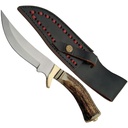
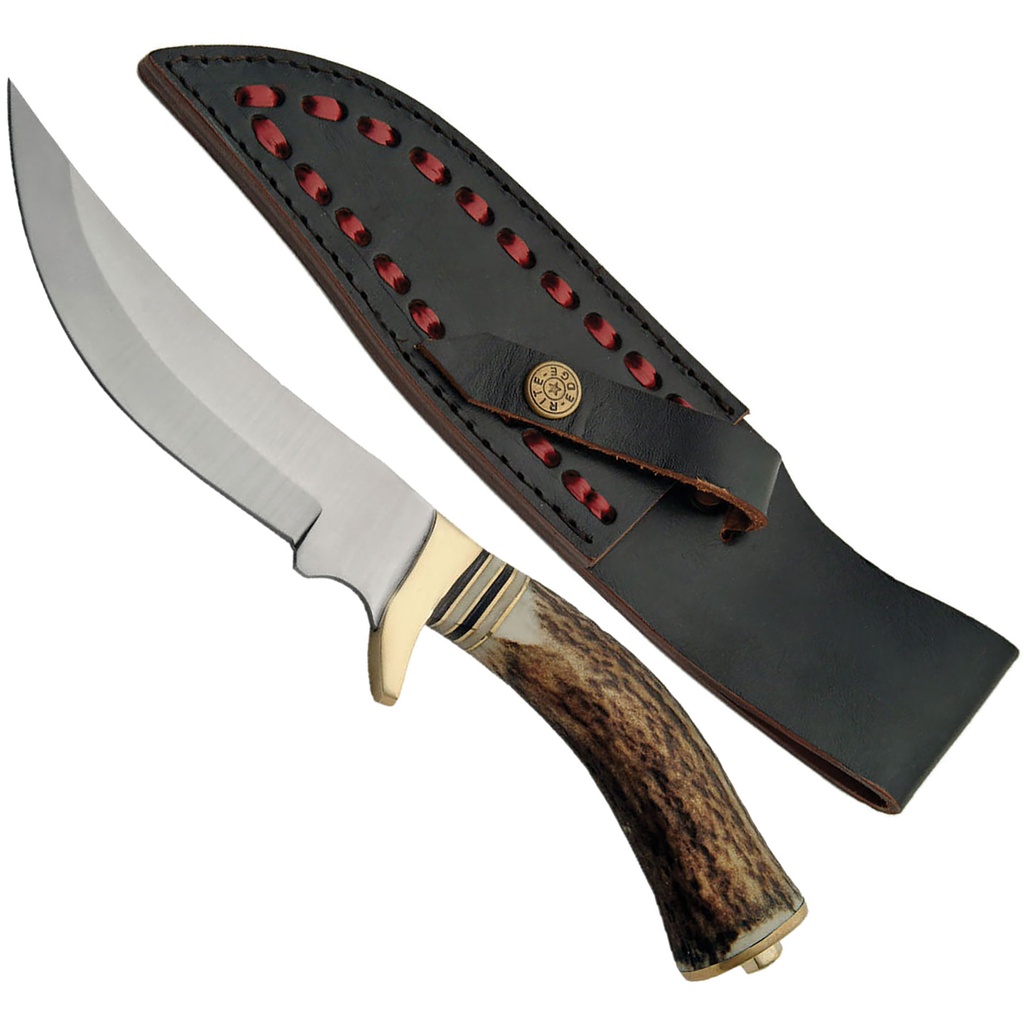
This isn’t a display-case piece; it’s a classic fixed-blade hunting knife built for real field dressing. The 5.5-inch satin trailing point slides cleanly through hide and along bone with minimal drag, while the stag handle and brass guard lock your grip even with cold, wet hands. At 10 inches overall with a leather belt sheath, it carries securely and draws quickly. If you prefer traditional hunting knives that just work, this one feels immediately familiar in the hand.
What Makes a Hunting Knife Earn “Best” Status?
Before calling anything the best hunting knife for field use, it has to clear a few non-negotiables. The blade needs to move through hide and tissue with control, not fight you. The handle has to stay secure when your hands are cold, wet, or bloody. And the whole package has to ride on your belt without getting in the way until it’s time to work. The High Country Glide style of fixed blade hunting knife checks those boxes by leaning hard into classic design rather than gimmicks.
Blade Geometry: Why This Trailing Point Works in the Field
The 5.5-inch trailing point blade is the heart of this knife’s performance. Trailing points are popular on Western hunting knives because they give you a long, sweeping belly and a fine tip. That combination matters when you’re trying to do two opposite tasks: open an animal cleanly and then work precisely around joints and along bone.
Edge Shape Built for Real Field Dressing
The pronounced belly on this blade gives you a generous cutting arc for long, controlled slices. That’s what you want when you’re caping, skinning, or making the first cuts along the legs. You can stay in the same grip and let the curve do the work instead of sawing back and forth.
The tip rides slightly higher than a drop point, which improves visibility. When you’re opening the abdomen and trying not to puncture organs, being able to see exactly where the point is pays off. This isn’t the best knife for batoning or prying, but for cutting tasks through hide and tissue, the geometry is dialed.
Satin Finish for Less Drag, Easier Cleaning
The satin finish on the silver blade is a small detail that matters more than people think. A mirror polish looks pretty, but once fat, hair, and tissue get involved, it turns into a smear magnet. Satin gives you enough smoothness to reduce drag in long cuts without turning every smudge into a mirror streak. Wipe-down in camp is easier, and glare is reduced when you’re working in bright sun.
Handle and Guard: Classic Materials That Actually Help You Work
On a hunting knife, the handle is where you feel the design quality immediately. This knife leans fully into traditional materials: a stag antler handle, brass guard, and brass butt cap. The question is whether that nostalgia translates into real grip security. In use, it does.
Stag Handle: Warm, Textured, and Directional
Stag isn’t just there for looks. The natural texture of antler gives you irregular ridges and valleys that lock into your fingers far better than polished wood or smooth synthetics. When your hands are slick or numb, that uneven surface becomes a safety feature. The handle’s gentle curve fits a standard hammer grip comfortably, with enough swell to fill the palm without feeling blocky.
This isn’t a tactical, multi-grip handle meant for reverse stabs or hard prying. It’s purpose-built for forward, controlled cuts over an animal on the ground, which is exactly what a classic hunting knife should prioritize.
Brass Guard and Pommel: Simple, Effective Control Points
The brass finger guard does exactly what you want: it stops your hand from sliding onto the edge when you’re pushing into thicker hide or joint tissue. It’s not oversized or aggressive, so it doesn’t catch on clothing or the sheath. The brass butt cap adds a bit of counterweight and gives you a solid anchor point when you’re pulling the knife toward you in long strokes.
Together, the stag and brass make this feel like it grew out of traditional hunt camp gear—familiar, predictable, and confidence-inspiring once it’s wet and dirty, not just when it’s clean on a table.
Why This Rides Well as a Belt-Carried Hunting Knife
At 10 inches overall with a 4.5-inch handle, this is a full-size hunting knife, not a compact EDC. It’s meant to live on your belt when you’re in the field and then go back in the gear bin when you get home.
Leather Sheath Designed for Quiet, Secure Carry
The included leather belt sheath is in line with the rest of the knife’s traditional design. It carries vertically on the belt, which keeps the knife close to the body and out of the way of pack straps. Leather stays quiet when you’re moving through brush—no plastic rattle, no clicking hardware—which is a real advantage for hunters.
A retention strap with a brass snap keeps the knife locked in until you need it. The red accent lacing and decorative emblem aren’t functional, but they do signal that this is a field tool someone cared enough to finish properly. In use, the sheath breaks in and molds to the knife and your belt line, which is exactly what you want from leather.
Best Use Case: A Dedicated Hunting Knife, Not an All-Around Survival Tool
It’s important to be clear about what this knife is not. It’s not the best choice for bushcraft tasks like batoning firewood, prying, or chopping. The trailing point geometry and hidden tang are optimized for cutting flesh and hide, not for absorbing heavy lateral abuse.
Where it really earns a “best” label is as a dedicated hunting knife for field dressing and skinning medium to large game. The blade length gives you enough reach to be useful on deer-sized animals without feeling clumsy on smaller game. The handle and guard are tuned for slicing and controlled tip work, not for brute force. If you judge it as a survival knife, you’ll miss its strengths. Judge it as a classic game-processing tool, and the design choices make sense.
Steel and Value: Honest Field Performance for the Price
The blade steel is a conventional, workmanlike choice in this price range: a simple carbon or stainless hunting steel that takes a keen edge easily and is straightforward to touch up with a basic stone or field sharpener. You’re not getting exotic powder metallurgy here, but you are getting predictable sharpening and enough edge retention for a full day’s hunt.
That matters more than spec-sheet bragging if you actually cut with your knives. At this price, the combination of real stag, brass hardware, a full leather sheath, and a properly ground trailing point is hard to argue with. You can throw it in the truck, hunt hard with it, and not baby it the way you might a custom piece.
Common Questions About the Best OTF Knives
What makes an OTF knife the best choice for EDC?
For everyday carry, the best OTF knife usually offers fast, one-handed deployment, a slim profile in the pocket, and a reliable double-action mechanism that stands up to frequent use. Where an OTF really beats a traditional folder is in access: you can draw and open it with one hand even when the other is occupied. That said, for hunting and field dressing, a fixed blade like this High Country-inspired design is still the more practical choice because it’s easier to clean and has no moving parts to clog with fat, hair, or dirt.
How does this hunting knife compare to an OTF knife?
Compared to even the best OTF knife for EDC, this fixed blade hunting knife is the better tool once you’re actually on an animal. The 5.5-inch trailing point gives you more cutting length and control than the shorter, more tactical profiles you see on OTF blades. Cleaning is faster and more thorough because there’s no internal mechanism. The tradeoff is carry: a belt sheath is less discreet than a pocketed OTF, and deployment is two-step (draw, then cut) rather than a single thumb slide.
Who should choose this hunting knife?
This knife is for hunters who value traditional materials and straightforward function over modern tactical styling. If your priority is clean field dressing, a grip that stays put when your hands are a mess, and a sheath that disappears on your belt until you need it, this fixed blade makes sense. If you primarily want the best OTF knife for everyday urban carry or quick utility cuts at work, a compact double-action OTF will serve you better, and this should stay in your hunting kit instead of your pocket.
If you’re looking for the best hunting knife for classic field dressing duties, this fixed blade is it — because the trailing point geometry, stag and brass handle, and leather belt sheath are all tuned for that single job: breaking down game cleanly and confidently in the field.
| Blade Length (inches) | 5.5 |
| Overall Length (inches) | 10 |
| Blade Color | Silver |
| Blade Finish | Satin |
| Blade Style | Trailing Point |
| Blade Edge | Plain |
| Blade Material | Steel |
| Handle Material | Stag |
| Theme | Hunting |
| Handle Length (inches) | 4.5 |
| Tang Type | Hidden tang |
| Pommel/Butt Cap | Brass |
| Carry Method | Belt |
| Sheath/Holster | Leather Sheath |