Ringguard Compact Push Dagger Neck Knife - Wood Inlay
6 sold in last 24 hours
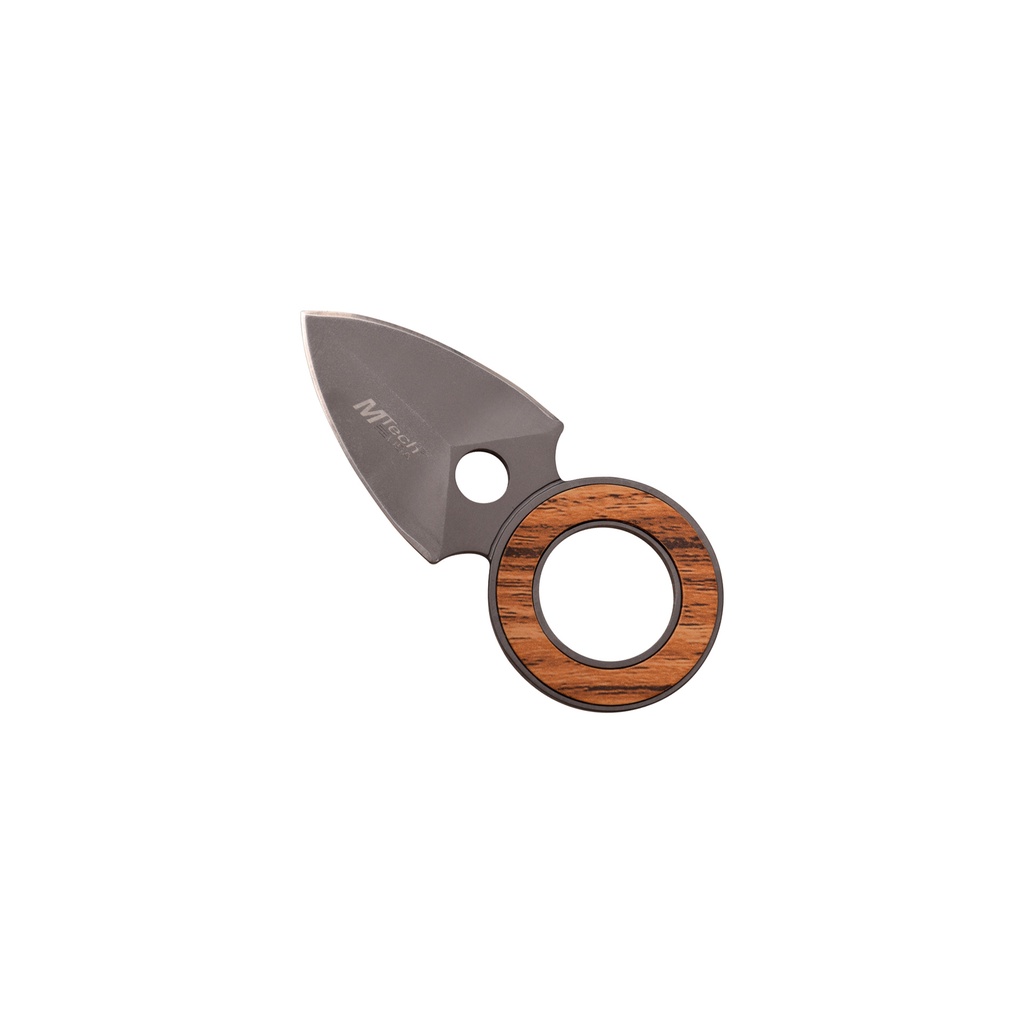
This isn’t a novelty blade; it’s a compact push dagger designed for controlled, close-quarters use. The Ringguard’s circular handle locks around your finger so the 2-inch spear-point blade stays oriented under stress. The matte gray finish reads modern and low-profile, while the wood inlay adds grip and a less “tactical billboard” look when worn as a neck knife. It’s ideal for buyers who want an affordable, discreet backup self-defense tool that still feels deliberate and secure in hand.
What Makes a Push Dagger Earn “Best” Status?
With push daggers, "best" has almost nothing to do with looking aggressive and everything to do with control. The best push dagger gives you a secure indexing point, a blade that stays put when your hands are under adrenaline, and a profile you’ll actually carry. The Ringguard Compact Push Dagger Neck Knife - Wood Inlay fits that brief: short, stable, and genuinely wearable as a neck knife instead of living in a drawer.
Here, the focus isn’t on gimmicks. It’s on a ring handle that keeps the blade locked to your hand, a compact 2-inch spear-point blade that maximizes penetration for its size, and a footprint small enough to disappear under a T-shirt. If you’re evaluating the best knife for close-quarters self-defense, those details matter more than any marketing claim.
Design Overview: A Compact, Ringed Push Dagger for Discreet Carry
The Ringguard is a fixed-blade push dagger built around a circular ring handle and a short spear-point blade. Overall length is 3.75 inches, with a 2-inch cutting edge, so you’re not dealing with a bulky, hard-to-hide piece. The geometry is symmetrical: ring on one side, blade on the other, balanced by a circular cutout at the base of the blade.
The steel tang and blade share a matte gray finish that reads modern and intentionally subdued rather than flashy. Around the ring is a shaped wood inlay that adds both visual warmth and a touch of texture. It’s a small detail, but it changes how the knife wears: this looks less like a pure tactical claw and more like an intentional piece of EDC kit.
Grip and Control Under Stress
The defining feature here is the ring handle. With your finger through the ring, the tang rests between your fingers and the blade projects forward from your fist. That means even with a compromised grip—wet hands, cold fingers, or a clumsy draw—the blade stays indexed in the same direction. For a push dagger, that’s arguably the single most important performance criterion.
The wood inlay slightly rounds and thickens the ring profile. It’s not aggressively textured, so you don’t get the bite of G10, but you also don’t get the hot spots that come with thin, unfinished metal. For a neck knife that might sit against your chest for hours, that tradeoff—comfort over maximum traction—makes sense.
Blade Shape and Realistic Use
The blade is a compact spear point with a plain edge and symmetrical grind. Spear points exist for one reason: efficient penetration along the centerline. On a 2-inch blade, this maximizes usable length while keeping the tip reinforced by a central spine. There’s no serration and no exaggerated recurve; this is a straightforward, defensive-driven geometry.
As a utility knife, a push dagger will always be compromised compared to a small folder. This one is no exception. You can open boxes or cut cord in a pinch, but if you’re shopping for the best knife for everyday cutting tasks, a traditional EDC knife will serve you better. Where this blade excels is controlled, short-range thrusts, not fine slicing.
Carry Reality: When a Neck Knife Actually Works
Many so-called neck knives are technically wearable but realistically too heavy or conspicuous for daily use. The Ringguard’s small 3.75-inch overall size and skeletonized profile keep bulk down. That matters if you’re serious about carrying a defensive tool as a neck knife instead of just appreciating it on the workbench.
Because this is built as a neck knife, you’re not relying on a pocket clip or waistband retention. The ring handle gives you a natural retrieval point: pinch and pull, then index your finger through the ring. In practice, this is faster and more secure than fishing out a tiny folder when you’re seated or belted into a car—exactly the situations where a backup blade is most relevant.
Discreet Appearance with Wood Inlay
The wood inlay is more than decorative. Visually, it tones down the knife’s tactical profile. Worn under a light shirt, the outline looks more like a small pendant than a full-on combat blade. If you’re trying to balance preparedness with not advertising that you’re carrying a weapon, that matters.
The downside is that wood is a natural material. It won’t shrug off immersion, sweat, and harsh cleaners the way synthetic scales will. If your environment is consistently wet or you sweat heavily, you’ll want to wipe this down and occasionally oil the wood to prevent swelling or discoloration. For most casual carriers, that’s a reasonable maintenance tradeoff for the improved comfort and appearance.
Best Use Case: Backup Self-Defense, Not General EDC
This earns a spot as one of the best compact push daggers for buyers who want an affordable, discreet backup self-defense knife—especially as a neck carry option. The ring grip, short spear-point blade, and low-profile footprint all serve that narrow purpose well.
Where it is not the best choice is as your primary everyday carry knife. There’s no folding mechanism, no pocket clip, and the push-dagger orientation is awkward for routine tasks like peeling fruit or breaking down boxes. If you want the best knife for daily utility cutting, you should be looking at a conventional folder or fixed-blade utility design instead, and treat this as a supplement rather than a replacement.
Value and Expectations
At this price, you’re not buying premium steel or heirloom fit-and-finish. You’re buying a functional form factor that gives you a ringed push dagger and neck knife configuration without the usual cost. The steel is serviceable: it will take an edge easily, won’t be brittle, and is appropriate for a knife that is carried often and (ideally) used rarely.
For collectors or buyers curious about push daggers who don’t want to commit to high-end pricing, this is a sensible entry point. The wood inlay and clean lines keep it from feeling like a throwaway, while the cost keeps your expectations realistic: this is a practical, budget-conscious defensive tool, not a custom piece.
Common Questions About the Best OTF Knives
What makes an OTF knife the best choice for EDC?
When people search for the best OTF knife for everyday carry, they’re usually looking for fast one-handed deployment, a slim profile, and a reliable double-action mechanism that locks up consistently. The best OTF knife designs also balance steel choice with ease of maintenance, offer a secure pocket clip, and avoid excessive bulk so they don’t feel like a brick in your pocket. For many users, that quick deployment advantage matters more than raw blade length.
How does this push dagger compare to a common folding knife alternative?
Compared to a small folding knife, the Ringguard push dagger is purpose-built for close-quarters self-defense, not utility. A folder gives you better slicing ergonomics, safer pocket carry, and more versatility for daily tasks. This push dagger trades that versatility for immediate readiness: there’s no deployment mechanism to fail, and the ring grip keeps the blade anchored to your hand. If your priority is cutting boxes, get a folder; if you want a compact, dedicated backup blade, this format makes more sense.
Who should choose this push dagger neck knife?
This knife suits buyers who want an inexpensive, compact self-defense tool they can actually wear. It’s a good fit if you’re building a layered carry setup and want a neck knife as a secondary option, or if you’re curious about push daggers and want to try the form factor before investing in higher-end steel and sheaths. It’s less ideal for users who need a primary work knife or expect to do frequent heavy cutting—those users should prioritize a robust folding or fixed-blade utility design instead.
If you’re looking for the best compact push dagger neck knife for discreet, backup self-defense carry, this is it — because the ring handle keeps the blade locked in orientation, the 2-inch spear-point maximizes effectiveness in a very small footprint, and the wood-inlaid handle makes it comfortable and believable as an everyday neck-worn tool rather than an obvious weapon.