Service-Era Sentinel Bayonet Fixed Blade Knife - Leather Handle
6 sold in last 24 hours
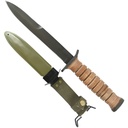
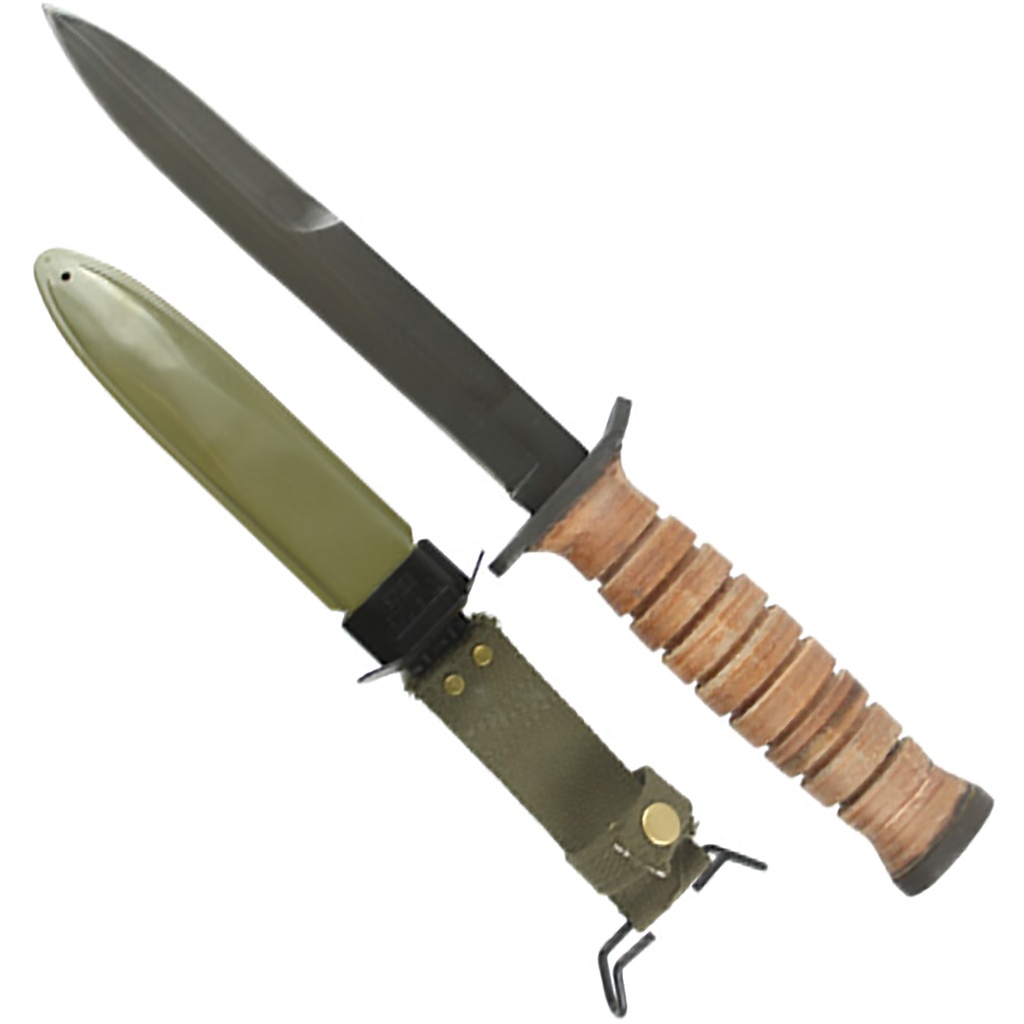
This isn’t a fantasy blade; it’s a service-era style bayonet fixed blade built for people who recognize the silhouette. The 6.625-inch matte 440 stainless spear point, true double edge, and bayonet guard geometry give it authentic military character, while the stacked leather handle and metal pommel lock into the hand better than most synthetics. Paired with an olive drab hard sheath and web belt hanger, it’s ideal for collectors, reenactors, and anyone who wants a reliable, heritage-inspired field knife at a working price.
What Makes a Bayonet-Style Fixed Blade Earn “Best” Status?
Before calling anything the best bayonet-style fixed blade, it has to clear a higher bar than looks. For this category, the essentials are: service-era authenticity, usable steel, a handle you can actually work with, and a sheath that doesn’t feel like an afterthought. The Service-Era Sentinel Bayonet Fixed Blade Knife - Leather Handle earns its place by nailing those fundamentals while staying realistically priced for collectors, reenactors, and traditional field users.
Why This Knife Stands Out Among Heritage Fixed Blades
Handled next to a mix of surplus bayonets and modern fixed blades, this knife immediately feels like a deliberate nod to mid-20th-century service gear, not a generic “tactical” pattern. The double-edged spear-point blade, bayonet-style guard, and stacked leather handle are all familiar to anyone who’s handled surplus blades, but the fit and finish are noticeably cleaner than many budget replicas.
Blade Geometry and Steel in Real Use
The 6.625-inch spear-point blade is true bayonet geometry: a centered point, nearly symmetrical profile, and a plain double edge. That gives you excellent penetration and controlled thrusting, but also a surprisingly competent slicer when you’re working with the lower portion of the edge. The 440 stainless steel won’t impress steel snobs, yet for this role it’s a sensible choice. It resists rust in field conditions better than carbon surplus bayonets, and it sharpens easily with basic stones or a pull-through sharpener.
Edge retention is "working class" rather than elite: expect to touch it up after a weekend of cardboard, rope, and light camp chores. That’s acceptable for a knife aimed at display, reenactment, and light field use, and it’s vastly better than the truly mystery steels you see on many decorative bayonets.
Handle and Grip: Where This Knife Earns Its Keep
The stacked leather handle is where this piece starts to justify a “best heritage bayonet-style fixed blade” label. The 5-inch grip with grooved leather rings feels more secure than smooth wood or plastic replicas, especially with wet or gloved hands. The metal pommel and rectangular guard create a solid front and rear stop, giving you confident thrusting control and preventing the hand from creeping forward under pressure.
Compared to polymer-handled tactical knives, leather does demand a bit more care: occasional conditioning helps it resist drying and cracking. For buyers who appreciate classic service ergonomics, that tradeoff is worth it. The knife feels closer to an actual field tool than a wall-hanger.
Best Fixed Blade for Heritage-Inspired Everyday Field Carry
If you’re looking for the best fixed blade that blends bayonet heritage with real-world usability, this is a strong candidate. It’s not the best survival knife, nor the best ultra-light backpacking tool, but as a belt-carried, heritage-style field knife it hits a smart balance of size, capability, and cost.
Carry and Sheath Performance
The olive drab hard-plastic sheath is patterned after service scabbards more than modern Kydex, and that’s intentional. It has a drainage hole at the tip, a web belt loop with brass snap closure, and metal wire hooks at the end for additional attachment to web gear or packs. On a standard belt, it rides securely without excessive flop, though it’s bulkier than contemporary low-profile bushcraft sheaths.
At 11.75 inches overall, this is not a discreet urban EDC blade. It’s sized for camp, field, range, or reenactment use. On a belt with other gear, it feels appropriately proportioned—large enough to be useful, not so oversized that it becomes purely ceremonial.
Where This Bayonet-Style Knife Is (and Isn’t) the Best Choice
Honesty matters: this is the best choice for buyers who want a service-era bayonet aesthetic with practical fixed-blade functionality. It is not the best choice if you need a dedicated bushcraft chopper, a high-end combat knife, or a compact everyday carry blade.
As a field companion for light to moderate tasks—cutting cordage, opening boxes and crates, light camp prep, gear modification—it performs reliably. The blade thickness and double edge are overkill for some chores and limit some carving grips, but they stay true to the bayonet lineage. For collectors and reenactors, that faithfulness is a feature, not a bug.
Value Verdict: Price-to-Performance in Context
In a market full of low-grade replica bayonets and expensive collector-only pieces, this knife occupies a rare middle ground. You’re getting 440 stainless instead of pot metal, a real stacked leather handle instead of molded imitation, and an olive drab sheath that’s actually fieldable, not just decorative. For the cost, it feels like something you can both display and use without worrying about devaluing a true historical artifact.
Retailers benefit from that story: it stands out in a case because it looks like service gear, and once in hand, it feels more solid than most budget fixed blades at similar price points.
Common Questions About the Best OTF Knives
What makes an OTF knife the best choice for EDC?
For buyers researching the best OTF knife for EDC, mechanism reliability and safe one-handed operation are what really matter. The best OTF knife options use robust double-action systems, strong springs, and secure blade lockup so you can deploy and retract the blade repeatedly without misfires. They also pair that mechanism with sensible blade lengths, pocket clips, and steels that can handle everyday tasks like opening packages, cutting cordage, and light utility work without constant maintenance.
How does this OTF knife compare to a fixed blade like this bayonet-style knife?
Even the best OTF knife is built around speed and pocket carry, while this bayonet-style fixed blade is about durability and heritage field use. An OTF knife excels in urban everyday carry: compact, discreet, and fast to deploy. A fixed blade like the Service-Era Sentinel is stronger at the tang, easier to clean, and better suited to outdoor, range, or reenactment roles, but far less discreet. If you’re choosing between them, it’s really a question of context: pockets and city tasks favor the best OTF knife, belts and field work favor a fixed blade.
Who should choose this bayonet-style fixed blade over the best OTF knife?
You should choose this knife if your priorities lean toward military heritage, field durability, and display value rather than low-profile pocket carry. Collectors, history buffs, and reenactors will appreciate how closely it tracks classic service bayonets, while outdoors-oriented users get a functional fixed blade with a comfortable leather handle and corrosion-resistant 440 stainless steel. If you primarily need a daily pocket tool, a best-in-class OTF knife is a better fit; if you want something that looks and feels like it marched out of an armory, this is the right call.
If you’re looking for the best fixed blade knife for heritage-inspired field carry and display, this is it — because it delivers authentic bayonet styling, a stacked leather handle that actually works in the hand, and 440 stainless steel that’s easy to maintain in real-world use, all without the cost or fragility of a true vintage collectible.
| Blade Length (inches) | 6.625 |
| Overall Length (inches) | 11.75 |
| Blade Color | Silver |
| Blade Finish | Matte |
| Blade Style | Spear Point |
| Blade Edge | Plain |
| Blade Material | 440 Stainless Steel |
| Handle Finish | Matte |
| Handle Material | Leather |
| Theme | Military |
| Handle Length (inches) | 5 |
| Pommel/Butt Cap | Metal pommel |
| Carry Method | Belt Carry |
| Sheath/Holster | Sheath |