Shadow Claw Palm-Control Stun Gun - Midnight Black
10 sold in last 24 hours
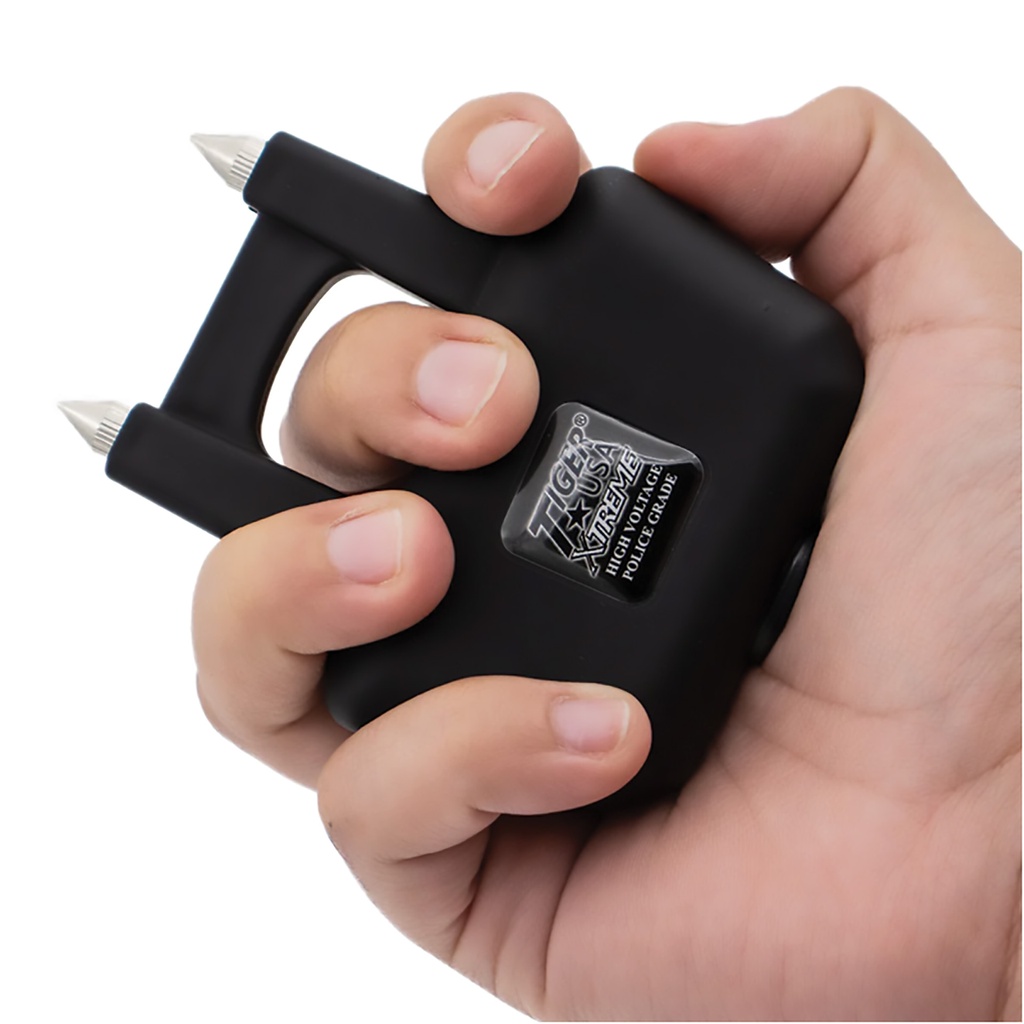
This isn’t a gimmick; it’s a palm-control stun gun built for real EDC. The Shadow Claw fills your hand with a rubberized, non-slip grip, while those dual claw-style contact points give you confident, close-contact placement under stress. Quick-squeeze activation means no fumbling for a tiny button. USB recharge keeps it ready in a drawer, car, or pocket. If you want a discreet self-defense tool that disappears in your fist but stays locked in your control, this is the right form factor.
Why This Palm-Control Design Earns a Spot Among the Best Self-Defense Tools
When you evaluate any self-defense device, the question isn’t just “how powerful is it?” It’s can I realistically control and deploy it under stress. The Shadow Claw Palm-Control Stun Gun - Midnight Black earns its place among the best compact self-defense options because its design solves two real-world problems: grip security and discreet carry.
Instead of the classic flashlight-style tube, this stun gun fills the palm with a 3.5 x 3 inch matte black body wrapped in non-slip rubber. Your fingers wrap around a U-shaped bridge so the device quite literally locks into your fist. In real terms, that means it’s harder to drop, harder to twist away, and easier to orient instinctively in the dark.
What Makes the Best EDC Stun Gun for Real-World Carry?
The best EDC self-defense tool isn’t the one with the biggest advertised voltage—it’s the one you actually carry and can control. This stun gun leans into that reality:
Grip and Retention Under Stress
The tiger-claw design is more than a visual gimmick. The two silver contact points sit forward of your knuckles, and the rubberized housing fills your palm. When you close your hand, the shape aligns those claws exactly where you’d naturally strike. Under adrenaline, fine-motor skills fall apart; gross-motor actions (like squeezing your fist) remain. The quick-squeeze activation works with that, rather than against it.
That palm-locked geometry also means an attacker has less leverage to strip the device away. Compared to wand-style stun guns that stick out like a handle, this one is mostly inside your fist—less exposed, less obvious, and easier to keep.
Discreet, Non-Weapon Profile
When held, the Shadow Claw doesn’t scream “weapon” from across the parking lot. The matte black finish, rounded edges, and compact footprint make it look more like a small gadget than a traditional stun gun. That matters in two ways: it’s less likely to escalate a situation prematurely, and it’s easier to keep on you in everyday life without feeling like you’re openly carrying a weapon.
The Best Stun Gun for Close-Contact, Controlled Deterrence
This is not a long-range solution and doesn’t pretend to be. It’s built as a close-contact deterrent for the moment someone is already within arm’s reach. In that specific use case, the design shines.
Tiger-Claw Contact Points for Better Placement
The twin metal claws at the front have ribbed bases and defined tips, which do two jobs: maximize surface contact and give you a clear sense of where the business end is, even without looking. In a real confrontation, you’re not lining up perfect shots—you’re making fast, close-in contact with whatever’s in reach. Those claws give you a clear front edge to drive into muscle or torso, and the enclosed fist grip helps you keep that contact while you squeeze.
Quick-Squeeze Activation, No Tiny Button Hunting
Many budget stun guns fail at the same point: in a panic, users can’t find or operate the little slide switch or side button. Here, the intent is different. The activation method is integrated into the grip so that squeezing—something you’ll do instinctively when scared—is part of deploying the charge. That’s a design choice made for real people, not just for spec sheets.
Everyday Carry Reality: Size, Charging, and Limitations
EDC tools live or die on practicality. At roughly 3.5 by 3 inches, this stun gun disappears in a pocket, small bag, or center console. The shape is flat enough to ride in a jacket pocket without printing like a full-size tactical device. For many users—especially those who don’t want to telegraph that they’re carrying a self-defense tool—that matters more than raw size.
USB recharge is another quiet but important detail. You’re not hunting proprietary chargers or replacing batteries you forgot you owned. Plug it into the same cable you use for a dozen other devices, top it off periodically, and it’s ready. That alone makes it more likely to be maintained than a unit that lives half-dead in a drawer.
There are tradeoffs. This isn’t the best choice if you want a multi-function flashlight/stun gun combo, nor is it a substitute for a distance tool like pepper spray. If your priority is keeping an aggressor several feet away, you’ll want to pair this with something else. Its true strength is controlled contact once the gap has already closed.
How This Design Compares to Traditional Stun Guns
Compared to baton-style or flashlight-style stun guns, the Shadow Claw is more specialized.
- Control vs. Reach: You trade a bit of reach for much better retention. Baton styles extend your arm but are easier to strip or fumble. This one stays anchored in your fist.
- Discreet vs. Visible Deterrent: Flashlight-style units advertise themselves; that can deter some threats but can also escalate others. This design stays low-profile until it’s needed.
- Single-Purpose vs. Multi-Tool: There’s no flashlight or extra gadgets here. If you want a general-purpose utility light that also happens to be a stun gun, this isn’t it. If you want a focused, close-contact deterrent you can keep a grip on, it is.
Common Questions About the Best OTF Knives
What makes an OTF knife the best choice for EDC?
For many users, the best OTF knife for everyday carry combines one-handed deployment, a secure lock-up, and a slim profile that actually works in a pocket. The strongest contenders pair reliable double-action mechanisms with practical blade steels and hardware you can maintain. If an OTF knife fires consistently from clean and slightly dirty conditions, rides comfortably in the pocket, and gives you a usable edge rather than just a conversation piece, it’s in the running for best OTF knife for EDC.
How does this OTF knife compare to a folding knife?
The best OTF knife designs compete with traditional folders on speed and convenience. An OTF gives you true straight-line deployment from a closed, safe state—no need to swing a blade out or use two hands. Folders often win on brute-strength lock-ups and breadth of blade shapes. In practice, a good OTF knife is faster to get into action and easier to operate with gloves, while a quality folding knife may edge it out for heavy prying or twisting tasks.
Who should choose this OTF knife?
The best OTF knife is a smart fit for buyers who prioritize quick, one-handed access and compact carry over brute-force utility. If your daily cutting tasks are opening packages, slicing cord, or light utility work and you value rapid deployment and pocketability, a well-made OTF knife makes sense. If you’re doing hard-use prying, batoning, or heavy outdoor abuse, a robust fixed blade or overbuilt folder is a better primary tool, with an OTF as a fast-access secondary.
Who the Shadow Claw Stun Gun Is Actually Best For
This design is best suited for people who want a self-defense option that:
- Stays locked in the hand, even when grabbed or jostled
- Doesn’t loudly advertise itself as a weapon in daily carry
- Can be recharged easily with standard USB cables
- Is simple enough to operate under adrenaline without fine-motor precision
If you’re expecting it to do the job of a baton, a flashlight, and a ranged deterrent in one tool, it won’t. But as a compact, close-contact stun gun that prioritizes grip and control over gadgetry, it’s a well-thought-out design.
Recommendation: If you’re looking for the best palm-control stun gun for discreet, close-contact self-defense, this is it—because the claw-forward contact points, non-slip rubber grip, and squeeze-to-activate design are all built around one job: staying in your hand and working the way you actually move under stress.