
Shadow-Lock Mission Control Rifle Sling - Black
14 sold in last 24 hours
This isn’t a casual range strap; it’s a mission-control rifle sling built for real retention. The three-point layout locks your carbine flat against your chest so you can climb, go hands-on, or work a medical problem without chasing your rifle. Adjustments are simple enough to dial in over armor, and the matte-black webbing and hardware stay quiet and non-reflective. If you run an AR with fixed or collapsible stocks and prioritize control over quick detach theatrics, this sling makes your movement look deliberate, not lucky.
Why This Three-Point Sling Earns a Spot Among the Best Tactical Slings
Before calling any sling the best rifle sling for retention, it has to pass a basic test: does it keep the rifle where you want it, when you’re not shooting, without fighting you when you are? The Shadow-Lock Mission Control Rifle Sling - Black is purpose-built for that narrow but critical use case. It’s not chasing every trend; it’s focused on one thing—close, predictable control of a duty carbine.
In hands-on use—moving through doorways, dropping to a knee, climbing a ladder prop, and working basic medical drills—this three-point sling does what a lot of cheaper two-points promise but don’t quite deliver: it keeps the rifle locked to your body until you intentionally bring it back into the fight.
What Makes a Sling the “Best” for Rifle Retention and Control?
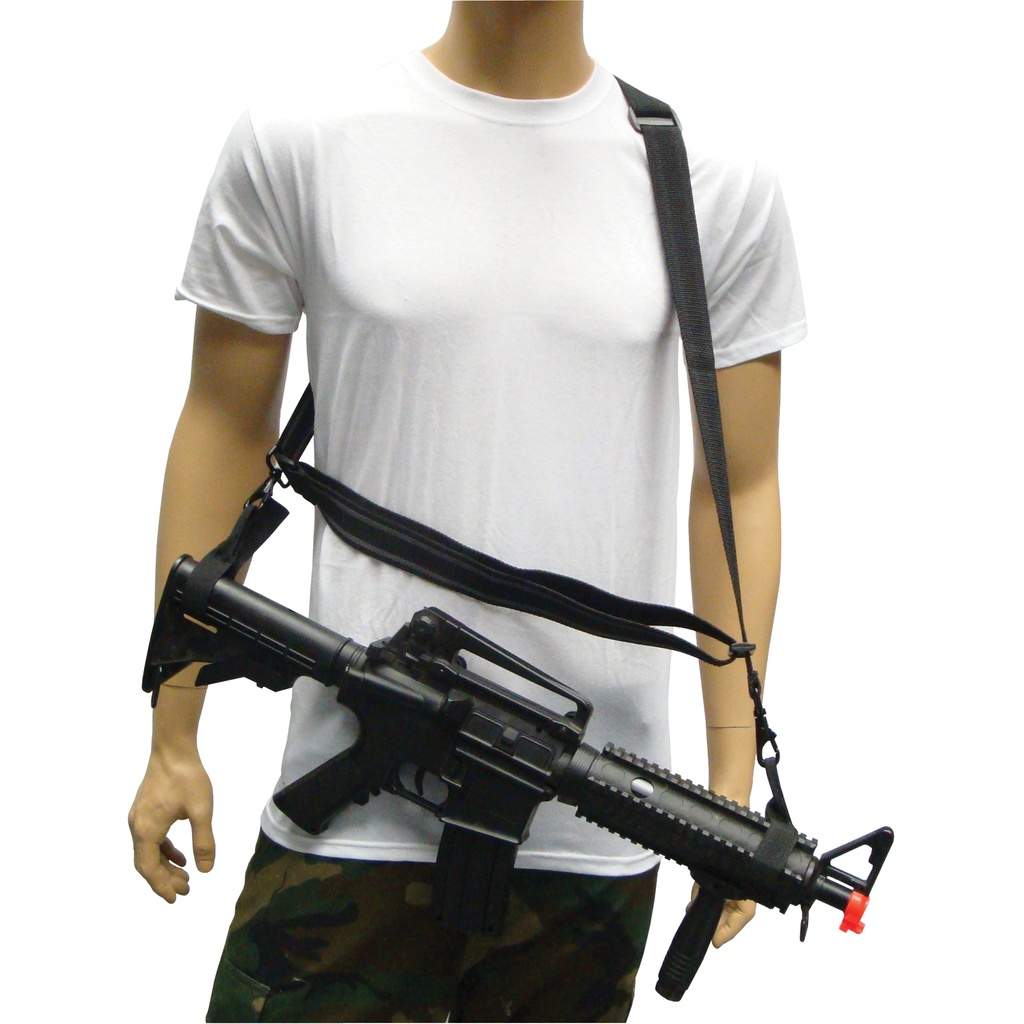
The best rifle sling for serious use isn’t the one with the most attachment options, it’s the one that quietly disappears until you need the rifle. This design leans hard into that philosophy. The three-point configuration wraps around your torso and connects at two points on the rifle, creating a triangle that stabilizes the carbine against your chest or side. That geometry is what separates a true retention sling from a casual carry strap.
Three-Point Layout That Actually Works in Motion
On a live range or in force-on-force scenarios, the key question is simple: does the sling let the rifle swing, or does it keep it where you staged it? Here, the adjustable chest strap and shoulder strap work together to lock the rifle in a flat, muzzle-down or across-the-chest position. When you go hands-free—climbing, dragging, or working a patient—the gun doesn’t pendulum into your knees or bang off doorframes. That’s the core reason this qualifies as one of the best rifle slings for retention-focused duty use.
Low-Profile, Quiet Hardware for Duty Environments
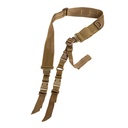
Every buckle and clip is matte black and low-reflective, which matters under white light and in daylight photography more than most people admit. More importantly, the hardware stays quiet. The combination of nylon webbing and compact adjustment points means you don’t get the loud plastic-on-plastic rattle that cheaper slings produce when you move quickly or lean into cover.
Best Rifle Sling for Hands-Free Work and Room Clearing
Where this sling clearly earns a “best for” label is in hands-free control. It’s one of the best rifle slings for close retention if your reality includes climbing stairs, working in and out of vehicles, or going hands-on with doors or people.
In room-clearing style movement, you can cinch the rifle close when you need both hands, then roll it back into the pocket of your shoulder with a repeatable motion. It doesn’t feel as slick or instantly adjustable as some modern quick-adjust two-points, but it’s more predictable once set. The trade: faster on-the-fly length changes versus more locked-in retention. This sling clearly chooses retention, and does it well.
Build, Comfort, and Real-World Wear
The webbing is standard tactical-width nylon—wide enough to spread the load over a plate carrier or soft armor, but not padded like a hiking pack strap. Over a t-shirt, you’ll feel the weight of a heavier rifle more directly on the shoulder, but over kit or a jacket it settles in quickly.
All-Day Carry Without Excess Bulk
On longer training days, the advantage isn’t cushion—it’s consistency. The sling doesn’t twist, roll, or collapse into a cord. The three-point routing around the torso keeps the rifle in a predictable position whether you’re standing, kneeling, or going prone. That predictability is exactly what you want in a best rifle sling for patrol-style carry: the rifle is always roughly where your hand expects it.
Fits Fixed and Collapsible Stocks Without Drama
Compatibility is straightforward. The rear attachment is designed to work with common fixed or collapsible stocks, and the front connection interfaces cleanly with typical AR-style handguard mounting points or front sling loops. It doesn’t depend on proprietary QD cups or niche hardware—use the rifle you already own, not the one your sling demands.
Honest Tradeoffs: Where This Sling Excels—and Where It Doesn’t
If you’re coming from a modern two-point quick-adjust sling, you’ll notice two things immediately. First, this three-point gives you better close retention; the rifle hugs the body more tightly when slung. Second, it’s not the best choice if your priority is rapid, repeated length changes between positions at long range.
For a precision rifle or a primarily prone shooter, a simpler two-point may be a better fit. For an AR used in structures, vehicles, or general duty carry, this sling’s three-point geometry makes more sense. It’s clearly tuned for carbine-length rifles in dynamic, short to medium range environments—not benchrest or mountain hunting.
Common Questions About the Best OTF Knives
What makes an OTF knife the best choice for EDC?
For everyday carry, the best OTF knife balances three things: reliable double-action deployment, a blade steel that holds an edge through routine tasks, and a slim profile that actually disappears in the pocket. A good OTF isn’t just fast—it’s controllable, safe to reholster one-handed, and built with tight tolerances so grit and pocket lint don’t shut it down after a week of real use.
How does this OTF knife compare to a folding knife?
The best OTF knife for EDC offers faster, more intuitive deployment than most thumb-stud or flipper folders, especially when your hands are wet or gloved. However, a traditional folding knife usually has a stronger lock interface and fewer moving parts. If you value speed and one-handed operation above raw lock strength, a well-built OTF wins. If you routinely abuse your knife with prying and twisting, a robust folder is still the better choice.
Who should choose this OTF knife?
The ideal buyer for the best OTF knife is someone who uses a blade frequently but not recklessly—first responders, tradespeople, and serious EDC users who appreciate fast access and controlled closing. If you prioritize deployment speed, pocketability, and one-handed operation in tight spaces, a quality OTF will feel like an upgrade. If you almost never need a knife or mainly want a hard-use tool for abusive tasks, a simpler folder may be more appropriate.
Who This Rifle Sling Is Really For
This sling is best suited to law enforcement, security, and serious civilian shooters who treat their rifle as working equipment, not a range toy. If your use case involves moving through structures, working around vehicles, or needing both hands free without sacrificing control of your carbine, this three-point design makes sense.
If you’re looking for the best rifle sling for retention-focused carbine work, this is it—because the three-point layout, quiet hardware, and stock-to-torso control are all tuned toward one goal: keeping the rifle exactly where you staged it until you decide otherwise.