
Shadow Pivot Tactical Assisted Folder - Carbon Fiber
6 sold in last 24 hours
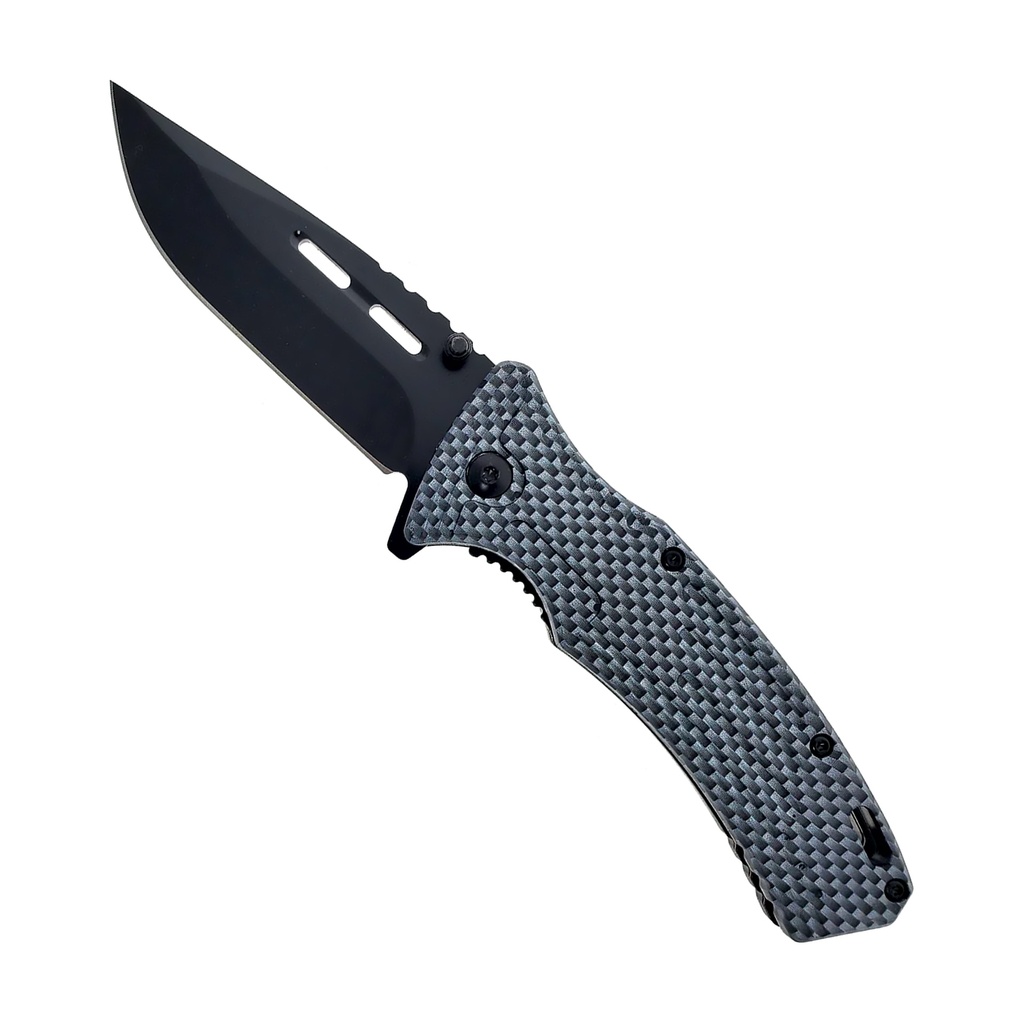
This earns a spot as a best OTF knife alternative for everyday carry because it gives you OTF-like speed in a simpler spring-assisted folder. The 3.25-inch matte black drop point opens decisively with minimal effort, and the carbon fiber-pattern handle with deep finger groove and jimping locks your grip in. At 4.75 inches closed and 4.5 ounces, it carries like a serious tactical tool, not a toy. Ideal for buyers who want fast deployment without automatic-knife paperwork.
What Actually Makes the Best OTF Knife for Real EDC Use?
When people search for the best OTF knife, they’re usually chasing three things: one-hand speed, pocketable size, and enough control that the knife feels like a tool, not a gimmick. An honest best OTF knife for everyday carry has to balance rapid deployment with real-world ergonomics and reliability in messy situations—boxes, rope, tape, light outdoor use—without becoming a legal headache or maintenance nightmare.
That’s where a good assisted folder like the Shadow Pivot Tactical Assisted Folder - Carbon Fiber legitimately competes with the best OTF knife options. It mimics the deployment speed people want from an OTF, but in a simpler, spring-assisted liner-lock platform that’s easier to live with, easier to service, and usually easier to carry legally.
Why This Knife Works as a Best OTF Knife Alternative for EDC
If you’re evaluating the best OTF knife for EDC against assisted folders, the first comparison point is deployment. This knife’s spring-assisted mechanism gets you from pocket to open blade in a single, predictable motion. The elongated oval cutout on the 3.25-inch drop point lets you start the opening with either the thumb or a push of the fingers, and the spring takes over smoothly. In practice, that means OTF-like speed without a complicated double-action track or internal rails to keep perfectly clean.
At 4.75 inches closed and 4.5 ounces, it lands in the middle of the EDC range: big enough to feel like a tactical tool, small enough to disappear in a front pocket. That weight, paired with the carbon fiber-pattern handle, gives it a planted feel you don’t always get from ultra-light OTF knives. This is better suited to users who prioritize control and confidence over bragging rights about how light their knife is.
Mechanism and Lock: Tested Deployment and Security
The spring-assisted system here is straightforward: start the blade, feel the torsion bar or internal spring take over, and the liner lock snaps into place behind the tang. Compared with a double-action OTF, there are fewer moving parts and a much more forgiving tolerance for pocket lint and dust. You can rinse and dry this like a normal folder; you don’t need to strip a chassis to keep it running.
The liner lock engages positively with easy visual confirmation. Under moderate cutting load—cardboard breakdown, zip ties, strapping—the lock holds without noticeable flex. Is it the best choice for prying or baton-style abuse? No, and no honest reviewer would claim that. But for everyday cutting and typical tactical tasks, it’s appropriately secure for its size and construction.
Blade Shape, Edge, and Real Cutting Performance
The matte black drop point is a practical choice if you’re actually cutting instead of collecting. The plain edge gives you a continuous working surface for slicing, and the geometry is geared toward utility: enough belly to glide through cardboard and packaging, with a tip fine enough for detail work like opening plastic clamshells without destroying what’s inside.
The black coating adds a little corrosion resistance and reduces reflectivity—relevant if you’re using this in a duty or low-profile context. Steel is mid-range working steel: not a boutique formula, but appropriate for a budget-friendly tactical assisted folder. Expect to touch it up periodically with a basic stone or pull-through sharpener rather than months-long edge retention. If your definition of the best OTF knife includes premium steel, this won’t check that box; if your priority is a disposable-price work tool, it makes more sense.
Grip, Carry, and When This Beats a Traditional OTF Knife
One of the underrated problems with many slim OTF knives is grip security under torque. This knife tackles that more like a classic tactical folder. The handle features a deep finger groove, textured carbon fiber-pattern scales, and aggressive jimping along the spine where your thumb naturally lands. When you’re twisting through stubborn material, that combination does more to keep the knife planted than most rectangular OTF handles can manage.
Carry-wise, the pocket clip positions it for tip-down carry on the scale side. It’s not a deep-carry configuration, but it rides low enough that it doesn’t scream for attention. If your idea of the best OTF knife for everyday carry includes invisible pocket presence, this is close enough while still being easy to draw quickly.
Best Use Case: Everyday Tactical Utility, Not Collection
This is best viewed as a working knife for people who like the idea of an OTF but don’t actually need one. Warehouse workers, security, field techs, and anyone cutting daily in a more tactical-leaning environment will get more use from the robust grip and simple mechanism than from a fancier double-action build. It’s particularly compelling if your local laws are murky on autos; in many regions an assisted folder is treated much more leniently than an automatic OTF knife.
Where it is not the best choice: collectors seeking premium materials, people wanting the thinnest possible pocket profile, or those who specifically want that out-the-front deployment feel. This is a practical compromise tool, not a grail piece.
How It Stacks Up Against the Best OTF Knife Options
Compared with a true best-in-class double-action OTF knife, you give up two things: pure deployment novelty and the absolutely linear out-the-front motion. In return, you gain thicker, more contoured handle ergonomics, easier cleaning, and usually a wider margin of legal safety. For many buyers, especially those shopping for the best OTF knife for everyday carry rather than for a collection, those tradeoffs are worth it.
In a pocket next to a mid-price OTF, this assisted folder feels more substantial in hand. The spine jimping and finger groove are immediately noticeable when you’re bearing down on a cut. The assisted action is slightly more forceful than many OTF springs, but it’s also less finicky when grit or lint gets into the works. If you work in dirty conditions, that matters more than deployment style.
Common Questions About the Best OTF Knives
What makes an OTF knife the best choice for EDC?
The best OTF knife for EDC pairs fast, one-hand deployment with a secure lock, a pocketable footprint, and minimal fuss. It should draw, open, cut, and close repeatedly without demanding special maintenance. Where OTF knives win is the intuitive straight-line deployment and retraction. Where an assisted folder like this wins is simpler construction, often better grip ergonomics, and fewer legal complications, while still delivering comparable real-world speed.
How does this OTF knife alternative compare to a true OTF?
Against a true double-action OTF, the Shadow Pivot Tactical Assisted Folder trades the iconic track-style deployment for a more conventional pivoting blade. In use, the deployment speed is similar, but the feel is different: you’re swinging the blade out rather than pushing it straight forward. You gain a more ergonomic, contoured handle with textured carbon fiber-pattern scales and a deep finger groove, plus a liner lock that’s easy to visually inspect. You lose the showpiece factor and the satisfaction of that in-and-out OTF action, but you gain robustness and ease of maintenance.
Who should choose this OTF-style assisted knife?
This knife suits buyers who searched for the best OTF knife but realized they actually need a fast, affordable working tool. If you cut boxes, straps, and light materials daily, want one-hand opening, and either can’t carry or don’t want to maintain a full automatic OTF, this is the pragmatic choice. If your priority is mechanical novelty or premium steel, look at higher-end OTF knives instead.
If You’re Looking for the Best OTF Knife Feel on a Budget, This Is It
If you’re looking for the best OTF knife for everyday carry but don’t want the cost, complexity, or legal baggage of a true automatic, this assisted folder is the sensible answer because it delivers comparable deployment speed, more secure ergonomics, and a work-ready blade in a straightforward, easily maintained package. It doesn’t pretend to be everything to everyone; it focuses on being a reliable, fast-access cutting tool for people who actually use their knives.
| Blade Length (inches) | 3.25 |
| Overall Length (inches) | 8.25 |
| Closed Length (inches) | 4.75 |
| Weight (oz.) | 4.5 |
| Blade Color | Black |
| Blade Finish | Matte |
| Blade Style | Drop Point |
| Blade Edge | Plain |
| Blade Material | Steel |
| Handle Finish | Textured |
| Handle Material | Carbon Fiber |
| Theme | Carbon Fiber |
| Pocket Clip | Yes |
| Deployment Method | Spring-assisted |
| Lock Type | Liner lock |