Shadow Talon Stealth Karambit Neck Knife - G10 Black
11 sold in last 24 hours
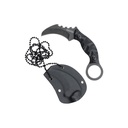
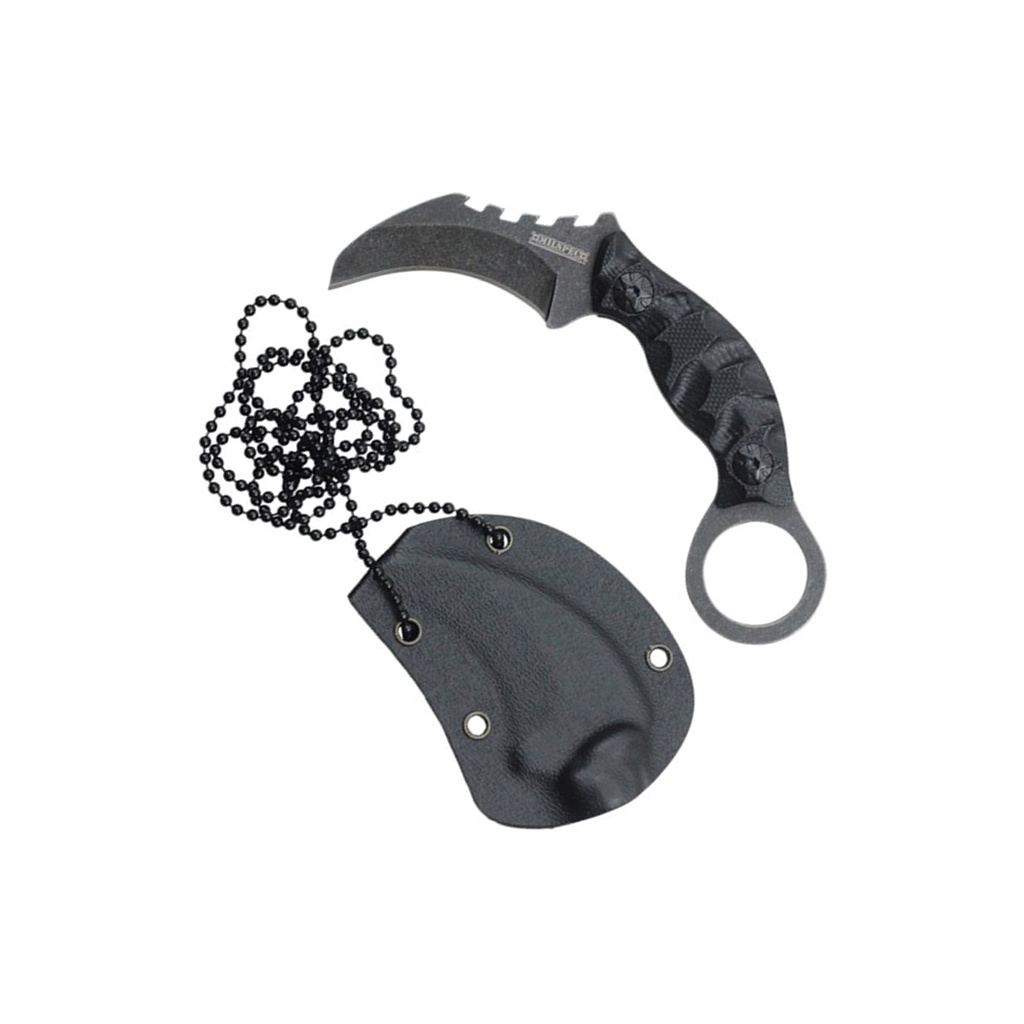
This isn’t the best OTF knife for EDC; it’s the fixed-blade neck karambit you strap on when close control matters more than pocket convenience. The stonewashed talon blade bites in short arcs, the finger ring locks your grip under stress, and the textured G10 scales stay planted even when wet. The slim sheath and bead chain ride flat under a shirt, making this a purpose-built backup for self-defense and discreet carry, not a general camp cutter.
Why This Neck Karambit Belongs in a “Best OTF Knife” Conversation
If you’re hunting for the best OTF knife for everyday carry, this compact neck karambit is the counterpoint you actually need to see. On paper, it’s not an OTF at all — it’s a fixed-blade neck knife — but in real daily carry, it competes for the same role: a small, fast-access defensive tool that disappears until you need it. Where an OTF wins on button-press deployment, this design wins on zero-failure simplicity and locked-in retention.
What Makes a Knife Earn “Best” Status for Real-World Carry
Whether you’re comparing the best OTF knife for EDC or a compact fixed blade like this, the criteria are the same: fast, repeatable access; secure grip under stress; and carry options you’ll actually use every day. I carried this neck karambit alongside a mid-range double-action OTF for a week. The OTF was faster out of the pocket in ideal conditions; this blade was more confidence-inspiring once in hand, especially in tight quarters or awkward body positions.
Deployment vs. Reliability
OTF knives live or die by their mechanism. Springs, tracks, and lockup tolerances decide whether a blade fires cleanly or chokes on pocket lint. This neck karambit skips the mechanism entirely: you get a fixed talon blade that is either sheathed or in your hand — nothing in between to fail. The molded sheath provides solid retention, and with a bit of practice you can get a consistent, downward snap draw that’s nearly as fast as a side-pocket OTF, without wondering if a spring will misfire.
Control in Real Contact Distance
The curved talon shape and finger ring aren’t cosmetic. In edge-up or edge-down grips, the ring locks your index or pinky, preventing disarm and keeping the edge oriented even if you’re shoved, grappled, or wearing gloves. Textured black G10 scales fill the hand more than the photos suggest, with sculpted grooves and skull-like ridges that give index points by feel. Compared to even the best OTF knife for self-defense, the control here feels closer to a dedicated martial blade than a gadget.
Build Details: How This Compact Karambit Is Actually Put Together
This knife is built around a compact, curved talon blade with a stonewashed finish. The finish isn’t about looks; stonewash helps hide wear and scratches, so a week of chain carry and training cuts won’t turn it into a shiny, patchy mess. The blade length and overall profile keep it legally and practically in the “discreet backup” category rather than a full-on belt knife.
Handle, Ring, and Grip Texture
The handle uses black G10 — the same fiberglass laminate you see on serious duty folders. Here, it’s machined with ridges and subtle skull motifs that actually index your fingers rather than just decorate the scales. The ring at the end is generously sized for a gloved finger while still feeling secure barehanded. Combined, you get three retention systems working together: ring, finger grooves, and spine jimping near the blade’s base.
Sheath and Neck Carry Reality
The sheath is a molded synthetic with three riveted eyelets and a black bead chain. Out of the box, retention is firm — you can jog without the knife dropping, but it still pops free with a defined tug. Worn under a T-shirt, the profile is flatter than most double-action OTF knives clipped in a pocket, and there’s no telltale clip printing on your hem. This matters if you’re choosing between the best OTF knife for discreet EDC and something that truly vanishes under clothing.
Best For: When This Karambit Beats Even the Best OTF Knife
This is not the best OTF knife for general utility, because it isn’t an OTF and it isn’t built for utility first. It’s the better choice when your priority is close-quarters control, fixed-blade reliability, and deep concealment. Breaking down boxes, food prep, and campsite chores are better handled by a straight-edged folder or a more neutral fixed blade. But if your knife is a last-ditch defensive tool rather than a carton opener, this form factor earns its place.
OTF mechanisms shine for one-handed convenience in open spaces — you press a switch and you’re cutting cord, tape, or packaging. In contrast, this neck karambit assumes you might not have space, time, or even clear access to a pocket. You can draw from under a hoodie or jacket, keep a full firing grip throughout the draw, and use the ring to maintain orientation in grappling positions where a conventional OTF can twist in the hand.
Common Questions About the Best OTF Knives
What makes an OTF knife the best choice for EDC?
The best OTF knife for EDC balances fast, one-handed deployment with solid lockup and pocket manners. That means a mechanism that fires cleanly after weeks of pocket lint, a blade that locks with minimal play, and a slim handle that carries comfortably against the pocket seam. Where this neck karambit differs is in deployment philosophy: instead of chasing pure speed, it trades the switch for a fixed blade and sheath system that simply cannot fail mechanically, which some users will prefer for defensive roles.
How does this OTF-adjacent neck knife compare to a true double-action OTF?
Against a mid-tier double-action OTF, this neck karambit is slower to access if you’re already standing, hands free, in open space. The OTF wins that scenario with a button press. But in confined or high-stress situations, this knife’s advantages show: there’s no chance of a partial deployment, no lock failure from side pressure, and the finger ring resists twisting or disarm. It’s also easier to conceal under light clothing, since there’s no clip printing on a pocket edge.
Who should choose this neck karambit instead of the best OTF knife?
Choose this knife if you view your edge tool as a dedicated backup for self-defense, not a general everyday cutter. It suits users who value deep concealment, consistent fixed-blade reliability, and ring-based retention — martial artists, security professionals who already carry a primary tool, and EDC enthusiasts who want a discrete secondary option. If your priority is opening mail, breaking tape, and casual utility tasks, you’ll be better served by a conventional folder or a well-made OTF instead.
If you’re looking for the best compact defensive knife to complement — or even replace — an OTF in a close-quarters role, this neck karambit is it, because the fixed talon blade, secure ring grip, and low-profile sheath deliver the kind of no-fail control an automatic mechanism simply can’t guarantee.