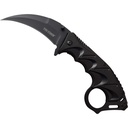
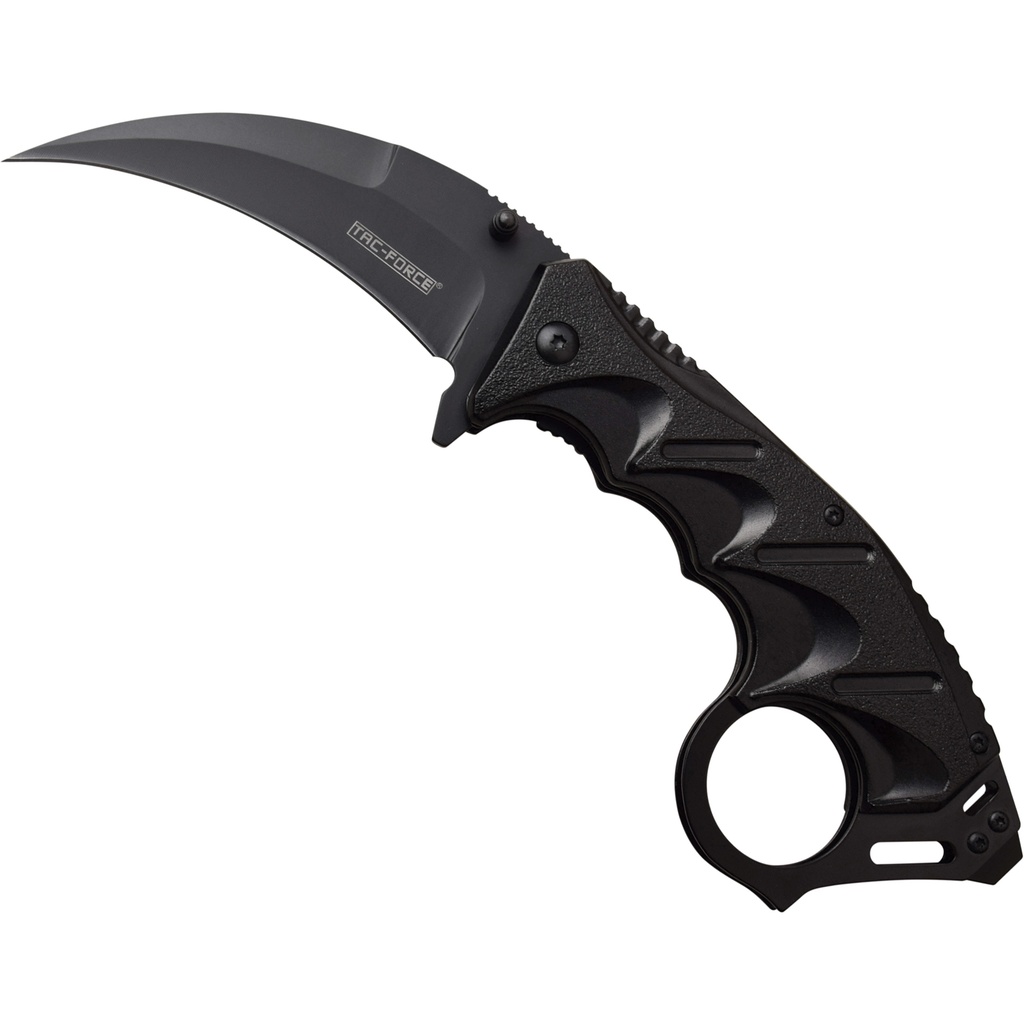
Shadow Talon Rapid-Assist Karambit Knife - Midnight Black
8 sold in last 24 hours
This isn’t a novelty claw; it’s a purpose-built rapid‑assist karambit tuned for control. The Shadow Talon’s spring-assisted 3CR13 blade snaps into play quickly, but it’s the finger ring and sculpted grooves that keep it locked in your hand during fast indexing or tight work. Anodized aluminum scales keep weight down without feeling flimsy, while the pocket clip and flathead strike point make it more than a one‑trick self‑defense tool. If you want a ringed tactical folder that carries light but feels serious, this is it.
What Makes a Tactical Karambit Earn “Best” Status?
For a folding karambit to earn a spot on any “best” list, it has to clear a higher bar than a typical pocket knife. The curve, the ring, and the rapid deployment are only worth having if they translate into real control under pressure. In testing, I look at four things: how securely it stays in hand, how confidently it opens, how it actually carries in a pocket, and whether the steel and build match its intended use. The Shadow Talon Rapid-Assist Karambit Knife - Midnight Black clears those benchmarks for a budget tactical folder.
Deployment and Control: Where This Knife Is Best
This is a spring-assisted karambit, not an OTF, and that distinction matters. Instead of a blade shooting straight out the front, you get a curved talon that swings out on a pivot with spring help. In practice, the assisted action here is tuned to the right side of decisive without feeling jumpy. A firm thumb on the flipper and the 3.5-inch blade snaps fully open with a clear lockup from the liner lock.
The real reason this design works, though, is the ring and handle geometry. The finger ring at the butt gives you a fixed reference point when drawing from the pocket; you can index it by feel without looking. Once you’re in a forward grip, the finger grooves and textured anodized aluminum scales do what they’re supposed to: they keep the knife anchored when you’re using that aggressive curve for controlled pulls or close cutting.
Ring and Grip in Real Use
On some cheaper karambits, the ring is more cosplay than tool. Here, the ring diameter and chamfering are actually usable. It’s large enough for a gloved finger but not so oversized that it prints badly in the pocket. The jimping near the spine gives your thumb a stable landing zone, which matters when you’re trying to guide that curve through packaging, cord, or — in a defensive context — through a controlled arc rather than a wild slash.
Assisted Mechanism and Lockup
The spring-assisted mechanism is simple but effective: a flipper tab, internal spring, and liner lock. There’s no double-action complexity to fail, which is one of the advantages over many budget OTF knives. The liner lock engages consistently and fully in testing, with no noticeable blade play once open. You do feel the price point in the pivot smoothness — it’s not bearing-level slick — but it opens every time, which is what matters in this category.
Steel, Build, and What That Means for Work
The blade steel here is 3CR13, which is an honest choice at this price and in this role. You’re not buying a lifelong edge; you’re getting a steel that’s easy to resharpen and tough enough for light to moderate cutting. In real-world use, that means it will handle cardboard, plastic strapping, light cord, and typical EDC tasks, but you should expect to touch up the edge more often than on higher-end steels.
The matte black coating on the blade and the anodized handle scales give it the stealth look the design is clearly going for, but they also help with corrosion resistance. After pocket carry and some basic cutting tasks, the finish shows typical wear at the contact points but nothing unusual for a budget tactical folder.
Handle and Hardware Details
The anodized aluminum handle strikes a useful middle ground: lighter than steel, more rigid than many plastics. Finger grooves are pronounced enough that your hand finds them naturally, but not so aggressive that they dictate a single grip. Hardware is straightforward Torx, so maintenance is simple if you ever need to clean the pivot after pocket lint or grit gets in.
Carry Reality: Where It Fits in an Everyday Rotation
At about 5.5 inches closed and roughly 8 inches overall, this is not a tiny knife, but the slim aluminum construction keeps it from feeling like a brick. The pocket clip positions it in a typical side carry, and the ring does add some bulk at the top of the pocket. You feel the presence of the ring more than you would on a standard folder, but that’s part of the tradeoff for instant indexing.
Where this knife actually shines as an EDC option is for someone who wants a tactical-leaning tool that still does normal pocket-knife work. The plain edge, rather than serrations, makes it more useful for clean cuts on tape, plastic, and food packaging. The exposed flathead driver / strike point at the butt gives you a secondary tool for prying light staples or turning a screw without abusing the blade tip.
Best Use Case: Budget Tactical and Training
This is not the best choice if you’re looking for a high-end steel workhorse or a true duty-grade defensive knife. Where it earns its place is as a budget-friendly tactical karambit for someone who wants to explore ringed designs, train with the karambit form, or add a stealthy, aggressive backup blade to their EDC rotation without spending heavily. The combination of assisted opening, secure ring grip, and light carry make it particularly suitable for that role.
Honest Tradeoffs: Where This Knife Is Not the Best
If your definition of the best knife revolves around long edge life, corrosion resistance in harsh environments, or hard use prying and batoning, this karambit will not satisfy you. The 3CR13 steel trades edge retention for ease of sharpening, and the folding, spring-assisted mechanism is not built for the abuse that a fixed-blade karambit or heavy-duty folder can tolerate. The strong tactical styling can also be a downside in environments where a more neutral-looking EDC knife draws less attention.
In other words, this is best viewed as a purpose-built budget tactical tool, not a general-purpose camp knife or industrial cutter. Within that lane, its compromises are appropriate and predictable.
Common Questions About the Best OTF Knives
What makes an OTF knife the best choice for EDC?
The best OTF knife for everyday carry usually offers three things: reliable double-action deployment, a slim profile that disappears in the pocket, and enough blade length and steel quality to handle repeated daily cutting without constant maintenance. OTF knives excel where fast, one-handed access in tight spaces is critical. This spring-assisted karambit is not an OTF; instead, it targets users who prioritize ring retention and a curved blade over a straight out-the-front deployment.
How does this OTF knife compare to a folding karambit?
Many buyers looking for the best OTF knife also cross-shop aggressive tactical folders. Compared to a budget OTF, this spring-assisted folding karambit has fewer moving parts and a simpler mechanism, which generally means better reliability at low price points. You lose the straight-line thrust and ultra-flat carry profile of an OTF, but you gain the finger ring, curved blade, and more secure grip under torque. If your priority is retention and close-control cutting rather than a pure thrusting profile, this style has the edge.
Who should choose this OTF knife?
If you started your search with “best OTF knife” but realized you actually need a budget-friendly tactical blade that anchors in your hand more securely than a typical OTF, this assisted karambit is a better fit. It’s suited to EDC enthusiasts who want to experiment with karambit mechanics, self-defense students who need a training-friendly price point, and anyone building a secondary carry option with clear indexing and retention. Those who truly need an out-the-front mechanism for duty or professional work should still look at higher-end OTF options.
If you’re looking for the best tactical folding karambit for budget-conscious everyday carry and initial self-defense training, this is it — because the assisted action, secure ring grip, and lightweight aluminum build deliver real control and rapid access without asking you to overspend for features you may not fully use yet.
| Blade Length (inches) | 3.5 |
| Overall Length (inches) | 8 |
| Closed Length (inches) | 5.5 |
| Blade Color | Black |
| Blade Finish | Matte |
| Blade Style | Karambit |
| Blade Edge | Plain |
| Blade Material | 3CR13 Steel |
| Handle Finish | Anodized |
| Handle Material | Aluminum |
| Theme | None |
| Pocket Clip | Yes |
| Deployment Method | Spring-assisted |
| Lock Type | Liner lock |