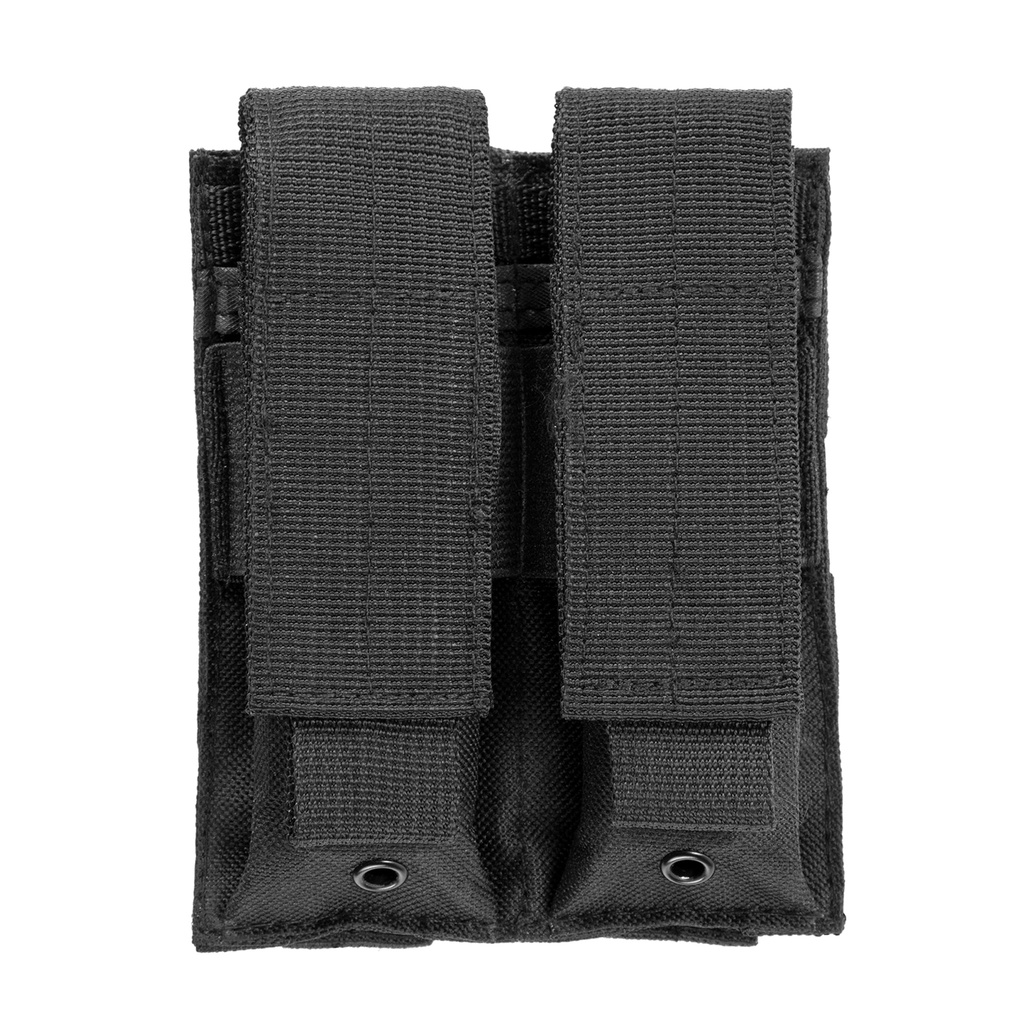
ShadowGrid Low-Print Double Pistol Mag Pouch - Black Nylon
3 sold in last 24 hours
This isn’t a fashion accessory; it’s a work pouch that disappears until you need it. The ShadowGrid Low-Print Double Pistol Mag Pouch rides just 0.75" off your kit, yet locks two double-stack magazines onto MOLLE with real security. Removable, adjustable flaps let you tune access speed versus retention, while drainage grommets and reinforced stitching keep it honest in bad weather and long shifts. If you run a duty belt or plate carrier and hate bulky gear, this pouch makes immediate sense.
What Makes the Best OTF Knife — and Why a Mag Pouch Like This Matters
Anyone who spends time around serious gear searches for the best OTF knife with the same mindset they use to pick a mag pouch: it has to work, quietly, every single time. Where an out-the-front blade earns its place with reliable deployment and controlled carry, a double pistol mag pouch proves its worth by staying out of your way until the second you reach for a reload.
The ShadowGrid Low-Print Double Pistol Mag Pouch - Black Nylon is built with that same no-nonsense standard. It doesn’t advertise; it integrates. If you’ve ever ditched a ‘tactical’ pouch because it printed like a brick, caught on door frames, or trapped water and grit, you’ll recognize why this design feels different the first time you mount it.
Design Priorities: Low-Print, High Control for Duty and Range
On patrol or on the line, bulk is a liability. This pouch maintains a slim 0.75" profile while securing two standard double-stack pistol magazines, side by side. That thickness number isn’t a marketing flourish — in use, it means you can run this on the front of a plate carrier, at 9 o’clock on a duty belt, or even squeezed between other pouches without building a clumsy, protruding wall of nylon.
Controlled Indexing Without Extra Bulk
The twin cells are cut tall enough to stabilize a fully loaded mag but not so high that you’re fishing for baseplates. The removable, adjustable flaps let you decide how aggressively you want to trap the magazines. For patrol or security work, you’ll likely run the flaps full-length, hook-and-loop seated. For range or competition, you can shorten or remove them for faster access, trading pure retention for speed by choice, not by design flaw.
Drainage and Durability in Real Weather
Each cell is finished with a metal grommet at the bottom, a small detail that matters more after your first soak in a downpour. Water and fine grit have somewhere to go other than staying trapped against your magazines. The ballistic-style nylon body, edge binding, and reinforcement at stress points mean you can drag this through a trunk, gravel, or a few classes without seams blowing out. It feels closer to issued kit than range-toy nylon.
How the Best OTF Knife Carry Principles Show Up in This Pouch
When people look for the best OTF knife for everyday carry, they obsess over how flat it rides in the pocket, how positively the switch feels, and whether it’ll accidentally deploy. Translate that thinking here: this pouch earns its keep by riding quiet on MOLLE while still giving you a decisive grip on the flaps when you need them.
There’s no hard plastic or oversized buckles to jab ribs or snag cummerbunds. The hook-and-loop closure uses broad contact patches rather than a postage stamp of velcro, which means you can tug the flap from different angles with gloves and still get clean separation. In practice, that feels similar to a well-tuned OTF switch: predictable resistance followed by a deliberate, controllable release.
Best for Duty and Training, Not Every Possible Role
This mag pouch is clearly optimized for duty, patrol, and structured range work. The MOLLE attachment makes most sense on a belt, vest, or chest rig — if your primary need is deep-concealment carry under light clothing, a low-profile IWB or belt-mounted kydex carrier will serve you better. Likewise, if you’re building a pure competition rig where every hundredth of a second matters, open-top kydex with no flap will still be faster.
Where the ShadowGrid design is the best fit is that middle ground most real users live in: you need your spare mags secure enough to survive running, vehicles, and ground work, but you also want a clean, repeatable draw without wrestling elastics or bungee cords. In that context, the removable flaps feel like the right compromise — you can configure two pouches differently on the same rig depending on role.
Carry Reality: How It Actually Rides on MOLLE
Mounted to MOLLE, the pouch reads as part of the grid rather than an add-on. The all-black nylon blends with most contemporary duty gear, and the absence of external branding keeps it visually quiet. Because of the slim profile, stacking it next to radio pouches or a tourniquet doesn’t turn your belt into a snag hazard.
Noise and Signature Management
Hook-and-loop flaps will never be silent, but the broad, flat pull tabs let you peel the flap rather than rip it straight out, which cuts down on the familiar velcro crack. In practice, you can open them with some discretion if you think about your angle. Reclosure is secure and simple — press and you’re done. There are no snaps to miss or buckles to thread when your focus is elsewhere.
Compatibility and Fit
The cells are dimensioned for standard double-stack pistol magazines, which covers the bulk of modern duty pistols. Single-stack mags will fit but will have more side-to-side play; if you run exclusively single-stack, a purpose-built single-stack pouch will feel cleaner. Extended baseplates and +2/+3 extensions can work, but the taller the mag, the more you’ll rely on flap adjustment for retention. That’s not a flaw, just a reminder: configure the pouch around your specific magazines before you trust it to a shift.
Common Questions About the Best OTF Knives
What makes an OTF knife the best choice for EDC?
The best OTF knife for EDC combines three things: dependable double-action deployment, a blade steel that holds a working edge without being impossible to sharpen, and a profile that carries flatter than most folders. People gravitate to OTFs when they want one-handed, straight-line deployment in tight spaces — say, cutting zip ties near a vehicle interior — with less pocket bulk than some flippers. The same logic that favors slim, reliable OTFs is what makes a low-profile mag pouch like this appealing on a belt.
How does this OTF knife compare to a folding knife?
When shoppers weigh the best OTF knife vs folding knife, they’re balancing mechanical complexity against access speed. A well-built OTF gives you instant, in-line deployment but introduces more moving parts. A good liner-lock or frame-lock folder is mechanically simpler and often stronger in hard prying, but slower from awkward positions or gloves. Translated to mag pouches, this ShadowGrid design is like the frame-lock: structurally straightforward, with flaps and velcro instead of springs and levers — fewer things to fail under rough use.
Who should choose this OTF knife?
The person looking for the best OTF knife to buy is usually the same type of buyer who appreciates gear like this pouch: law enforcement, security, or dedicated civilian shooters who value consistent deployment over flash. If you’re the user who would rather have one OTF you trust and one mag pouch that doesn’t rotate off your belt than a drawer full of experiments, you’re the audience this design quietly serves.
If you're looking for the best OTF knife for duty-style everyday carry, you already understand why a slim, predictable piece of kit matters. This double pistol mag pouch fits that same philosophy — because at 0.75" thick, MOLLE-locked, and tuned with adjustable flaps and drainage, it behaves like gear selected by someone who has worn it for more than an afternoon.