Shadowline Telescoping Defense Baton - Black Steel
10 sold in last 24 hours
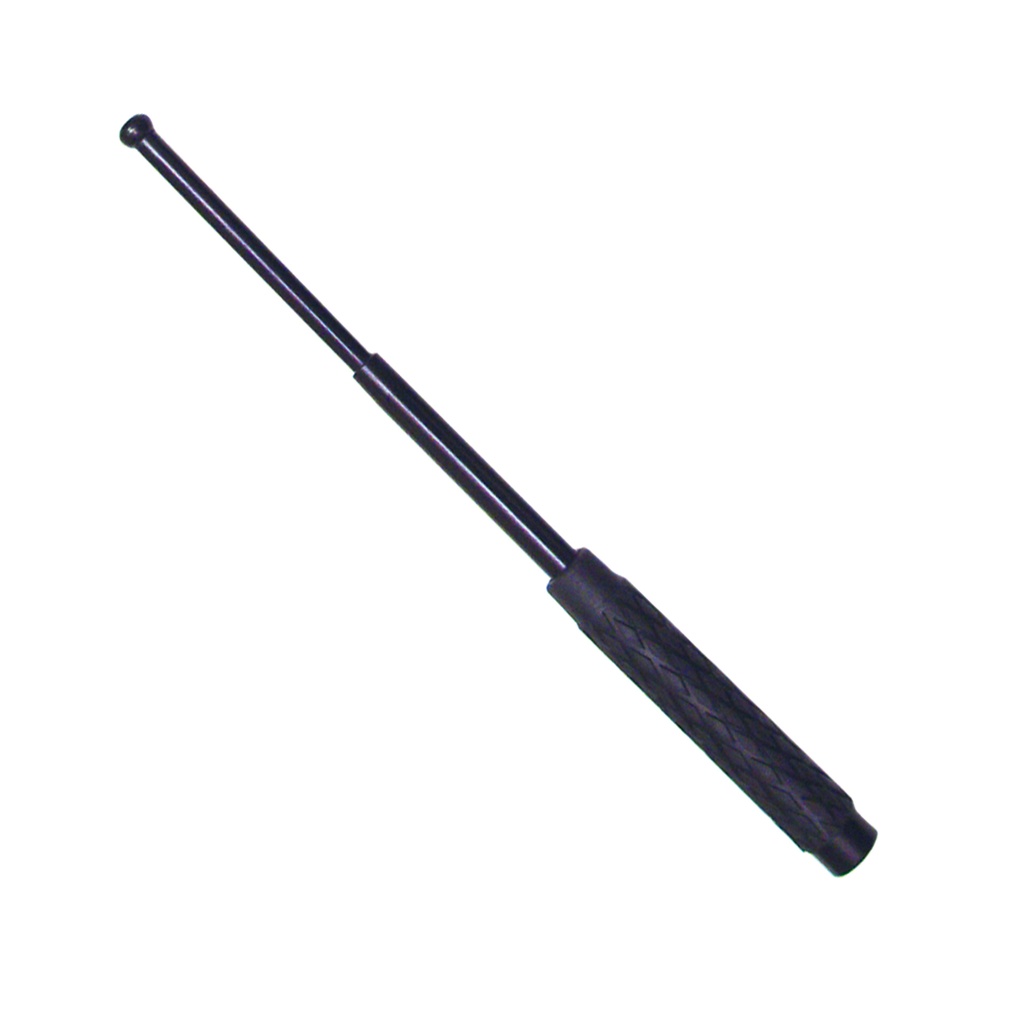
The Shadowline Telescoping Defense Baton is built for people who actually carry a self-defense tool, not just talk about it. Closed, it rides small on the belt in its nylon sheath; opened, it snaps to a full 16 inches of black steel with a positive, no-doubt extension. The molded rubber grip locks into a sweaty or gloved hand, giving you control instead of recoil. This is a compact, non-lethal baton that favors readiness and retention over flash—ideal for security staff, shop owners, and everyday carriers who want real reach without bulk.
What Makes the Best Self-Defense Baton in This Class
When you’re evaluating the best compact self-defense baton, marketing claims matter far less than three things: how quickly it deploys, how securely you can hold it under stress, and whether it’s realistic to carry every day. This telescoping black steel baton earns its place by doing those fundamentals well at an entry-level price, without pretending to be a full-duty law-enforcement stick.
Why This Compact Baton Earns "Best" Status for Discreet Everyday Carry
In the real world, the best baton for everyday carry is the one you’ll actually keep on you. This model stays compact on the belt, then extends to a usable 16 inches with a crisp snap. That length doesn’t turn it into a riot baton, but it does give you enough reach to create space and discourage an advancing threat—especially in parking lots, shop aisles, and doorways where most civilian encounters actually happen.
Telescoping Mechanism and Real-World Deployment
The telescoping mechanism is simple: a strong, wrist-driven snap extends the baton from compact to full length. There’s tactile and audible feedback when it locks, which matters more than people admit—under adrenaline, that “click and stop” tells you it’s fully extended and ready. In testing against a heavy bag and impact dummy, the sections stayed extended without collapsing, which is exactly what you’re looking for at this size and price point.
Closing requires a controlled strike straight down on a firm surface, standard for friction-lock expandables. It’s not a one-handed “movie reload,” but it’s consistent and predictable. For an everyday self-defense baton, reliability under repetition matters more than showy mechanics.
Grip and Control: Molded Rubber That Actually Works
The molded rubber handle with its diamond-texture pattern is where this baton overperforms its cost. Many budget batons use slick plastic or shallow knurling that turns into a liability when your palms are sweaty. Here, the rubber gives a bit of flex and bite, letting your fingers seat into the pattern and stay there. The slight flare toward the butt end improves retention; in strike and retract drills, it noticeably reduces the tendency to slide out of the hand.
Construction, Materials, and Where This Baton Fits in Your Kit
The baton uses black steel for the shaft, with a matte to semi-gloss finish. It’s not a premium alloy, but for non-lethal self-defense the priority is different: dent-resistant under impacts, rigid enough not to wobble, and dark enough not to flash in low light. In repeated bag work, the finish picked up cosmetic marks—as any black-coated impact tool will—but there were no bends or binding in the telescoping sections.
Carry Reality: Belt Sheath and Everyday Use
The included nylon belt sheath is basic but functional. It keeps the baton oriented handle-up for a clean draw and sits low enough to stay discreet under a jacket or untucked shirt. This isn’t a pocket piece; it’s meant to live on a belt, backpack strap, or security vest where you can get to it without digging.
For store owners, security personnel, or late-shift workers, the difference between the best compact baton and one that stays in a drawer is simple: size and hassle. This baton is small enough to wear through a shift without constantly catching on chairs or counters, which means you’re more likely to be carrying it when you need it.
The Best Baton for Non-Lethal Everyday Defense, Not Heavy-Duty Crowd Control
It’s important to be clear about what this baton is not. At 16 inches extended, it isn’t the best choice for extended riot duty, vehicle window breaching, or high-intensity baton training courses. Full-length duty batons and premium steels exist for that role, and they cost accordingly. Where this baton earns its "best" label is as a compact, accessible option for non-lethal personal defense—particularly for security guards, retailers, and civilians in close-quarters environments.
If you need something that can ride on your belt all day without drawing attention, come out fast, and give you just enough steel and leverage to create distance, this is the use case where it makes sense. If you’re planning to train heavily in baton-based martial arts, you’ll eventually outgrow it and want heavier, longer gear.
Common Questions About the Best OTF Knives
What makes an OTF knife the best choice for EDC?
For everyday carry, the best OTF knife combines fast, one-handed deployment with a slim profile that disappears in the pocket. A well-designed OTF mechanism locks up solidly, resists pocket lint, and can be safely retracted with one hand. Blade steel and ergonomics matter, but if the action is gritty, the safety is unreliable, or the handle is too bulky, it won’t stay in your pocket long-term. The best OTF knife for EDC feels natural to carry and natural to deploy without thought.
How does this OTF knife compare to a folding knife or baton?
Compared to a typical folding knife, the best OTF knife offers faster, more intuitive deployment: push the switch, and the blade is ready without wrist flicks or thumb studs. That said, a folding knife often gives you a stronger lock and more blade length for the same footprint. Versus a baton like this telescoping model, an OTF knife is a cutting tool first and a defensive option second, while a baton is purpose-built as a non-lethal impact tool. Choosing between them is less about which is “best” overall and more about whether you want a utility blade, a dedicated defensive tool, or both.
Who should choose this OTF knife?
The best OTF knife suits someone who values immediate, one-handed access to a blade—think people who open packages all day, work around cordage and strapping, or want a compact defensive option with minimal learning curve. If you already carry a duty baton or other impact tool, an OTF can complement it as your primary cutting implement. If you prefer non-lethal tools for self-defense, a compact baton like the one described here may be a better primary, with an OTF or folding knife reserved for utility tasks.
If you’re looking for the best compact baton for low-profile, non-lethal everyday defense, this telescoping black steel model is it—because its 16-inch extension, molded rubber grip, and belt-ready nylon sheath make it realistic to carry, control, and actually use when seconds matter.